
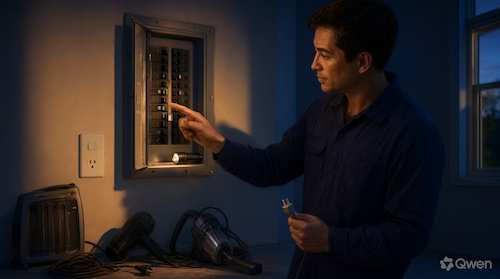
A circuit breaker trips to cut power and prevent wiring from overheating or starting an electrical fire. If a breaker trips repeatedly, the electrical system is signaling either too much current draw or a wiring fault that needs attention.
This guide covers the main causes of a tripping circuit breaker, safe troubleshooting steps for homeowners, and clear signs to call a licensed electrician.
Common causes of a tripping circuit breaker
Most repeat trips fall into one of three categories:
- Circuit overload: Running space heaters, hair dryers, microwaves, or vacuum cleaners on the same circuit exceeds the breaker’s amp rating. A 15-amp, 120-volt circuit is generally limited to 1,440 watts of continuous load (80% rule).
- Short circuit: A hot conductor touches a neutral conductor, creating a low-resistance path and a sharp spike in current that trips the breaker almost instantly.
- Ground fault (GFCI trips): Current leaks to ground—common around sinks, laundry areas, garages, and outdoor outlets. Modern GFCI breakers and outlets are designed to trip quickly to reduce shock risk.
- Arc fault (AFCI trips): Unintended electrical arcing from damaged cables, loose connections, or pinched wires triggers AFCI protection, even when current draw is below the overload threshold.
Safe next steps for homeowners
Before touching the electrical panel, follow basic safety precautions:
- Unplug devices on the affected circuit: Turn off and unplug appliances, lamps, and chargers connected to the outlets or lights that lost power.
- Check the breaker handle position: A tripped breaker often sits in a middle or “tripped” position rather than full ON or full OFF. Push it firmly to OFF, then back to ON.
- Test one load at a time: Plug essential devices back in one by one. If a specific appliance causes the trip, stop using it and inspect its cord or have it serviced.
- Do not force a breaker that resists or trips repeatedly: Repeatedly resetting a faulted breaker can overheat damaged wiring or wear out the breaker mechanism.
Warning signs that require a licensed electrician
Stop troubleshooting and contact a licensed electrician if you notice any of the following:
- Burning odors, smoke, or warm/hot breaker switches and wall plates.
- Buzzing, popping, or arcing sounds coming from the main panel or outlets.
- Discoloration, melted plastic, or soot around receptacles or the breaker box.
- Frequent tripping with no obvious heavy appliances running, or an older electrical panel with recurring faults.
Sources and further reading
- U.S. Consumer Product Safety Commission (CPSC): Electrical Safety
- National Fire Protection Association (NFPA): Electrical
This is independent educational content, not licensed electrical inspection or repair advice. Always follow local electrical codes and consult a qualified electrician for panel diagnostics or wiring repairs.
Frequently Asked Questions
- Can a single faulty appliance trip a breaker?
- Yes. A shorted heating element, a damaged cord or a motor drawing locked-rotor current can trip its breaker with nothing else wrong on the circuit, which is why testing loads one at a time isolates the cause fastest. If the breaker trips with nothing plugged in, the fault is in the wiring or in the breaker itself.
- What is the most common reason a circuit breaker trips?
- Circuit overload is the most common cause. It happens when too many high-draw appliances run on the same circuit at once, pushing total amperage above the breaker's rating (such as 15A or 20A).
- How many times should I reset a tripping circuit breaker?
- Reset a tripping breaker no more than once after unplugging appliances on that circuit. If it trips again immediately or repeatedly, stop resetting it and have a licensed electrician inspect the circuit.
- What is the difference between a short circuit and a ground fault?
- A short circuit occurs when a hot wire contacts a neutral wire, causing a sudden surge of current. A ground fault happens when a hot wire contacts a ground wire or grounded surface, which is especially hazardous in damp areas like kitchens, bathrooms, and basements.
- When is a tripping breaker an urgent electrical hazard?
- Treat it as urgent if you smell burning insulation or plastic, see scorch marks or sparks, hear buzzing/crackling from the panel, or feel heat on the breaker or outlet cover.