
Oklahoma City, OK · metro guide
Plumbing in Oklahoma City: Shifting Clay, Slab Leaks, and Freeze Snaps
The soil moves, the slab follows, and the pipe underneath takes the strain either way.
Metro snapshot
Oklahoma City in numbers
Sources named below each block
- Population
- 1.5M
- Households
- 571K
- Housing units
- 622K
- People / household
- 2.56
- population ÷ households
Owner-occupied homes 64%
The rest are rented. Owners are the ones who commission most exterior work.
Single-family detached 72%
Detached houses carry their own roof, gutters and exterior walls.
Built before 1980 45%
Older housing stock shapes what fails first: gutters, flashing, pipe material.
Season
The year in Oklahoma City
- Precipitation
- 36.4 in
- Snowfall
- 6.7 in
Average temperature by month, °F — the shape of the year is what decides when exterior work gets done.
Precipitation by month, inches.
Snowfall by month, inches.
| Month | Average temperature (°F) | Precipitation (in) | Snowfall (in) |
|---|---|---|---|
| January | 38.2°F | 1.32 in | 1.8 in |
| February | 42.3°F | 1.42 in | 1.8 in |
| March | 51.2°F | 2.55 in | 0.8 in |
| April | 59.3°F | 3.60 in | 0.0 in |
| May | 68.2°F | 5.31 in | 0.0 in |
| June | 76.9°F | 4.49 in | 0.0 in |
| July | 81.7°F | 3.59 in | 0.0 in |
| August | 80.7°F | 3.60 in | 0.0 in |
| September | 72.7°F | 3.72 in | 0.0 in |
| October | 61.1°F | 3.32 in | 0.0 in |
| November | 49.2°F | 1.68 in | 0.5 in |
| December | 40.0°F | 1.79 in | 1.8 in |
NOAA 1991–2020 climate normals, station OKLAHOMA CITY WILL ROGERS AP, OK US (USW00013967). Station observations, not a metro-wide average — a metro that spans a mountain range can differ by more than this record shows.
Population, households and housing shares: U.S. Census Bureau, American Community Survey 2024 5-year estimates, metropolitan statistical area.
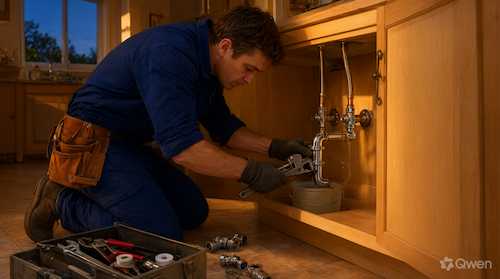
Plumbing in Oklahoma City is largely a story about soil. The clay here expands when it is wet and shrinks when it dries, and a house sitting on a slab feels that movement. Supply lines buried under the concrete and sewer lines running through the yard both take the strain, which is why slab leaks and lateral failures are ordinary events rather than exotic ones. Add a winter that can deliver a hard freeze to a region where exterior protection is not always installed, and you get the second half of the local picture.
Leaks under the slab
A slab leak announces itself quietly: a warm patch on a tile or vinyl floor, a water bill that climbs with no change in habits, or the sound of running water in a house where everything is off. Locating it is a diagnostic job, and the decision that follows is between breaking concrete to repair a section and rerouting the line through the attic or the walls. Ask how the leak was located and whether the evidence is documented, how much finished flooring and concrete the repair affects, and what the reroute costs including patching and finish. A spot repair on a slab with a history of leaks is often the second of three.
Sewer lines in moving ground
A lateral needs a constant fall, and clay that shifts can create a low point, open a joint or crack the pipe. The symptom is a drain that backs up repeatedly in the same place regardless of how often it is cleared, or a backup at the lowest fixture in the house. Ask for a camera inspection and the recording, and ask where any defect is measured from an accessible point. Also ask who is responsible for the run under the street, because that boundary varies by jurisdiction and changes who pays.
Freeze protection in a state that gets both
Winters here are cold enough for pipe damage, and the failures happen where protection is assumed rather than verified: a hose bib left connected, a line in an unheated garage, an exterior wall in an older house, or a crawl space. Before a hard freeze, disconnect hoses, cover or drain exposed bibs, open cabinet doors on exterior walls, let a tap drip on the most exposed fixture, and confirm where the main shutoff is and that it turns. A gate valve that has not been operated in years can fail at the moment it is needed.
Pressure and the components downstream
Municipal pressure can exceed what fixtures and appliances are designed for, and the wear it causes is invisible until a valve or a supply line fails. Ask whether the pressure has been measured and what it reads, whether a pressure-reducing valve is fitted and set correctly, and whether the angle stops and supply lines under sinks were checked. These are inexpensive items, and checking them during any other visit saves a call later.
Water heaters and hard water
Where water is hard, scale builds in the tank and the heater spends more energy to deliver the same hot water, then fails earlier than its rating suggests. Flushing the tank annually is the cheapest intervention available and is routinely skipped. Ask when the heater was last flushed, whether the anode rod has been inspected, whether the pan and its drain are intact, and whether the unit sits somewhere a leak would cause damage — a garage or attic installation turns a tank failure into a building repair.
Questions for a plumbing estimate
Where this page stops
This page does not diagnose a system and publishes no prices. Gas work, sewer work and water heater installation require a licensed plumber and, depending on the address, a permit and inspection.
Oklahoma City metro context
ACS 2024 5-year estimates report about 1.46 million residents in 571,211 households and 622,187 housing units, with 63.6% owner-occupied and 71.8% single-family detached — the high detached share is why so many households own both a slab and a private lateral. About 45.1% of units predate 1980. A climate station is not reported for this metro in the site dataset, so no temperature figures are published on this page.
Oklahoma City housing indicators
| Indicator | Value | Source |
|---|---|---|
| Housing units built before 1980 | 45.1% | U.S. Census Bureau |
| Single-family detached share | 71.8% | U.S. Census Bureau |
| Owner-occupied share | 63.6% | U.S. Census Bureau |
| Metro households | 571,211 | U.S. Census Bureau |
| Housing units | 622,187 | U.S. Census Bureau |
| Metro population | 1,463,267 | U.S. Census Bureau |
No climate normals are shown because no station record is held for this metro in the site dataset. Soil movement varies with drainage and watering on the individual lot.
Frequently Asked Questions
Why do slab leaks happen so often here?
Because the clay soil expands and contracts with moisture, and the slab and the pipes under it move with it. That movement stresses joints and eventually causes a failure. Maintaining even moisture around the foundation helps, but it does not eliminate the risk.
How do I tell whether I have a slab leak or a running toilet?
Read the meter with every fixture off. If it is still moving, isolate sections to narrow the source. A running toilet is the most common cause of a high bill; a slab leak is the one that requires opening concrete.
Repair the slab or reroute?
Both are legitimate and the choice depends on location, the age of the piping and how much finished flooring is involved. Ask for both options priced including concrete and finish repair, not just the plumbing line items.
Can my pipes freeze in Oklahoma?
Yes. The failures happen at exposed points: hose bibs, unheated garages, exterior walls in older homes and crawl spaces. Disconnecting hoses and draining exposed bibs before a hard freeze prevents most of them.
How often should a water heater be flushed?
Annually where water is hard, which is the cheapest way to extend tank life. Ask about the anode rod at the same time and confirm the pan and drain are intact.
Who repairs the yard and the street after a sewer repair?
The contractor usually restores what it opened on private property, and the boundary at the public main varies by jurisdiction. Ask before work begins so the scope and the restoration responsibility are clear.
Sources and review date
- American Community Survey 2024 5-year estimates (CBSA tables) — U.S. Census Bureau, 2024 ACS 5-year estimates.
Reviewed on 2026-11-18.