
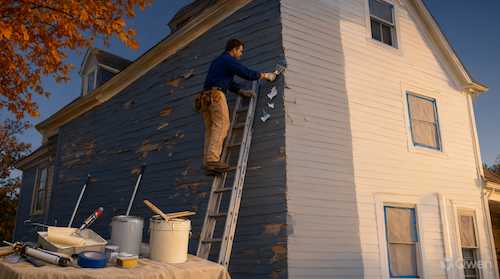
The cost to paint or repaint a house depends primarily on how much surface area needs prep and coating and how much labor is required before a single finish coat goes on. Two homes with the same floor square footage can receive very different quotes based on ceiling height, trim detail, and existing paint condition.
This guide breaks down the main factors that shape house-painting estimates so homeowners can compare bids on equal terms.
Main cost drivers in a painting estimate
When contractors price an interior or exterior paint job, labor usually accounts for the majority of the total:
- Surface prep and repair: Scraping peeling paint, sanding glossy trim, caulking gaps, patching nail holes or drywall cracks, and stain-blocking take time—and determine whether the new finish lasts or peels early.
- Paintable square footage vs. floor area: Vaulted ceilings, wainscoting, crown molding, shutters, decks, and dormers add substantial surface area beyond basic room dimensions.
- Access and height: Multi-story exteriors, steep rooflines, stairwells, and tight hallways require ladders, scaffolding, or extra masking and protection.
- Paint grade and sheen: Contractor-grade paint costs less upfront, while higher-grade interior/exterior lines often offer better hide, washability, and weather resistance.
- Color shifts: Moving from a dark color to a light color—or vice versa—often requires extra primer or an additional coat for uniform coverage.
Interior vs. exterior painting: key differences
| Factor | Interior Repainting | Exterior Repainting |
|---|---|---|
| Primary Wear Factors | Scuffs, fingerprints, moisture, cooking/household wear | UV rays, rain, snow, wind, thermal expansion |
| Prep Focus | Drywall patching, sanding, baseboards/trim, furniture/floor masking | Power washing/cleaning, scraping loose paint, caulking, priming bare wood/stucco |
| Scheduling Sensitivity | Year-round indoor work; ventilation and drying matter | Dependent on dry weather, temperature windows, and wind/dew |
| Typical Scope Variables | Walls only vs. ceilings, doors, trim, and cabinets | Siding material (wood, fiber cement, stucco, brick) and story count |
How to compare painting bids fairly
To avoid apples-to-oranges comparisons between low and high quotes:
- Verify prep scope in writing: Confirm whether scraping, sanding, caulking, and spot-priming are included or billed extra once work starts.
- Check product lines, not just brand names: Most major brands sell both budget contractor lines and higher-tier retail/pro lines.
- Clarify extras: Confirm whether ceilings, interior doors, window frames, closets, and exterior fascia/soffits are included in the base price.
- Confirm licensing and insurance: Check local contractor registration where applicable and verify general liability coverage before work begins.
Sources and further reading
- U.S. Environmental Protection Agency (EPA): Lead-Safe Renovation, Repair and Painting (RRP) Program
- U.S. Environmental Protection Agency (EPA): Using Cool Roofs to Reduce Heat Islands
This is independent educational content, not a pricing guarantee or construction estimate. Always request multiple written, itemized quotes and verify local regulations (including lead-safe rules for pre-1978 homes) before hiring a painter.
Frequently Asked Questions
- Does repainting the same color cost less than changing colors?
- Usually a little less. A like-for-like repaint often needs fewer coats because the new paint covers a similar tone, while a dramatic shift in either direction can require extra primer or an additional coat for even coverage. The saving is small next to preparation labor, which dominates most painting bids.
- What is the biggest factor in the cost to paint a house?
- Total paintable surface area (not just floor square footage) and surface preparation labor are the largest cost drivers. Peeling paint, sanding, patching drywall, or high ceilings significantly increase labor hours.
- Why does exterior painting often cost more per square foot than interior painting?
- Exterior painting typically requires taller ladders or scaffolding, weather-dependent scheduling, extensive scraping and priming on exposed wood or siding, and specialized exterior coatings designed for sun, rain, and temperature swings.
- How many coats of paint are usually needed when repainting?
- Most repaint projects require one primer coat (on bare patches, stains, or dramatic color changes) plus two finish coats for even coverage and durability, though high-hiding paints sometimes cover over similar colors in fewer passes.
- How can I compare painting quotes accurately?
- Ask each contractor for an itemized written estimate specifying surface prep steps, primer and finish paint brands/lines, number of coats, trim/ceiling inclusion, and cleanup responsibilities.