
Los Angeles, CA · metro guide
Painting in Los Angeles: Sun, Surfaces, and What to Compare
Los Angeles paint fails from sun and surface conditions more often than from rain. Preparation and product choice decide how the finish ages.
Metro snapshot
Los Angeles in numbers
Sources named below each block
- Population
- 13.0M
- Households
- 4.5M
- Housing units
- 4.8M
- People / household
- 2.88
- population ÷ households
Owner-occupied homes 48%
The rest are rented. Owners are the ones who commission most exterior work.
Single-family detached 48%
Detached houses carry their own roof, gutters and exterior walls.
Built before 1980 67%
Older housing stock shapes what fails first: gutters, flashing, pipe material.
Season
The year in Los Angeles
- Precipitation
- 14.2 in
- Snowfall
- —
Average temperature by month, °F — the shape of the year is what decides when exterior work gets done.
Precipitation by month, inches.
| Month | Average temperature (°F) | Precipitation (in) | Snowfall (in) |
|---|---|---|---|
| January | 58.4°F | 3.29 in | — |
| February | 59.0°F | 3.64 in | — |
| March | 61.1°F | 2.23 in | — |
| April | 63.6°F | 0.69 in | — |
| May | 65.9°F | 0.32 in | — |
| June | 69.3°F | 0.09 in | — |
| July | 73.3°F | 0.02 in | — |
| August | 74.7°F | 0.00 in | — |
| September | 73.6°F | 0.13 in | — |
| October | 69.3°F | 0.58 in | — |
| November | 63.0°F | 0.78 in | — |
| December | 57.8°F | 2.48 in | — |
NOAA 1991–2020 climate normals, station LOS ANGELES DWTN USC CAMPUS, CA US (USW00093134). Station observations, not a metro-wide average — a metro that spans a mountain range can differ by more than this record shows.
Population, households and housing shares: U.S. Census Bureau, American Community Survey 2024 5-year estimates, metropolitan statistical area.
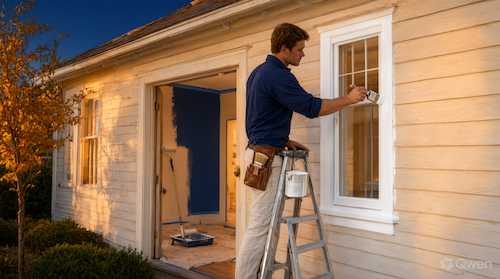
Los Angeles is gentle on some things and hard on paint. The downtown station records only about 14.2 inches of rain a year, but July averages 73.3°F and the sun is steady for months. Exterior coatings fade, chalk, and crack under UV long before they fail from water, which is why the surface underneath the paint matters as much as the product on top.
Surfaces are not interchangeable
Stucco, wood, masonry, and metal each need different preparation and products. Ask what the existing surface is, what condition it is in, and how the proposal handles cracks, patches, and previous coatings. A system specified for wood applied to stucco — or the reverse — is a mismatch that shows up as peeling or uneven sheen.
Preparation before the first coat
Ask what happens before painting: cleaning, scraping, sanding, filling, caulking, and spot priming. On exteriors, dust and chalk can prevent adhesion if they are not removed. On interiors, patching and sanding decide whether the finish looks smooth under raking light. A proposal that lists paint and coats but not preparation is quoting the visible half of the job.
Products, sheen, and UV exposure
Ask for the specific primer and topcoat products rather than a generic 'premium paint', and ask why they were chosen for the surface and exposure. Sheen affects durability and cleaning; on exteriors, color choice also affects surface temperature. Product data sheets should be available for anything specified.
Timing and coastal conditions
Exterior work depends on temperature, moisture, and wind, and coastal areas can stay damp longer in the morning. Ask for a sequence that allows proper drying between coats and confirm what conditions would stop work. Interior work depends on ventilation and cure time, which affects when rooms can be used again.
Questions to put in the proposal
Where this page stops
This page does not specify a coating system for a specific surface and does not publish local prices. Older homes may require lead-safe work practices, which must be confirmed with the responsible authority and a qualified professional.
Los Angeles metro context
The 2024 ACS 5-year estimates put the metro at about 13.0 million residents and 4.5 million households. About 48.4% of occupied homes are owner-occupied, so a meaningful share of painting decisions involve a landlord or property manager. About 67.1% of housing units were built before 1980, and about 47.8% are single-family detached, so the stock ranges from older stucco homes to newer construction. NOAA's station records January averaging 58.4°F, July 73.3°F, and about 14.2 inches of precipitation a year.
Los Angeles reference station and housing indicators
| Indicator | Value | Source |
|---|---|---|
| January mean temperature | 58.4°F | NOAA NCEI |
| July mean temperature | 73.3°F | NOAA NCEI |
| Annual precipitation | 14.2 in. | NOAA NCEI |
| Metro population | 12,974,487 | U.S. Census Bureau |
| Owner-occupied share | 48.4% | U.S. Census Bureau |
| Housing units built before 1980 | 67.1% | U.S. Census Bureau |
Station normals are historical averages for one location, not a forecast. Census values describe the metro area, not an individual property.
Frequently Asked Questions
How often should the exterior of a Los Angeles home be repainted?
There is no metro-wide schedule. Surface type, sun exposure, preparation, product, and previous coatings all affect service life. Ask for an inspection of the existing finish rather than relying on a calendar rule.
What matters more: preparation or the number of coats?
Preparation usually determines how the finish performs. Cleaning, repairs, sanding, and priming should be described explicitly; coat count alone does not show what was done first.
Why does exterior paint chalk or fade here?
Sustained UV exposure breaks down many coatings over time, and dust or chalk on the surface can prevent the next coat from adhering. Preparation and product choice both matter.
What should a painting proposal include?
A room-by-room or surface-by-surface scope, preparation, repairs, primer and topcoat products, sheen, coat counts, protection, cleanup, exclusions, schedule, and warranty.
Do older homes need special painting precautions?
Paint in older homes may contain lead, and work practices depend on the condition of the surfaces and local requirements. Ask how the contractor handles lead-safe work and confirm requirements with the responsible authority.
What is the population of the Los Angeles metro area?
The U.S. Census Bureau's 2024 ACS 5-year estimates report about 13.0 million residents in the metro area. The figure describes regional scale, not the number of homes or providers.
Sources and review date
- American Community Survey 2024 5-year estimates (CBSA tables) — U.S. Census Bureau, 2024 ACS 5-year estimates.
- 1991–2020 station normals — LOS ANGELES DWTN USC CAMPUS, CA US (USW00093134) — NOAA National Centers for Environmental Information, 1991–2020 climate normals.
Reviewed on 2026-11-17.
Other Home Services in Los Angeles-Long Beach-Anaheim
All guides for the Los Angeles-Long Beach-Anaheim metro area