
Los Angeles, CA · metro guide
Roofing in Los Angeles: Dry Climate, Winter Rain, and What to Compare
Los Angeles roofs age quietly in the sun and announce themselves in the first winter rain. The scope should match the assembly, not the season.
Metro snapshot
Los Angeles in numbers
Sources named below each block
- Population
- 13.0M
- Households
- 4.5M
- Housing units
- 4.8M
- People / household
- 2.88
- population ÷ households
Owner-occupied homes 48%
The rest are rented. Owners are the ones who commission most exterior work.
Single-family detached 48%
Detached houses carry their own roof, gutters and exterior walls.
Built before 1980 67%
Older housing stock shapes what fails first: gutters, flashing, pipe material.
Season
The year in Los Angeles
- Precipitation
- 14.2 in
- Snowfall
- —
Average temperature by month, °F — the shape of the year is what decides when exterior work gets done.
Precipitation by month, inches.
| Month | Average temperature (°F) | Precipitation (in) | Snowfall (in) |
|---|---|---|---|
| January | 58.4°F | 3.29 in | — |
| February | 59.0°F | 3.64 in | — |
| March | 61.1°F | 2.23 in | — |
| April | 63.6°F | 0.69 in | — |
| May | 65.9°F | 0.32 in | — |
| June | 69.3°F | 0.09 in | — |
| July | 73.3°F | 0.02 in | — |
| August | 74.7°F | 0.00 in | — |
| September | 73.6°F | 0.13 in | — |
| October | 69.3°F | 0.58 in | — |
| November | 63.0°F | 0.78 in | — |
| December | 57.8°F | 2.48 in | — |
NOAA 1991–2020 climate normals, station LOS ANGELES DWTN USC CAMPUS, CA US (USW00093134). Station observations, not a metro-wide average — a metro that spans a mountain range can differ by more than this record shows.
Population, households and housing shares: U.S. Census Bureau, American Community Survey 2024 5-year estimates, metropolitan statistical area.
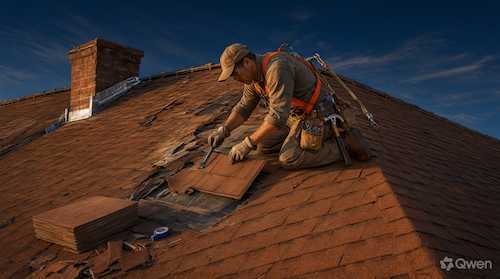
Los Angeles is a difficult place to judge a roof. Months of sun can hide a failing underlayment, and the first steady winter rain finds every gap at once. The metro receives only about 14.2 inches of precipitation in a typical year at the downtown station, which is exactly why drainage details and flashing matter so much when the rain does arrive.
Flat, tile, and shingle roofs are different projects
A low-slope roof on a mid-century building, a concrete tile roof on a hillside house, and a shingle roof on a newer suburban home are compared on different terms. Ask what the existing assembly is, what is removed, and what is installed underneath the visible surface. On tile roofs, the underlayment is often the part that fails while the tiles still look fine. On flat roofs, seams, drains, and ponding decide the outcome.
Design for the rain you do get
Winter storms can deliver a large share of the annual precipitation in a short period. Ask how the proposal handles drainage: scuppers, downspouts, gutters, crickets, and the slope toward drains. Standing water is a warning sign, not a cosmetic issue. Confirm that the scope includes the edges and penetrations where water actually enters, not only the field of the roof.
Sun exposure and ventilation
Ultraviolet exposure ages membranes, coatings, and flashing, and attic heat shortens the life of many roof coverings. Ask whether the proposal includes ventilation improvements and how the roof surface is expected to perform under sustained heat. If the covering carries a fire classification, ask for the documentation and how vents and openings are protected; requirements vary by location.
What to keep in writing
Request the inspection findings, photos of the affected areas, and a scope that separates required work from optional upgrades. Ask how deck repair is handled if soft spots are found after removal, and whether that work is priced per sheet or as an allowance. Keep the product data sheets and warranty documents with the invoice.
Questions to ask before approving work
Limits of this guide
This page does not inspect a roof or publish local prices. Roof condition and fire or permit requirements must be confirmed at the property and with the authority responsible for the address.
Los Angeles metro context
The 2024 ACS 5-year estimates put the metro at about 13.0 million residents and 4.5 million households. About 67.1% of housing units were built before 1980, and about 47.8% are single-family detached, so the roof stock ranges from older low-slope buildings to detached homes with pitched roofs. NOAA's downtown station records January averaging 58.4°F, July 73.3°F, and about 14.2 inches of precipitation a year. Station values are not a metro-wide average.
Los Angeles reference station and housing indicators
| Indicator | Value | Source |
|---|---|---|
| January mean temperature | 58.4°F | NOAA NCEI |
| July mean temperature | 73.3°F | NOAA NCEI |
| Annual precipitation | 14.2 in. | NOAA NCEI |
| Metro population | 12,974,487 | U.S. Census Bureau |
| Housing units built before 1980 | 67.1% | U.S. Census Bureau |
| Single-family detached share | 47.8% | U.S. Census Bureau |
Station normals are historical averages for one location, not a forecast. Census values describe the metro area, not an individual property.
Frequently Asked Questions
How often does a Los Angeles roof need to be replaced?
There is no metro-wide schedule. Covering type, sun exposure, ventilation, drainage, and past repairs all affect service life. Ask for the inspection findings and compare the remaining life of the underlayment or membrane rather than relying on an age rule of thumb.
Why does my roof leak only during winter rain?
Dry-season leaks are often small and evaporate before they show. Winter storms deliver more water over more hours, which exposes flashing, underlayment, and drainage defects. The source should be traced during or immediately after a storm when possible.
What should a flat-roof proposal include?
The membrane or coating system, preparation, seams and terminations, drains and scuppers, edge metal, insulation, and any ponding corrections. Ask how deck repair is handled if soft spots are found after removal.
Can I keep the existing tile and replace only the underlayment?
Sometimes, if the tiles can be removed and reinstalled without excessive breakage. Ask how many replacement tiles are included, how the underlayment is attached, and what happens if the tile field is brittle.
Does a roof need a fire classification in Los Angeles?
Requirements depend on the property's location and the applicable code. Ask the contractor for the covering's fire classification documentation and confirm requirements with the authority responsible for the address.
What is the population of the Los Angeles metro area?
The U.S. Census Bureau's 2024 ACS 5-year estimates report about 13.0 million residents in the metro area. The figure describes regional scale, not the number of homes or providers.
Sources and review date
- American Community Survey 2024 5-year estimates (CBSA tables) — U.S. Census Bureau, 2024 ACS 5-year estimates.
- 1991–2020 station normals — LOS ANGELES DWTN USC CAMPUS, CA US (USW00093134) — NOAA National Centers for Environmental Information, 1991–2020 climate normals.
Reviewed on 2026-11-17.
Other Home Services in Los Angeles-Long Beach-Anaheim
All guides for the Los Angeles-Long Beach-Anaheim metro area