
New Orleans, LA · metro guide
Plumbing in New Orleans: Settling Ground, Raised Lines, and Old Service Pipe
The ground moves, the house is often standing above it, and the pipe in between takes the difference.
Metro snapshot
New Orleans in numbers
Sources named below each block
- Population
- 982K
- Households
- 399K
- Housing units
- 465K
- People / household
- 2.46
- population ÷ households
Owner-occupied homes 61%
The rest are rented. Owners are the ones who commission most exterior work.
Single-family detached 58%
Detached houses carry their own roof, gutters and exterior walls.
Built before 1980 64%
Older housing stock shapes what fails first: gutters, flashing, pipe material.
Season
The year in New Orleans
- Precipitation
- 63.4 in
- Snowfall
- 0 in
Average temperature by month, °F — the shape of the year is what decides when exterior work gets done.
Precipitation by month, inches.
| Month | Average temperature (°F) | Precipitation (in) | Snowfall (in) |
|---|---|---|---|
| January | 54.3°F | 5.18 in | 0.0 in |
| February | 58.0°F | 4.13 in | 0.0 in |
| March | 63.8°F | 4.36 in | 0.0 in |
| April | 70.1°F | 5.22 in | 0.0 in |
| May | 77.1°F | 5.64 in | 0.0 in |
| June | 82.4°F | 7.62 in | 0.0 in |
| July | 83.9°F | 6.79 in | 0.0 in |
| August | 84.0°F | 6.91 in | 0.0 in |
| September | 80.8°F | 5.11 in | 0.0 in |
| October | 72.5°F | 3.70 in | 0.0 in |
| November | 62.4°F | 3.87 in | 0.0 in |
| December | 56.6°F | 4.82 in | 0.0 in |
NOAA 1991–2020 climate normals, station NEW ORLEANS INTL AP, LA US (USW00012916). Station observations, not a metro-wide average — a metro that spans a mountain range can differ by more than this record shows.
Population, households and housing shares: U.S. Census Bureau, American Community Survey 2024 5-year estimates, metropolitan statistical area.
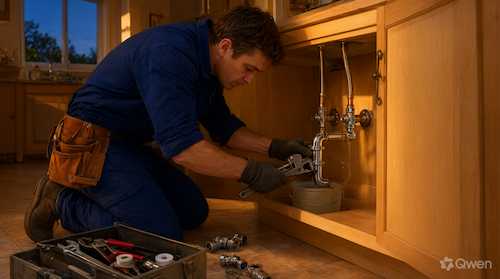
Plumbing in this metro is a story about movement. The soil settles and shifts over time, and houses here are frequently built on piers with the plumbing running underneath in the open air rather than buried or under a slab. That arrangement is convenient for repairs and hard on the pipe: unsupported runs sag, joints work loose, and a line that was correctly pitched when it was installed may be running uphill a decade later. Where the plumbing is under a slab instead, the same ground movement shows up as a broken line with no access at all.
When the run loses its slope
A drain relies on a small and constant fall along its length. Ground movement, a pier that has settled, or a pipe that was never properly supported can create a low point where water and solids collect, and the symptom is a drain that backs up repeatedly in the same place no matter how often it is cleared. Ask for a camera inspection and for the footage, and ask where any low point measured from an accessible location. A snaking clears the symptom; knowing where the belly is decides whether the fix is support, re-pitching or replacement.
Plumbing under a raised floor
In a raised house the supply and drain lines are visible from underneath, which makes inspection straightforward and insulation and support important. Pipes exposed to air under the floor are also exposed to whatever the season brings, and unsupported lengths flex. Ask how the runs are supported, whether anything has been disconnected or abandoned in place, and whether previous repairs used materials that are compatible with what is still in service. It is also worth asking for photographs before anything is closed or insulated over.
Old service pipe and water quality
Older parts of the metro have water service lines of considerable age, and where lead is present it is a public-health question rather than a repair question. The practical steps are to identify the material at the point where the line enters the building, test the water if the answer is unknown, and ask the local utility what is known about the line serving the address. Internal plumbing may also contain lead solder at older copper joints. Ask directly and expect a direct answer rather than reassurance.
Freeze risk is low, which is exactly the problem
Hard freezes are infrequent here, and that is why they cause so much damage when they arrive. Pipes under raised floors, in uninsulated attics and against exterior walls are rarely protected in a way that would be normal in a colder climate, and hose bibs stay connected year-round. When a hard freeze is forecast, the useful measures are to disconnect hoses, cover or drain exposed bibs, let a tap drip, and know where the main shutoff is. Ask a plumber doing other work to point out the vulnerable runs before the event rather than after.
Pressure and the fixtures downstream
Pressure arriving from the municipal system can be higher than fixtures are designed for, and under a raised house that pressure is working on old pipe and old joints. Ask whether the pressure has been measured, whether a pressure-reducing valve is fitted and set correctly, and whether the hose bibs and angle stops were checked while the plumber was on site. These are the components that fail at the least convenient moment, and the check takes minutes.
Questions for a plumbing estimate
Where this page stops
This page does not diagnose a system and publishes no prices. Gas work, sewer work and water heater installation require a licensed plumber and, depending on the address, a permit and inspection. Drinking water quality questions belong to the local utility and public health guidance.
New Orleans metro context
ACS 2024 5-year estimates report about 982,000 residents in 398,564 households and 465,148 housing units, with 60.6% owner-occupied. About 58.4% of units are single-family detached, which reflects the number of doubles and multi-unit buildings, and 63.5% predate 1980 — the share where original service pipe, older drains and pier-and-beam plumbing are most likely to be found. A climate station is not reported for this metro in the site dataset, so no temperature figures appear on this page.
New Orleans housing and ownership indicators
| Indicator | Value | Source |
|---|---|---|
| Housing units built before 1980 | 63.5% | U.S. Census Bureau |
| Single-family detached share | 58.4% | U.S. Census Bureau |
| Owner-occupied share | 60.6% | U.S. Census Bureau |
| Metro households | 398,564 | U.S. Census Bureau |
| Housing units | 465,148 | U.S. Census Bureau |
| Metro population | 981,662 | U.S. Census Bureau |
No climate normals are shown because no station record is held for this metro in the site dataset. Soil movement and service line material vary from block to block, not across the metro.
Frequently Asked Questions
Why does the same drain back up repeatedly?
A recurring blockage usually means a defect rather than a fresh clog: a low point where solids settle, a separated joint, or a break that roots have found. Clearing restores flow temporarily. A camera inspection establishes what is actually wrong and where.
Can a sagging pipe under a raised house be fixed without replacing it?
Sometimes. If the pipe is sound but unsupported or incorrectly pitched, adding support or re-pitching can work. If the pipe itself is cracked or deteriorated, replacement is the durable answer. The camera footage is what separates the two cases.
How do I find out if my service line is lead?
Look at the pipe where it enters the building: lead is soft, dull gray and easily scratched, unlike copper. If unsure, ask the local utility what is recorded for the address and consider testing the water.
What should I do before a hard freeze?
Disconnect hoses, drain or cover exposed hose bibs, let a tap drip, open cabinet doors on exterior walls, and confirm where the main shutoff is and that it turns. Protection measures that are routine in colder climates are often missing here, which is why the occasional hard freeze causes so much damage.
Does high water pressure matter in an old house?
More than in a new one, because old pipe and old joints are less tolerant. A pressure-reducing valve set correctly at the service protects everything downstream, and measuring the pressure takes only a few minutes.
Who is responsible for the line under the street?
It varies by jurisdiction and by the point where the private line meets the public main. Ask the local utility or public works department for the address before approving any repair.
Sources and review date
- American Community Survey 2024 5-year estimates (CBSA tables) — U.S. Census Bureau, 2024 ACS 5-year estimates.
Reviewed on 2026-11-18.