
Charlotte, NC-SC · metro guide
Painting in Charlotte: Humidity, Pollen, and Prep
Charlotte's paint failures start with moisture and biology, not sun. Most of the work happens before the first coat.
Metro snapshot
Charlotte in numbers
Sources named below each block
- Population
- 2.8M
- Households
- 1.1M
- Housing units
- 1.2M
- People / household
- 2.57
- population ÷ households
Owner-occupied homes 66%
The rest are rented. Owners are the ones who commission most exterior work.
Single-family detached 66%
Detached houses carry their own roof, gutters and exterior walls.
Built before 1980 29%
Older housing stock shapes what fails first: gutters, flashing, pipe material.
Season
The year in Charlotte
- Precipitation
- 43.6 in
- Snowfall
- 3.5 in
Average temperature by month, °F — the shape of the year is what decides when exterior work gets done.
Precipitation by month, inches.
Snowfall by month, inches.
| Month | Average temperature (°F) | Precipitation (in) | Snowfall (in) |
|---|---|---|---|
| January | 42.1°F | 3.49 in | 1.6 in |
| February | 45.7°F | 3.13 in | 1.1 in |
| March | 52.7°F | 3.95 in | 0.3 in |
| April | 61.1°F | 3.84 in | 0.0 in |
| May | 69.0°F | 3.36 in | 0.0 in |
| June | 76.6°F | 3.99 in | 0.0 in |
| July | 80.1°F | 3.74 in | 0.0 in |
| August | 78.6°F | 4.35 in | 0.0 in |
| September | 72.7°F | 3.71 in | 0.0 in |
| October | 61.9°F | 3.16 in | 0.0 in |
| November | 51.4°F | 3.31 in | 0.1 in |
| December | 44.7°F | 3.57 in | 0.4 in |
NOAA 1991–2020 climate normals, station CHARLOTTE DOUGLAS AP, NC US (USW00013881). Station observations, not a metro-wide average — a metro that spans a mountain range can differ by more than this record shows.
Population, households and housing shares: U.S. Census Bureau, American Community Survey 2024 5-year estimates, metropolitan statistical area.
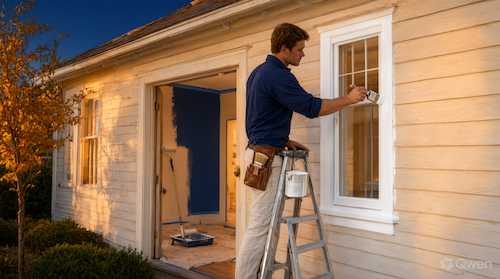
Charlotte gets about 43.6 inches of rain a year with humid summers and a heavy spring pollen season. On siding and trim, that combination produces the familiar cycle: pollen and dirt hold moisture against the surface, mildew appears on the shaded side, and the coating fails at joints before it fails on the field. Prep is where the job is won or lost.
Prep is the scope
Ask what washing, scraping, sanding, patching, caulking, and priming are included, and how much surface repair is covered. A quote that lists paint and labor but not surface work is a price for covering a problem. Compare prep descriptions line by line before comparing totals.
Mildew is a moisture report
Mildew usually appears where air movement is poor: under eaves, behind shrubs, on walls shaded all day. Ask whether the source was investigated — a leaking gutter, a failed caulk joint, irrigation hitting the wall — and what treatment is proposed. Painting over active mildew brings it back.
Siding and trim behave differently
Ask which products are specified for each material. Fiber cement, vinyl, and wood each need different preparation and different coatings, and trim usually fails before the field does. Product names, sheens, and coat counts belong in the written scope.
Summer storms and heat
Ask how the schedule accounts for afternoon thunderstorms and for the heat of direct sun on a wall. Coatings applied to a hot surface can dry too fast to bond. Ask how surfaces are protected between coats and whether the crew returns after weather delays.
Questions to ask before you sign
Where this page stops
This page does not estimate cost or specify products for a particular property. Coating performance depends on the substrate, moisture, preparation, and application, and lead-safe requirements apply to older housing, which should be confirmed with the responsible local authority.
Charlotte metro context
The 2024 ACS 5-year estimates put the metro at about 2.8 million residents and 1.1 million households. About 65.9% of occupied homes are owner-occupied, and about 65.9% of housing units are single-family detached, so most exterior painting happens on private homes. About 29.1% of housing units were built before 1980, so lead-based paint is less likely than in older metros but still possible in the oldest neighborhoods. NOAA's Charlotte station records January averaging 42.1°F, July 80.1°F, and about 43.6 inches of precipitation a year.
Charlotte reference station and housing indicators
| Indicator | Value | Source |
|---|---|---|
| January mean temperature | 42.1°F | NOAA NCEI |
| July mean temperature | 80.1°F | NOAA NCEI |
| July precipitation | 3.74 in. | NOAA NCEI |
| Annual precipitation | 43.6 in. | NOAA NCEI |
| Metro population | 2,768,407 | U.S. Census Bureau |
| Single-family detached share | 65.9% | U.S. Census Bureau |
Station normals are historical averages for one location, not a forecast. Census values describe the metro area, not an individual property.
Frequently Asked Questions
How often should a Charlotte house be repainted?
It depends on the substrate, the previous coating, shade, and moisture. Ask a contractor to assess the current condition rather than relying on a fixed interval.
Why does mildew keep returning on one side?
That side probably stays damp and shaded. Ask whether the moisture source was investigated — a gutter, a downspout, a caulk joint, or vegetation holding water against the wall.
Does pollen damage paint?
Pollen itself is not destructive, but it holds moisture and dirt against the surface and interferes with adhesion if not washed off. Ask how surfaces are cleaned before coating.
What should a painting estimate include?
Surface preparation, carpentry and caulking repair, products with names and sheens, coat counts, protection of adjacent surfaces, schedule, exclusions, and the warranty.
Can exteriors be painted in summer?
It can be done, but heat and thunderstorms affect cure and adhesion. Ask how the schedule accounts for weather and whether surfaces are protected between coats.
What is the population of the Charlotte metro area?
The U.S. Census Bureau's 2024 ACS 5-year estimates report about 2.8 million residents in the metro area. The figure describes regional scale, not the number of homes or providers.
Sources and review date
- American Community Survey 2024 5-year estimates (CBSA tables) — U.S. Census Bureau, 2024 ACS 5-year estimates.
- 1991–2020 station normals — CHARLOTTE DOUGLAS AP, NC US (USW00013881) — NOAA National Centers for Environmental Information, 1991–2020 climate normals.
Reviewed on 2026-11-18.