
Denver, CO · metro guide
Electrical in Denver: Panels, EVs, and Cold-Weather Loads
Denver panels now carry loads nobody planned for: a car, a heat pump, and backup heat on the coldest nights.
Metro snapshot
Denver in numbers
Sources named below each block
- Population
- 3.0M
- Households
- 1.2M
- Housing units
- 1.3M
- People / household
- 2.46
- population ÷ households
Owner-occupied homes 64%
The rest are rented. Owners are the ones who commission most exterior work.
Single-family detached 57%
Detached houses carry their own roof, gutters and exterior walls.
Built before 1980 41%
Older housing stock shapes what fails first: gutters, flashing, pipe material.
Season
The year in Denver
- Precipitation
- 14.5 in
- Snowfall
- —
Average temperature by month, °F — the shape of the year is what decides when exterior work gets done.
Precipitation by month, inches.
| Month | Average temperature (°F) | Precipitation (in) | Snowfall (in) |
|---|---|---|---|
| January | 31.7°F | 0.38 in | — |
| February | 32.7°F | 0.41 in | — |
| March | 41.6°F | 0.86 in | — |
| April | 47.8°F | 1.68 in | — |
| May | 57.4°F | 2.16 in | — |
| June | 68.2°F | 1.94 in | — |
| July | 75.1°F | 2.14 in | — |
| August | 72.9°F | 1.58 in | — |
| September | 64.8°F | 1.35 in | — |
| October | 51.1°F | 0.99 in | — |
| November | 39.4°F | 0.64 in | — |
| December | 31.2°F | 0.35 in | — |
NOAA 1991–2020 climate normals, station DENVER INTL AP, CO US (USW00003017). Station observations, not a metro-wide average — a metro that spans a mountain range can differ by more than this record shows.
Population, households and housing shares: U.S. Census Bureau, American Community Survey 2024 5-year estimates, metropolitan statistical area.
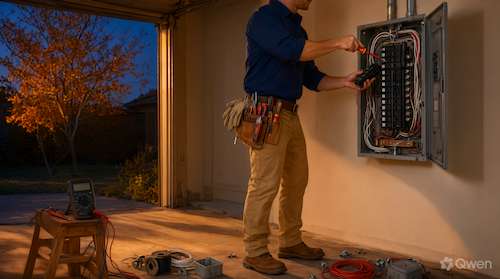
About 41.0% of Denver metro housing units were built before 1980, according to ACS estimates, and many of those homes still have a service sized for a gas furnace, a range, and a dryer. Electrifying heating and adding a vehicle charger changes that arithmetic, and the coldest nights are exactly when the electrical load peaks.
Capacity is a calculation
Ask what the existing service rating is and whether a load calculation was done for the proposed change. A heat pump with auxiliary resistance heat, an EV charger, a hot tub, or a shop can each add significant demand — and they tend to run at the same time in winter. The answer may be load management, a dedicated circuit, a panel change, or a service upgrade.
Panel condition, not just age
Ask what was inspected inside the panel: breaker condition, bus connections, grounding and bonding, and any signs of heat or corrosion. Age alone does not condemn a panel, and a new panel does not fix an overloaded circuit. The finding should be written down so the recommendation follows evidence.
Testing before replacement
Ask which tests support the diagnosis: voltage readings, circuit tracing, insulation testing, thermal imaging, or a panel inspection. Flickering lights and tripping breakers can come from loose connections, overloaded circuits, failing equipment, or a utility supply issue. Replacing parts without a finding often produces a repeat visit.
Permits, inspection, and restoration
Ask who files the permit, who schedules the inspection, and what restoration is included after walls or ceilings are opened. For a service change, confirm how the utility is coordinated and what the inspection sequence looks like before the meter is reconnected.
Questions to ask before approving work
Where this page stops
This page does not assess electrical safety remotely and does not publish local prices. Electrical hazards should be handled by a qualified professional, and permit and inspection requirements must be confirmed with the authority responsible for the address.
Denver metro context
The 2024 ACS 5-year estimates put the metro at about 3.0 million residents and 1.2 million households. About 64.1% of occupied homes are owner-occupied, and about 57.1% of housing units are single-family detached. About 41.0% of housing units were built before 1980. NOAA's Denver station records January averaging 31.7°F, July 75.1°F, and about 14.5 inches of precipitation a year.
Denver reference station and housing indicators
| Indicator | Value | Source |
|---|---|---|
| January mean temperature | 31.7°F | NOAA NCEI |
| July mean temperature | 75.1°F | NOAA NCEI |
| Annual precipitation | 14.5 in. | NOAA NCEI |
| Metro population | 3,002,721 | U.S. Census Bureau |
| Owner-occupied share | 64.1% | U.S. Census Bureau |
| Housing units built before 1980 | 41.0% | U.S. Census Bureau |
Station normals are historical averages for one location, not a forecast. Census values describe the metro area, not an individual property.
Frequently Asked Questions
How do I know if my Denver home needs a panel upgrade?
The decision should follow an assessment of the service rating, panel condition, and the proposed load. Ask whether a load calculation was performed and which findings support the upgrade rather than a replacement based on age alone.
Can I add an EV charger and a heat pump without upgrading?
Sometimes, especially with load management. Ask for a calculation that includes both, assumes winter conditions, and states what happens when the heat pump uses auxiliary heat.
What should an electrical estimate include?
The tested condition, work area, materials, labor, permit assumptions, inspection responsibilities, restoration, exclusions, and warranty. Ask for the test results that support the recommendation.
Why do lights flicker or dim?
Possible causes include loose connections, overloaded circuits, failing equipment, or supply issues. The cause should be identified with testing rather than by replacing parts.
Do I need a permit for electrical work?
Requirements depend on the type of work and the jurisdiction. Confirm with the authority responsible for the address and ask whether permit handling and inspection are included in the scope.
What is the population of the Denver metro area?
The U.S. Census Bureau's 2024 ACS 5-year estimates report about 3.0 million residents in the metro area. The figure describes regional scale, not the number of homes or providers.
Sources and review date
- American Community Survey 2024 5-year estimates (CBSA tables) — U.S. Census Bureau, 2024 ACS 5-year estimates.
- 1991–2020 station normals — DENVER INTL AP, CO US (USW00003017) — NOAA National Centers for Environmental Information, 1991–2020 climate normals.
Reviewed on 2026-11-17.