
Denver, CO · metro guide
Roofing in Denver: Hail, Snow Load, and What to Compare
Denver roofs are judged by hail first and snow second. The rating class and the layers underneath carry the decision.
Metro snapshot
Denver in numbers
Sources named below each block
- Population
- 3.0M
- Households
- 1.2M
- Housing units
- 1.3M
- People / household
- 2.46
- population ÷ households
Owner-occupied homes 64%
The rest are rented. Owners are the ones who commission most exterior work.
Single-family detached 57%
Detached houses carry their own roof, gutters and exterior walls.
Built before 1980 41%
Older housing stock shapes what fails first: gutters, flashing, pipe material.
Season
The year in Denver
- Precipitation
- 14.5 in
- Snowfall
- —
Average temperature by month, °F — the shape of the year is what decides when exterior work gets done.
Precipitation by month, inches.
| Month | Average temperature (°F) | Precipitation (in) | Snowfall (in) |
|---|---|---|---|
| January | 31.7°F | 0.38 in | — |
| February | 32.7°F | 0.41 in | — |
| March | 41.6°F | 0.86 in | — |
| April | 47.8°F | 1.68 in | — |
| May | 57.4°F | 2.16 in | — |
| June | 68.2°F | 1.94 in | — |
| July | 75.1°F | 2.14 in | — |
| August | 72.9°F | 1.58 in | — |
| September | 64.8°F | 1.35 in | — |
| October | 51.1°F | 0.99 in | — |
| November | 39.4°F | 0.64 in | — |
| December | 31.2°F | 0.35 in | — |
NOAA 1991–2020 climate normals, station DENVER INTL AP, CO US (USW00003017). Station observations, not a metro-wide average — a metro that spans a mountain range can differ by more than this record shows.
Population, households and housing shares: U.S. Census Bureau, American Community Survey 2024 5-year estimates, metropolitan statistical area.
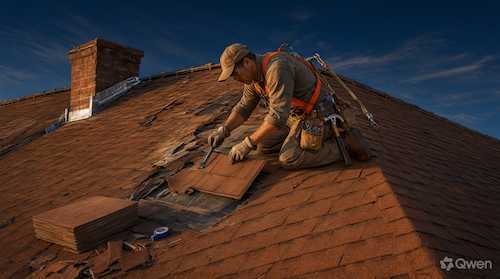
Denver's roofing conversation starts with hail. The metro sits in one of the most hail-prone corridors in the country, and a roof that would last decades elsewhere can be damaged in a single afternoon. Add a cold season with January averaging 31.7°F and about 14.5 inches of precipitation a year, much of it as snow, and the details that matter are impact resistance, ice handling, and what the insurance policy will recognize.
Impact ratings, and what they actually mean
Ask what impact rating the proposed covering carries and who tested it. Ratings describe performance under a standard test, not immunity, and the difference between classes affects both durability and, in many policies, the premium or deductible. Ask for the manufacturer's documentation rather than a verbal claim.
Underlayment and ice protection
Ask what underlayment is specified and where ice-and-water protection is installed. In a climate with freeze-thaw cycles, ice can form at the eaves when snow melts above and refreezes at the edge, backing water up under the covering. That protection belongs at the edges and in valleys, and it is often the first item cut from a low bid.
Ventilation and snow melt
Ask how the attic is ventilated and whether intake and exhaust are balanced. A warm roof deck melts snow from below, which then refreezes at the colder edge — the mechanism behind ice dams. Ventilation and air sealing are part of the roof discussion here, not a separate upgrade.
Insurance claims and documentation
Ask how the contractor documents hail damage: photographs, test squares, and a written scope that distinguishes storm damage from wear. Ask whether they will meet the adjuster on site. A claim is easier when the evidence is collected before anything is removed.
Questions to ask before signing
Where this page stops
This page does not inspect a roof, estimate cost, or interpret an insurance policy. Coverage, deductibles, and claim requirements depend on the policy and the insurer, and code requirements vary by jurisdiction and should be confirmed with the responsible local authority.
Denver metro context
The 2024 ACS 5-year estimates put the metro at about 3.0 million residents and 1.2 million households. About 64.1% of occupied homes are owner-occupied, and about 57.1% of housing units are single-family detached. About 41.0% of housing units were built before 1980. NOAA's Denver station records January averaging 31.7°F, July 75.1°F, and about 14.5 inches of precipitation a year.
Denver reference station and housing indicators
| Indicator | Value | Source |
|---|---|---|
| January mean temperature | 31.7°F | NOAA NCEI |
| July mean temperature | 75.1°F | NOAA NCEI |
| Annual precipitation | 14.5 in. | NOAA NCEI |
| Metro population | 3,002,721 | U.S. Census Bureau |
| Owner-occupied share | 64.1% | U.S. Census Bureau |
| Housing units built before 1980 | 41.0% | U.S. Census Bureau |
Station normals are historical averages for one location, not a forecast. Census values describe the metro area, not an individual property.
Mapped in OpenStreetMap
Roofing businesses mapped in the Denver metro
OpenStreetMap contributors have mapped 37 roofing entries inside the Denver-Aurora-Centennial, CO CBSA; 37 have a name. This is a map-coverage indicator, not a count of all licensed roofing businesses in the metro.
- Mapped entries
- 37
- OSM features
- Phone listed
- 81%
- 30 of 37
- Website listed
- 76%
- 28 of 37
- Street address
- 84%
- 31 of 37
OSM coverage varies by area: a low count can mean low mapping activity, not a small market. OpenStreetMap does not record contractor licenses. To check a license, use the Denver contractor licensing. Denver issues local contractor licenses; Colorado does not license roofers statewide.
Query: craft=roofer.
Snapshot: 2026-11-17. Data:
© OpenStreetMap contributors,
ODbL 1.0.
CBSA boundary:
U.S. Census Bureau, 2023.
Frequently Asked Questions
How do I compare roofing estimates in Denver?
Compare the covering's impact rating and documentation, underlayment and ice-and-water protection, flashing details, ventilation and air sealing, tear-off and decking terms, permit handling, exclusions, and both workmanship and manufacturer warranties.
Should I upgrade to impact-resistant shingles?
It depends on the cost difference, the policy's treatment of ratings, and how long you plan to stay. Ask for the documentation behind each class and what your insurer does with it.
What causes ice dams?
Snow melts on a warm roof deck and refreezes at the colder edge, backing water under the covering. Ventilation, air sealing, and edge protection all affect it.
How is hail damage documented?
Typically with photographs, test squares, and a written scope separating storm damage from normal wear. Ask whether the contractor will meet the adjuster on site.
Does a roof replacement require a permit?
Requirements depend on the jurisdiction and the scope. Confirm with the authority responsible for the address and ask whether permit handling and inspection are included.
What is the population of the Denver metro area?
The U.S. Census Bureau's 2024 ACS 5-year estimates report about 3.0 million residents in the metro area. The figure describes regional scale, not the number of homes or providers.
Sources and review date
- American Community Survey 2024 5-year estimates (CBSA tables) — U.S. Census Bureau, 2024 ACS 5-year estimates.
- 1991–2020 station normals — DENVER INTL AP, CO US (USW00003017) — NOAA National Centers for Environmental Information, 1991–2020 climate normals.
- OpenStreetMap contributors — craft=roofer features in the Denver-Aurora-Centennial, CO CBSA — OpenStreetMap contributors, Snapshot 2026-11-17.
Reviewed on 2026-11-18.