
Atlanta, GA · metro guide
Roofing in Atlanta: Rain, Trees, and What to Compare
Atlanta roofs face about 50 inches of rain a year and a lot of tree cover. The details that fail are usually at debris traps, valleys, and flashing.
Metro snapshot
Atlanta in numbers
Sources named below each block
- Population
- 6.3M
- Households
- 2.3M
- Housing units
- 2.5M
- People / household
- 2.70
- population ÷ households
Owner-occupied homes 66%
The rest are rented. Owners are the ones who commission most exterior work.
Single-family detached 66%
Detached houses carry their own roof, gutters and exterior walls.
Built before 1980 26%
Older housing stock shapes what fails first: gutters, flashing, pipe material.
Season
The year in Atlanta
- Precipitation
- 50.4 in
- Snowfall
- 2.2 in
Average temperature by month, °F — the shape of the year is what decides when exterior work gets done.
Precipitation by month, inches.
Snowfall by month, inches.
| Month | Average temperature (°F) | Precipitation (in) | Snowfall (in) |
|---|---|---|---|
| January | 44.8°F | 4.59 in | 1.0 in |
| February | 48.5°F | 4.55 in | 0.4 in |
| March | 55.6°F | 4.68 in | 0.4 in |
| April | 63.2°F | 3.81 in | 0.0 in |
| May | 71.2°F | 3.56 in | 0.0 in |
| June | 77.9°F | 4.54 in | 0.0 in |
| July | 80.9°F | 4.75 in | 0.0 in |
| August | 80.2°F | 4.30 in | 0.0 in |
| September | 74.9°F | 3.82 in | 0.0 in |
| October | 64.7°F | 3.28 in | 0.0 in |
| November | 54.2°F | 3.98 in | 0.0 in |
| December | 47.3°F | 4.57 in | 0.4 in |
NOAA 1991–2020 climate normals, station ATLANTA HARTSFIELD INTL AP, GA US (USW00013874). Station observations, not a metro-wide average — a metro that spans a mountain range can differ by more than this record shows.
Population, households and housing shares: U.S. Census Bureau, American Community Survey 2024 5-year estimates, metropolitan statistical area.
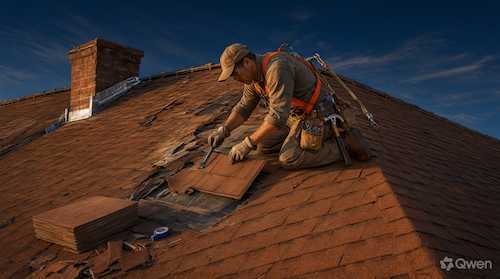
Atlanta is generous to trees and hard on roofs. The metro receives about 50.4 inches of precipitation in a typical year at the Hartsfield station, and much of the housing sits under or near a canopy that drops leaves, seeds, and small branches onto the roof. The result is a specific pattern of wear: debris collects in valleys and behind chimneys, shade keeps surfaces damp longer, and the first place water finds is often a flashing detail rather than the shingle field.
Debris and shade change the maintenance story
Ask how the proposal handles valleys, gutters, and the areas where debris collects. On a shaded roof, organic material holds moisture against the surface, and repeated wetting accelerates wear. A scope that replaces shingles without addressing the collection points can look new and fail in the same places. Cleaning and inspection are part of the comparison, not a separate afterthought.
Rain finds flashing first
With a wet climate, flashing at chimneys, skylights, dormers, and wall transitions deserves close attention. Ask whether flashing is replaced or reused, how step flashing is integrated, and what happens at roof-to-wall junctions. These are the details that decide whether a repair survives the next storm season.
Storm damage and documentation
After a wind or hail event, the useful comparison is documented condition, not the number of damaged shingles a contractor mentions. Ask for dated photos, a written description of the affected areas, and a scope that separates storm repairs from maintenance. Keep the inspection report with any insurance claim number.
Assembly, ventilation, and attic heat
Atlanta summers are long, with July averaging 80.9°F at the station. Ask whether the proposal includes underlayment, ventilation, and attic insulation improvements, and how the roof assembly is expected to handle heat and moisture. Ventilation is not cosmetic: it affects shingle life and attic conditions.
Questions to ask before approving work
Where this page stops
This page does not inspect a roof or publish local prices. Roof condition, tree-related damage, and permit requirements must be confirmed at the property and with the authority responsible for the address.
Atlanta metro context
The 2024 ACS 5-year estimates put the metro at about 6.3 million residents and 2.3 million households. About 66.1% of occupied homes are owner-occupied, and about 66.3% of housing units are single-family detached, so most roof decisions sit with the owner. Only about 26.2% of housing units were built before 1980 — the stock is younger than older metros, but fast growth means roof ages vary widely from neighborhood to neighborhood. NOAA's station records January averaging 44.8°F, July 80.9°F, and about 50.4 inches of precipitation a year.
Atlanta reference station and housing indicators
| Indicator | Value | Source |
|---|---|---|
| January mean temperature | 44.8°F | NOAA NCEI |
| July mean temperature | 80.9°F | NOAA NCEI |
| Annual precipitation | 50.4 in. | NOAA NCEI |
| Annual snowfall | 2.2 in. | NOAA NCEI |
| Metro population | 6,256,377 | U.S. Census Bureau |
| Owner-occupied share | 66.1% | U.S. Census Bureau |
| Single-family detached share | 66.3% | U.S. Census Bureau |
Station normals are historical averages for one location, not a forecast. Census values describe the metro area, not an individual property.
Frequently Asked Questions
How often should an Atlanta roof be inspected?
There is no universal interval. Tree cover, shade, roof age, and past storm exposure all affect how often debris and flashing should be checked. Ask a contractor to document what was observed rather than relying on a calendar rule.
Why do leaks appear at valleys and chimneys?
Those are the places where water is redirected and where debris collects. Flashing, underlayment, and drainage details at valleys and penetrations are common failure points, especially when debris has held moisture against the surface.
What should a roofing proposal include in Atlanta?
The roof area, removal and installation scope, underlayment, ventilation, flashing at penetrations and walls, debris and gutter work, disposal, permit responsibilities, schedule, and warranty terms.
How do I document storm damage?
Keep dated photos of the affected areas, the inspection report, and any insurance claim number together with the proposal. Ask the contractor to separate storm repairs from maintenance items so the scope is clear.
Does shade damage a roof?
Shade itself is not damage, but it keeps surfaces damp longer and can allow debris to hold moisture. The practical response is regular clearing and inspection of the collection points rather than a different shingle.
What is the population of the Atlanta metro area?
The U.S. Census Bureau's 2024 ACS 5-year estimates report about 6.3 million residents in the metro area. The figure describes regional scale, not the number of homes or providers.
Sources and review date
- American Community Survey 2024 5-year estimates (CBSA tables) — U.S. Census Bureau, 2024 ACS 5-year estimates.
- 1991–2020 station normals — ATLANTA HARTSFIELD INTL AP, GA US (USW00013874) — NOAA National Centers for Environmental Information, 1991–2020 climate normals.
Reviewed on 2026-11-17.