
Jacksonville, FL · metro guide
Landscaping in Jacksonville: Sandy Soil, Salt Air, and Storm Wind
Almost every plant problem here is a water problem, and the water drains away in an hour.
Metro snapshot
Jacksonville in numbers
Sources named below each block
- Population
- 1.7M
- Households
- 663K
- Housing units
- 732K
- People / household
- 2.54
- population ÷ households
Owner-occupied homes 67%
The rest are rented. Owners are the ones who commission most exterior work.
Single-family detached 64%
Detached houses carry their own roof, gutters and exterior walls.
Built before 1980 32%
Older housing stock shapes what fails first: gutters, flashing, pipe material.
Season
The year in Jacksonville
- Precipitation
- 53.4 in
- Snowfall
- 0 in
Average temperature by month, °F — the shape of the year is what decides when exterior work gets done.
Precipitation by month, inches.
| Month | Average temperature (°F) | Precipitation (in) | Snowfall (in) |
|---|---|---|---|
| January | 54.2°F | 3.28 in | 0.0 in |
| February | 57.5°F | 2.86 in | 0.0 in |
| March | 62.4°F | 3.29 in | 0.0 in |
| April | 68.1°F | 2.93 in | 0.0 in |
| May | 74.9°F | 3.42 in | 0.0 in |
| June | 80.3°F | 7.60 in | 0.0 in |
| July | 82.5°F | 6.77 in | 0.0 in |
| August | 82.1°F | 6.88 in | 0.0 in |
| September | 78.8°F | 7.56 in | 0.0 in |
| October | 71.2°F | 4.03 in | 0.0 in |
| November | 62.3°F | 2.00 in | 0.0 in |
| December | 56.7°F | 2.78 in | 0.0 in |
NOAA 1991–2020 climate normals, station JACKSONVILLE, FL US (USW00013889). Station observations, not a metro-wide average — a metro that spans a mountain range can differ by more than this record shows.
Population, households and housing shares: U.S. Census Bureau, American Community Survey 2024 5-year estimates, metropolitan statistical area.
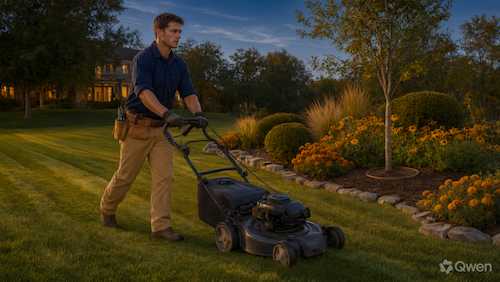
Jacksonville's landscaping constraints are the opposite of a heavy-clay city. Sandy soil drains quickly, which sounds ideal until you notice what it takes with it: water and nutrients pass straight through, so plants that would thrive elsewhere struggle through their first two summers and lawns demand irrigation to look like the ones in the photographs. Add salt air along the beaches and the Intracoastal, tropical storms that test every tree on the lot, and a rainy season that arrives in intense bursts, and the plan has to answer for drainage and wind at the same time.
Sand drains, and that changes the whole plan
Water moves through sandy soil quickly, so the usual advice about avoiding overwatering is reversed here: the risk is that water and dissolved nutrients leave the root zone before the plant can use them. That argues for organic matter worked into beds, mulch that breaks down and is replenished, and irrigation that delivers deeper, less frequent cycles rather than a daily sprinkle. Ask what soil amendment is proposed, how the beds will be edged and mulched, and whether the irrigation schedule is designed for the soil type rather than copied from a default.
Irrigation, water rules and the honest cost
A landscape that needs constant irrigation is a landscape with a monthly bill attached. Local rules on watering and on plant selection have tightened over the years and vary by jurisdiction, so confirm the current requirements for the address before the design is fixed. Ask how the system is zoned, whether it has a rain sensor, whether drip is used for beds rather than spray heads, and who adjusts the controller between the wet and dry seasons. A design that assumes unlimited water is the most common way these projects fail financially.
Salt at the beaches and along the river
Properties near the ocean or exposed to onshore wind see salt spray burn foliage, and irrigation with brackish water compounds it. Salt-tolerant species, a windbreak hedge, and leaching rain are the practical tools. Ask whether the plant list was chosen for the exposure of the specific lot, because a list that works three miles inland may fail on a dune-front property. Also ask where the irrigation draws from — a shallow well in a coastal area can be saltier than expected.
Trees that fail in storms
Tropical systems and strong summer thunderstorms make tree selection a safety question. Fast-growing species with weak wood are the ones that end up on roofs, and a canopy that has never been thinned becomes a sail. Ask for structural pruning while trees are young, for species with a form that resists wind, and for a realiztic assessment of existing trees — including whether any should come out. Removing a large tree is expensive and unpleasant, and it is still cheaper than a roof.
Where the water goes in a downpour
The rainy season brings intense rainfall, and a flat lot with sandy soil can still flood if the water table rises or if a swale is blocked. The critical checks are that grade falls away from the house, that swales and drains are clear, and that any low point near the foundation has a deliberate path rather than a puddle. In low-lying parts of the metro, the honest answer may be that the lot floods sometimes and the planting should be chosen accordingly. Ask where water stands and for how long.
What to put in a landscaping brief
Where this page stops
This page does not evaluate a property and publishes no prices. Soil, drainage and utility locations must be confirmed on site, and water-use rules and tree protection requirements are set locally and change over time.
Jacksonville metro context
The 2024 ACS 5-year estimates count about 1.68 million residents in 663,101 households across 732,419 housing units. About 63.7% of units are single-family detached and 66.5% are owner-occupied, and 31.6% were built before 1980 — a relatively young stock with a large detached share, which means most landscaping decisions are made by the household that owns the lot. A climate station is not reported for this metro in the site dataset, so no temperature or precipitation figures appear here.
Jacksonville housing and ownership indicators
| Indicator | Value | Source |
|---|---|---|
| Metro population | 1,683,960 | U.S. Census Bureau |
| Metro households | 663,101 | U.S. Census Bureau |
| Housing units | 732,419 | U.S. Census Bureau |
| Housing units built before 1980 | 31.6% | U.S. Census Bureau |
| Single-family detached share | 63.7% | U.S. Census Bureau |
| Owner-occupied share | 66.5% | U.S. Census Bureau |
No climate normals are shown because no station record is held for this metro in the site dataset. Soil, drainage and salt exposure vary significantly between inland neighborhoods and the coastal edge.
Frequently Asked Questions
Why do my plants struggle in sandy soil?
Because water and nutrients move out of the root zone quickly. Amendment with organic matter, mulch that is replenished, and deeper less frequent watering make more difference than choosing tougher plants.
How often should irrigation run?
Less often and for longer than most default schedules, so water reaches the roots rather than wetting the surface. The controller should be adjusted between the wet and dry seasons, and a rain sensor should prevent watering during storms.
What survives salt spray near the beach?
Species adapted to coastal exposure, with the windward side considered in the layout and a hedge or screen as protection. A list designed for an inland yard will typically burn at the beach, and irrigation source quality matters too.
Should I remove a large tree before storm season?
That is an arborist's judgement, not a landscaper's. Trees with weak wood, poor structure or damage are the ones that fail. Structural pruning helps, but some trees are simply in the wrong place relative to the house.
Does my lot need a drainage fix?
If water stands near the foundation or in the same low spot after every storm, yes. Regrading, clearing swales and extending downspout discharge are the usual first steps, and in low-lying areas the honest answer may be to plant for occasional flooding.
Is a lawn realiztic here?
Many households maintain one, and many more are converting parts of it to beds and groundcover to reduce irrigation. The trade-off is water and maintenance against appearance, and local rules on watering are part of the calculation.
Sources and review date
- American Community Survey 2024 5-year estimates (CBSA tables) — U.S. Census Bureau, 2024 ACS 5-year estimates.
Reviewed on 2026-11-18.