
Chicago, IL-IN · metro guide
Landscaping in Chicago: Frost, Rain, and What to Compare
Chicago landscapes are shaped by winter as much as summer. Drainage, freeze-thaw, and species choice decide what survives the cycle.
Metro snapshot
Chicago in numbers
Sources named below each block
- Population
- 9.4M
- Households
- 3.6M
- Housing units
- 3.9M
- People / household
- 2.57
- population ÷ households
Owner-occupied homes 66%
The rest are rented. Owners are the ones who commission most exterior work.
Single-family detached 52%
Detached houses carry their own roof, gutters and exterior walls.
Built before 1980 63%
Older housing stock shapes what fails first: gutters, flashing, pipe material.
Season
The year in Chicago
- Precipitation
- 37.9 in
- Snowfall
- 38.4 in
Average temperature by month, °F — the shape of the year is what decides when exterior work gets done.
Precipitation by month, inches.
Snowfall by month, inches.
| Month | Average temperature (°F) | Precipitation (in) | Snowfall (in) |
|---|---|---|---|
| January | 25.2°F | 1.99 in | 11.3 in |
| February | 28.8°F | 1.97 in | 10.7 in |
| March | 39.0°F | 2.45 in | 5.5 in |
| April | 49.7°F | 3.75 in | 1.3 in |
| May | 60.6°F | 4.49 in | 0.0 in |
| June | 70.6°F | 4.10 in | 0.0 in |
| July | 75.4°F | 3.71 in | 0.0 in |
| August | 73.8°F | 4.25 in | 0.0 in |
| September | 66.3°F | 3.19 in | 0.0 in |
| October | 54.0°F | 3.43 in | 0.2 in |
| November | 41.3°F | 2.42 in | 1.8 in |
| December | 30.5°F | 2.11 in | 7.6 in |
NOAA 1991–2020 climate normals, station CHICAGO OHARE INTL AP, IL US (USW00094846). Station observations, not a metro-wide average — a metro that spans a mountain range can differ by more than this record shows.
Population, households and housing shares: U.S. Census Bureau, American Community Survey 2024 5-year estimates, metropolitan statistical area.
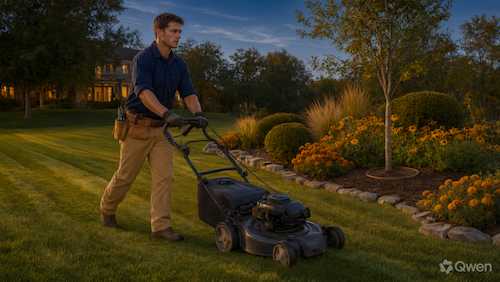
A Chicago landscape has to work in two directions. Summer is warm and wet — 37.9 inches of precipitation a year at O'Hare — while January averages 25.2°F and the ground freezes. Plants and hardscape that look right in June can fail in February if drainage and species choice were treated as decoration.
Drainage and freeze-thaw
Ask what the plan does with roof runoff, slope, and low spots. Water that pools in a bed can heave plants and crack hardscape when it freezes. Grading, downspout routing, and any drainage structures should be described explicitly rather than assumed. On older properties, the existing drainage pattern may already be part of the problem.
Species suited to the winter
Request a plant schedule with botanical names, sizes at installation, and mature size. Ask how the species handle the local winter, soil, and moisture, and whether any are high-maintenance or poorly suited to the exposure. A design that ignores winter hardiness is a one-season plan.
Hardscape and freeze movement
Pavers, retaining walls, steps, and edging move with freeze-thaw. Ask how base preparation and drainage are handled and what the design assumes about soil movement. A hardscape detail that works in a mild climate may not survive several Chicago winters.
Timing and establishment
Ask for a sequence that separates grading and drainage from planting, and for the planting window the designer recommends. New plants need watering and monitoring through their first season, and fall planting has a different aftercare requirement from spring. Confirm who is responsible during establishment.
Questions to ask before approving a design
Where this page stops
This page does not design a landscape or evaluate a specific site. Soil, drainage, exposure, and any local planting or tree rules must be assessed at the property and confirmed with the responsible local authority.
Chicago metro context
The 2024 ACS 5-year estimates put the metro at about 9.4 million residents and 3.6 million households. About 65.5% of occupied homes are owner-occupied, and about 51.5% of housing units are single-family detached, so most landscape decisions sit with the owner. About 62.7% of housing units were built before 1980, so mature trees, older paving, and existing drainage are common starting points. NOAA's O'Hare station records January averaging 25.2°F, July 75.4°F, about 37.9 inches of precipitation, and 38.4 inches of snow in a typical year.
Chicago reference station and housing indicators
| Indicator | Value | Source |
|---|---|---|
| January mean temperature | 25.2°F | NOAA NCEI |
| July mean temperature | 75.4°F | NOAA NCEI |
| Annual precipitation | 37.9 in. | NOAA NCEI |
| Annual snowfall | 38.4 in. | NOAA NCEI |
| Metro population | 9,371,595 | U.S. Census Bureau |
| Single-family detached share | 51.5% | U.S. Census Bureau |
Station normals are historical averages for one location, not a forecast. Census values describe the metro area, not an individual property.
Frequently Asked Questions
How do I compare landscaping proposals in Chicago?
Compare the site plan, grading and drainage scope, plant schedule with sizes, hardscape materials, cleanup, and maintenance terms. Ask each provider to price the same plan.
Why does freeze-thaw matter for a landscape?
Water in soil and under hardscape expands when it freezes, which can heave plants, crack paving, and move walls. Drainage and base preparation should be described explicitly.
When is the best time to plant in Chicago?
It depends on the species and the site. Ask the designer for the recommended planting window and the aftercare plan, because spring and fall planting have different watering and establishment requirements.
Should I keep existing trees?
Sometimes. Ask how the design accounts for root zones, shade, and construction access, and whether any tree work requires a separate arborist or local approval.
What maintenance will new plants need?
New plantings usually need watering and monitoring during establishment. Ask for a written care schedule and confirm who is responsible for it.
What is the population of the Chicago metro area?
The U.S. Census Bureau's 2024 ACS 5-year estimates report about 9.4 million residents in the metro area. The figure describes regional scale, not the number of homes or providers.
Sources and review date
- American Community Survey 2024 5-year estimates (CBSA tables) — U.S. Census Bureau, 2024 ACS 5-year estimates.
- 1991–2020 station normals — CHICAGO OHARE INTL AP, IL US (USW00094846) — NOAA National Centers for Environmental Information, 1991–2020 climate normals.
Reviewed on 2026-11-17.