
St. Louis, MO-IL · metro guide
Landscaping in St. Louis: Clay Soil and Four Seasons
St. Louis gardens have to handle wet springs, humid summers, and freezing winters in the same soil.
Metro snapshot
St. Louis in numbers
Sources named below each block
- Population
- 2.8M
- Households
- 1.2M
- Housing units
- 1.3M
- People / household
- 2.42
- population ÷ households
Owner-occupied homes 70%
The rest are rented. Owners are the ones who commission most exterior work.
Single-family detached 71%
Detached houses carry their own roof, gutters and exterior walls.
Built before 1980 58%
Older housing stock shapes what fails first: gutters, flashing, pipe material.
Season
The year in St. Louis
- Precipitation
- 41.7 in
- Snowfall
- 16.6 in
Average temperature by month, °F — the shape of the year is what decides when exterior work gets done.
Precipitation by month, inches.
Snowfall by month, inches.
| Month | Average temperature (°F) | Precipitation (in) | Snowfall (in) |
|---|---|---|---|
| January | 32.1°F | 2.59 in | 5.7 in |
| February | 36.7°F | 2.23 in | 4.3 in |
| March | 46.6°F | 3.50 in | 2.3 in |
| April | 57.5°F | 4.73 in | 0.2 in |
| May | 67.5°F | 4.82 in | 0.0 in |
| June | 76.5°F | 4.49 in | 0.0 in |
| July | 80.4°F | 3.93 in | 0.0 in |
| August | 78.8°F | 3.38 in | 0.0 in |
| September | 71.0°F | 2.96 in | 0.0 in |
| October | 59.1°F | 3.15 in | 0.0 in |
| November | 46.5°F | 3.42 in | 0.9 in |
| December | 36.5°F | 2.50 in | 3.2 in |
NOAA 1991–2020 climate normals, station ST LOUIS LAMBERT INTL AP, MO US (USW00013994). Station observations, not a metro-wide average — a metro that spans a mountain range can differ by more than this record shows.
Population, households and housing shares: U.S. Census Bureau, American Community Survey 2024 5-year estimates, metropolitan statistical area.
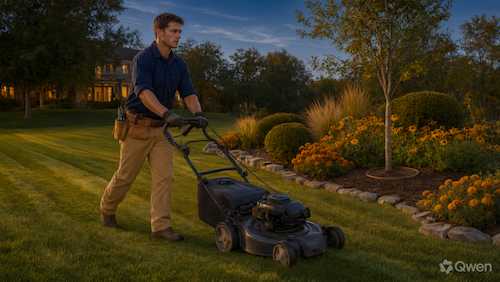
St. Louis gets about 41.7 inches of rain a year, with humid summers and winters that freeze, on soil that is often heavy clay. That combination is hard on plants: wet springs drown roots, humid summers encourage disease, and freeze-thaw heaves anything that was planted too shallow. The plan has to work across all three conditions, not just the pleasant weeks in May.
Clay and drainage
Ask how the soil was assessed and what amendment or drainage is included. Clay absorbs water slowly and holds it, so a planting hole can fill like a bucket and roots can rot. Ask whether the plan accounts for that with amendment, mounding, or species that tolerate wet feet.
Plant selection for humidity
Ask which plants are proposed and why they suit the site: sun exposure, soil moisture, and air movement. High summer humidity favors fungal problems in some species, especially where plants are crowded or shaded all day. A plant list without those reasons is a shopping list.
Shade trees and their consequences
Ask how the plan accounts for mature tree size, root spread, and the shade the canopy will create. A tree planted for privacy can shade out the lawn in ten years. Ask about species selection, planting distance from the house and utilities, and who is responsible for future pruning.
Seasonal maintenance
Ask what the planting needs in each season: spring cleanup, summer watering, autumn leaf removal, and winter protection for tender species. Ask who does that work in the first year and whether replacement of failed plants is included. A landscape that needs work nobody planned for becomes a liability.
Questions to ask before approving a plan
Where this page stops
This page does not design a landscape or estimate cost for a specific property. Plant suitability, drainage requirements, and municipal rules vary by address and should be confirmed locally.
St. Louis metro context
The 2024 ACS 5-year estimates put the metro at about 2.8 million residents and 1.2 million households. About 70.4% of occupied homes are owner-occupied, and about 70.6% of housing units are single-family detached, so most landscaping work happens on private lots. About 58.3% of housing units were built before 1980. NOAA's St. Louis station records January averaging 32.1°F, July 80.4°F, and about 41.7 inches of precipitation a year.
St. Louis reference station and housing indicators
| Indicator | Value | Source |
|---|---|---|
| January mean temperature | 32.1°F | NOAA NCEI |
| July mean temperature | 80.4°F | NOAA NCEI |
| Annual precipitation | 41.7 in. | NOAA NCEI |
| Metro population | 2,810,850 | U.S. Census Bureau |
| Owner-occupied share | 70.4% | U.S. Census Bureau |
| Single-family detached share | 70.6% | U.S. Census Bureau |
Station normals are historical averages for one location, not a forecast. Census values describe the metro area, not an individual property.
Frequently Asked Questions
What should a St. Louis landscaping estimate include?
Ask for the plan drawing, plant list with sizes, soil amendment and drainage work, mulch, irrigation if any, hardscape, grading, disposal, a schedule, exclusions, and the establishment terms.
Why do plants die in clay soil?
Clay holds water, and a planting hole can fill like a bucket, drowning roots. Amendment, mounding, and species choice all affect whether plants establish.
How much shade will a new tree create?
It depends on the species and the mature canopy size. Ask about mature height and spread, and how the plan accounts for the shade a tree will cast in ten to twenty years.
Does humidity cause plant disease?
It can, especially where air movement is poor or plants are crowded. Ask why each plant was chosen for its spot and how spacing accounts for airflow.
Who replaces plants that die in the first year?
It depends on the contract. Ask whether replacement is included, for how long, and under what conditions, such as proper watering or maintenance by the owner.
What is the population of the St. Louis metro area?
The U.S. Census Bureau's 2024 ACS 5-year estimates report about 2.8 million residents in the metro area. The figure describes regional scale, not the number of homes or providers.
Sources and review date
- American Community Survey 2024 5-year estimates (CBSA tables) — U.S. Census Bureau, 2024 ACS 5-year estimates.
- 1991–2020 station normals — ST LOUIS LAMBERT INTL AP, MO US (USW00013994) — NOAA National Centers for Environmental Information, 1991–2020 climate normals.
Reviewed on 2026-11-18.