
New York, NY-NJ · metro guide
Landscaping in New York: Small Spaces, Water, and What to Compare
New York landscaping is container, courtyard, and terrace work as often as backyard work. Drainage, weight, and light decide what survives.
Metro snapshot
New York in numbers
Sources named below each block
- Population
- 19.8M
- Households
- 7.4M
- Housing units
- 8.0M
- People / household
- 2.67
- population ÷ households
Owner-occupied homes 52%
The rest are rented. Owners are the ones who commission most exterior work.
Single-family detached 35%
Detached houses carry their own roof, gutters and exterior walls.
Built before 1980 73%
Older housing stock shapes what fails first: gutters, flashing, pipe material.
Season
The year in New York
- Precipitation
- 49.5 in
- Snowfall
- 29.8 in
Average temperature by month, °F — the shape of the year is what decides when exterior work gets done.
Precipitation by month, inches.
Snowfall by month, inches.
| Month | Average temperature (°F) | Precipitation (in) | Snowfall (in) |
|---|---|---|---|
| January | 33.7°F | 3.64 in | 8.8 in |
| February | 35.9°F | 3.19 in | 10.1 in |
| March | 42.8°F | 4.29 in | 5.0 in |
| April | 53.7°F | 4.09 in | 0.4 in |
| May | 63.2°F | 3.96 in | 0.0 in |
| June | 72.0°F | 4.54 in | 0.0 in |
| July | 77.5°F | 4.60 in | 0.0 in |
| August | 76.1°F | 4.56 in | 0.0 in |
| September | 69.2°F | 4.31 in | 0.0 in |
| October | 57.9°F | 4.38 in | 0.1 in |
| November | 48.0°F | 3.58 in | 0.5 in |
| December | 39.1°F | 4.38 in | 4.9 in |
NOAA 1991–2020 climate normals, station NEW YORK CNTRL PK TWR, NY US (USW00094728). Station observations, not a metro-wide average — a metro that spans a mountain range can differ by more than this record shows.
Population, households and housing shares: U.S. Census Bureau, American Community Survey 2024 5-year estimates, metropolitan statistical area.
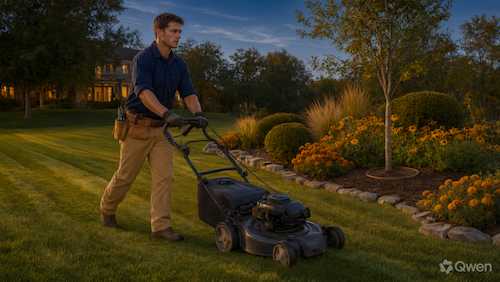
Landscaping in New York is usually a small-space problem. A courtyard behind a rowhouse, a terrace on a co-op roof, or a narrow side yard has to handle the same rain as a suburban lot with a fraction of the soil. About 73% of metro housing units were built before 1980, according to ACS estimates, and only about 34.9% are single-family detached, so the site is often shared, paved, or elevated.
Start with the site, not the plants
Ask what was observed: how much direct sun the space gets, where water drains, whether the surface is soil, concrete, or a roof membrane, and how much weight the structure can carry. On terraces and roofs, container weight and drainage are structural questions, not decorative ones. A design that ignores them can damage the building or fail in the first season.
Water and drainage in tight spaces
Ask how irrigation reaches the space, how runoff leaves it, and whether drainage is connected to a safe outlet. Hand-watering is common in small gardens, but it has to match the plant palette and the owner's schedule. In courtyards, water that cannot drain can pool against the building.
Light conditions by area
Ask for a sun and shade assessment by area, not a single label for the property. A courtyard may be shaded most of the day while a terrace is exposed to wind and full sun. Plant selection should follow the observed conditions, and containers dry out faster than ground beds.
Approvals and shared space
In a co-op or condo, the roof or courtyard may be common property. Ask who owns the space, whether board approval or an alteration agreement is required, and how insurance and access work. If you rent, confirm what the lease allows before ordering plants or containers.
Questions to ask before approving a design
Where this page stops
This page does not design a landscape or evaluate structural capacity. Soil, drainage, weight, and any local rules must be assessed at the property and confirmed with the responsible engineer or authority where applicable.
New York metro context
The 2024 ACS 5-year estimates put the metro at about 19.8 million residents and 7.4 million households. About 51.5% of occupied homes are owner-occupied, and about 34.9% of housing units are single-family detached, which means many garden projects happen in shared or attached buildings. About 73% of housing units were built before 1980, so mature trees, old paving, and drainage patterns are common starting points. These figures describe the metro, not a specific property.
New York metro housing indicators
| Indicator | Value |
|---|---|
| Population | 19,798,537 |
| Households | 7,409,947 |
| Owner-occupied share | 51.5% |
| Single-family detached share | 34.9% |
| Housing units built before 1980 | 73.0% |
Metro-level estimates. Structure mix does not describe a specific courtyard, terrace, or yard.
Frequently Asked Questions
How do I compare landscaping proposals for a New York courtyard or terrace?
Compare the site assessment, sun and shade observations, drainage plan, containers and weights, irrigation, plant schedule, and maintenance terms. Ask each provider to price the same plan.
Can I plant on a roof terrace?
Sometimes, but weight, drainage, waterproofing, and access have to be assessed first. In a co-op or condo, the building's approval and insurance requirements also apply.
Why does drainage matter in a small garden?
Water that cannot leave a courtyard or terrace can pool against the building or saturate containers. Drainage should be described explicitly rather than assumed.
How often will container plants need water?
Containers dry out faster than ground beds, especially in sun and wind. Ask for an irrigation or watering plan that matches the plant palette and the owner's availability.
Do I need approval to change a shared courtyard?
Often yes. Ask the board or managing agent who owns the space, what approval is required, and how access and insurance are handled.
What is the population of the New York metro area?
The U.S. Census Bureau's 2024 ACS 5-year estimates report about 19.8 million residents in the metro area. The figure describes regional scale, not the number of homes or providers.
Sources and review date
- American Community Survey 2024 5-year estimates (CBSA tables) — U.S. Census Bureau, 2024 ACS 5-year estimates.
Reviewed on 2026-11-17.