
New York, NY-NJ · metro guide
HVAC in New York: Repairs, Replacement, and What to Compare
In a metro where most housing predates 1980, heating and cooling decisions often hinge on the distribution system and electrical capacity, not the equipment alone.
Metro snapshot
New York in numbers
Sources named below each block
- Population
- 19.8M
- Households
- 7.4M
- Housing units
- 8.0M
- People / household
- 2.67
- population ÷ households
Owner-occupied homes 52%
The rest are rented. Owners are the ones who commission most exterior work.
Single-family detached 35%
Detached houses carry their own roof, gutters and exterior walls.
Built before 1980 73%
Older housing stock shapes what fails first: gutters, flashing, pipe material.
Season
The year in New York
- Precipitation
- 49.5 in
- Snowfall
- 29.8 in
Average temperature by month, °F — the shape of the year is what decides when exterior work gets done.
Precipitation by month, inches.
Snowfall by month, inches.
| Month | Average temperature (°F) | Precipitation (in) | Snowfall (in) |
|---|---|---|---|
| January | 33.7°F | 3.64 in | 8.8 in |
| February | 35.9°F | 3.19 in | 10.1 in |
| March | 42.8°F | 4.29 in | 5.0 in |
| April | 53.7°F | 4.09 in | 0.4 in |
| May | 63.2°F | 3.96 in | 0.0 in |
| June | 72.0°F | 4.54 in | 0.0 in |
| July | 77.5°F | 4.60 in | 0.0 in |
| August | 76.1°F | 4.56 in | 0.0 in |
| September | 69.2°F | 4.31 in | 0.0 in |
| October | 57.9°F | 4.38 in | 0.1 in |
| November | 48.0°F | 3.58 in | 0.5 in |
| December | 39.1°F | 4.38 in | 4.9 in |
NOAA 1991–2020 climate normals, station NEW YORK CNTRL PK TWR, NY US (USW00094728). Station observations, not a metro-wide average — a metro that spans a mountain range can differ by more than this record shows.
Population, households and housing shares: U.S. Census Bureau, American Community Survey 2024 5-year estimates, metropolitan statistical area.
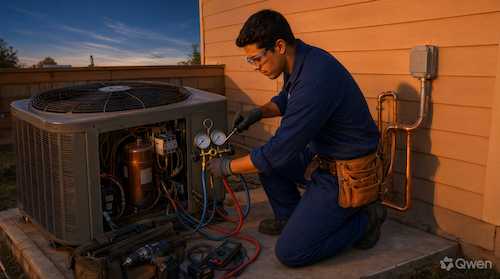
New York heating and cooling problems have a way of becoming building problems. A cold snap exposes a radiator that never balances, a heat wave turns a single window unit into the only defense for a bedroom, and a replacement proposal arrives with questions about risers, electrical service, and who is allowed to touch the wall. About 73% of metro housing units were built before 1980, according to ACS estimates, so the equipment is rarely the whole story.
Know which system you actually have
Steam radiators, hot-water baseboards, forced-air ducts, and ductless units fail in different ways and are compared differently. Before discussing brands, ask what distributes the heat or cooling, where the equipment sits, and what controls it. A proposal for a furnace and a proposal for a boiler are not alternatives, even if both are described as 'a new system'.
The diagnosis should name a measurement
For a repair, ask what was tested: supply and return temperatures, static pressure, combustion readings, refrigerant pressures, or electrical measurements. In older buildings, uneven heat is often a balancing or distribution issue rather than a failed boiler. A parts list without a measurement is a guess, and it can leave the original symptom in place.
Replacement, capacity, and electrical capacity
A replacement proposal should state the load calculation basis, the proposed capacity, the equipment models, and what electrical work is required. In pre-1980 buildings, the circuit serving the equipment and the capacity of the panel are part of the scope, not an afterthought. Ask whether the proposal includes a new disconnect, breaker, or wiring, and who confirms the electrical requirements for the unit.
Co-ops, condos, and rentals
Only about half of occupied homes in the metro are owner-occupied, according to ACS estimates. If you rent, ask who authorizes the work and who is responsible for restoration. In a co-op or condo, ask whether board approval, an alteration agreement, or building access rules apply before equipment is ordered. For a replacement, confirm how the equipment gets to the roof or basement and who repairs the wall afterwards.
Questions worth asking before you sign
Limits of this guide
This page does not diagnose a system remotely and does not publish local prices. Equipment condition, refrigerant handling, venting, and permit requirements must be confirmed at the property and with the responsible authority.
New York metro context
The 2024 ACS 5-year estimates put the metro at about 19.8 million residents and 7.4 million households. About 51.5% of occupied homes are owner-occupied, and only about 34.9% of housing units are single-family detached. That mix matters for HVAC work: a large share of projects involve a building system, a management company, or a board rather than a single owner. The figures describe the metro, not a specific building.
New York metro housing indicators
| Indicator | Value |
|---|---|
| Population | 19,798,537 |
| Households | 7,409,947 |
| Owner-occupied share | 51.5% |
| Housing units built before 1980 | 73.0% |
| Single-family detached share | 34.9% |
Metro-level estimates. Building age does not establish the condition of a specific system.
Frequently Asked Questions
How do I know whether to repair or replace my HVAC system in New York?
The decision usually turns on the age and condition of the equipment, the cost of the diagnosed repair relative to replacement, and whether the same problem keeps returning. Ask for the measurements behind the recommendation, especially in older buildings where distribution problems can mimic equipment failure.
What should an HVAC replacement quote include?
Equipment models and capacity, the load calculation basis, included duct or electrical work, controls, commissioning steps, permit handling, exclusions, and both equipment and labor warranty terms.
Do I need permission to replace HVAC equipment in a co-op or condo?
Often yes. Boards may require an alteration agreement, proof of insurance, and approved contractors, and building access rules can affect scheduling. Ask the managing agent before ordering equipment or signing a contract.
Why are some rooms hot or cold in older New York buildings?
Uneven temperatures can come from balancing, radiator valves, blocked returns, duct leakage, or a system that was never sized for the current layout. The cause should be identified with measurements rather than by replacing equipment first.
Is maintenance required to keep a warranty valid?
Manufacturer terms vary. Ask for the warranty document, confirm what maintenance is required, and keep records of the work performed.
What is the population of the New York metro area?
The U.S. Census Bureau's 2024 ACS 5-year estimates report about 19.8 million residents in the metro area. The figure describes regional scale, not the number of homes or providers.
Sources and review date
- American Community Survey 2024 5-year estimates (CBSA tables) — U.S. Census Bureau, 2024 ACS 5-year estimates.
Reviewed on 2026-11-17.