
Philadelphia, PA-NJ-DE-MD · metro guide
HVAC in Philadelphia: Old Houses, New Equipment, and What to Compare
Philadelphia heating and cooling decisions happen in houses that were never designed for ductwork. The distribution is the hard part.
Metro snapshot
Philadelphia in numbers
Sources named below each block
- Population
- 6.3M
- Households
- 2.5M
- Housing units
- 2.6M
- People / household
- 2.54
- population ÷ households
Owner-occupied homes 67%
The rest are rented. Owners are the ones who commission most exterior work.
Single-family detached 43%
Detached houses carry their own roof, gutters and exterior walls.
Built before 1980 67%
Older housing stock shapes what fails first: gutters, flashing, pipe material.
Season
The year in Philadelphia
- Precipitation
- 44.1 in
- Snowfall
- 23.1 in
Average temperature by month, °F — the shape of the year is what decides when exterior work gets done.
Precipitation by month, inches.
Snowfall by month, inches.
| Month | Average temperature (°F) | Precipitation (in) | Snowfall (in) |
|---|---|---|---|
| January | 33.7°F | 3.13 in | 7.1 in |
| February | 35.9°F | 2.75 in | 8.4 in |
| March | 43.6°F | 3.96 in | 3.6 in |
| April | 54.5°F | 3.47 in | 0.3 in |
| May | 64.3°F | 3.34 in | 0.0 in |
| June | 73.5°F | 4.04 in | 0.0 in |
| July | 78.7°F | 4.38 in | 0.0 in |
| August | 76.8°F | 4.29 in | 0.0 in |
| September | 69.9°F | 4.40 in | 0.0 in |
| October | 58.2°F | 3.47 in | 0.0 in |
| November | 47.4°F | 2.91 in | 0.2 in |
| December | 38.6°F | 3.97 in | 3.5 in |
NOAA 1991–2020 climate normals, station PHILADELPHIA INTL AP, PA US (USW00013739). Station observations, not a metro-wide average — a metro that spans a mountain range can differ by more than this record shows.
Population, households and housing shares: U.S. Census Bureau, American Community Survey 2024 5-year estimates, metropolitan statistical area.
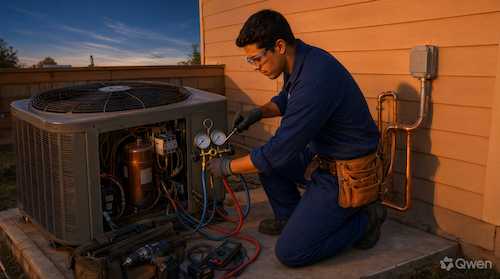
About 66.6% of metro housing units were built before 1980, according to ACS estimates, and only about 43.4% are single-family detached. That means a lot of HVAC work happens in rowhouses and twins with radiators, plaster walls, and limited space for ductwork. The equipment is the easy decision; how the air or water gets distributed is what determines whether the house is comfortable.
Load calculation before equipment
Ask whether a load calculation was performed and what it assumed about insulation, windows, and air sealing. In an old house with leaky windows and uninsulated walls, guessing from square footage usually produces an oversized system that short-cycles and never removes humidity properly.
Distribution is the design problem
Ask how the system delivers heat and cooling to each room: new ducts, mini-split heads, or a hydronic system. In rowhouses, duct runs often have to cross a party wall or pass through closets and soffits. Ask where the equipment and lines will physically go before discussing brand or efficiency.
Radiators, boilers, and heat pumps
If the house has radiators and a boiler, ask how a heat pump proposal interacts with the existing system: full replacement, hybrid operation, or a separate system for part of the house. Ask what happens on the coldest days and how domestic hot water is handled if the boiler is removed.
Humidity and old-building air
Ask how the design addresses summer humidity and winter ventilation. A tight old house with new windows can hold moisture, and kitchen and bath exhaust that discharges into a wall cavity or attic creates a different problem. Ventilation should be part of the conversation, not an afterthought.
Questions to ask before you decide
Where this page stops
This page does not diagnose an HVAC system remotely and does not publish local prices. Equipment selection, refrigerant handling, and permit requirements must be confirmed on site by a qualified professional and the responsible local authority.
Philadelphia metro context
The 2024 ACS 5-year estimates put the metro at about 6.3 million residents and 2.5 million households. About 66.8% of occupied homes are owner-occupied, and about 43.4% of housing units are single-family detached, so many households share walls and mechanical constraints with neighbors. About 66.6% of housing units were built before 1980.
Philadelphia metro housing indicators
| Indicator | Value | Source |
|---|---|---|
| Metro population | 6,272,014 | U.S. Census Bureau |
| Households | 2,467,761 | U.S. Census Bureau |
| Owner-occupied share | 66.8% | U.S. Census Bureau |
| Single-family detached share | 43.4% | U.S. Census Bureau |
| Housing units built before 1980 | 66.6% | U.S. Census Bureau |
Census values describe the metro area, not an individual property. A climate station is not reported for this metro in the site dataset.
Frequently Asked Questions
How do I compare HVAC quotes in Philadelphia?
Compare the load calculation, equipment models and capacity, how air or water is distributed to each room, duct or line routing, electrical work, permit handling, startup measurements, exclusions, and both equipment and labor warranties.
Can a rowhouse get central air?
It depends on the layout and where ducts can run. Some homes use a conventional system, others use mini-split heads or a high-velocity system. Ask where the equipment and lines will go before comparing prices.
Should I keep my radiators when adding cooling?
That is a design choice. Some households keep the radiators for heat and add a separate cooling system; others replace both. Ask what each option costs to install and to run, and what happens to domestic hot water.
Why does an old house feel damp in summer?
Oversized equipment, short runtime, and limited ventilation all contribute. Ask for measurements of indoor humidity and airflow before deciding on equipment changes.
Does a new system require a permit?
Requirements depend on the work and the jurisdiction. Confirm with the authority responsible for the address and ask whether permit handling and inspection are included in the scope.
What is the population of the Philadelphia metro area?
The U.S. Census Bureau's 2024 ACS 5-year estimates report about 6.3 million residents in the metro area. The figure describes regional scale, not the number of homes or providers.
Sources and review date
- American Community Survey 2024 5-year estimates (CBSA tables) — U.S. Census Bureau, 2024 ACS 5-year estimates.
Reviewed on 2026-11-17.
Other Home Services in Philadelphia–Camden–Wilmington
All guides for the Philadelphia–Camden–Wilmington metro area