
Orlando, FL · metro guide
Landscaping in Orlando: Sand, Storms and Year-Round Growth
The growing season never stops here, which makes installation easy and maintenance the real decision.
Metro snapshot
Orlando in numbers
Sources named below each block
- Population
- 2.8M
- Households
- 1.0M
- Housing units
- 1.1M
- People / household
- 2.73
- population ÷ households
Owner-occupied homes 63%
The rest are rented. Owners are the ones who commission most exterior work.
Single-family detached 59%
Detached houses carry their own roof, gutters and exterior walls.
Built before 1980 24%
Older housing stock shapes what fails first: gutters, flashing, pipe material.
Season
The year in Orlando
- Precipitation
- 51.5 in
- Snowfall
- 0 in
Average temperature by month, °F — the shape of the year is what decides when exterior work gets done.
Precipitation by month, inches.
| Month | Average temperature (°F) | Precipitation (in) | Snowfall (in) |
|---|---|---|---|
| January | 60.6°F | 2.48 in | 0.0 in |
| February | 63.6°F | 2.04 in | 0.0 in |
| March | 67.3°F | 3.03 in | 0.0 in |
| April | 72.2°F | 2.58 in | 0.0 in |
| May | 77.3°F | 4.02 in | 0.0 in |
| June | 81.2°F | 8.05 in | 0.0 in |
| July | 82.6°F | 7.46 in | 0.0 in |
| August | 82.6°F | 7.69 in | 0.0 in |
| September | 81.0°F | 6.37 in | 0.0 in |
| October | 75.5°F | 3.46 in | 0.0 in |
| November | 68.2°F | 1.79 in | 0.0 in |
| December | 63.3°F | 2.48 in | 0.0 in |
NOAA 1991–2020 climate normals, station ORLANDO INTL AP, FL US (USW00012815). Station observations, not a metro-wide average — a metro that spans a mountain range can differ by more than this record shows.
Population, households and housing shares: U.S. Census Bureau, American Community Survey 2024 5-year estimates, metropolitan statistical area.
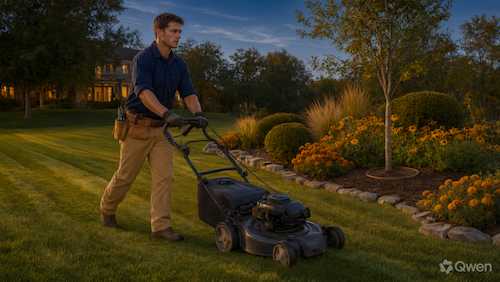
Almost everything grows here all year, and that changes what a landscape project is. Installation is straightforward in a climate with no dormant season; the cost that matters is the years afterwards, when hedges, turf and palms keep growing and need to be kept within their intended size. The soil underneath is mostly sand, which drains so quickly that water and nutrients move straight through it, and the rainfall arrives in intense storms with wind attached. With 58.5% of the stock single-family detached and much of it in subdivisions, association standards also shape what can be planted.
Sandy soil changes irrigation and feeding
Sand holds very little water and very little nutrient, so a schedule designed for a loam garden will under-water and over-fertilise here. Frequent, light irrigation leaches both water and nutrients past the root zone. The effective approach is short, frequent cycles during establishment and then longer, less frequent watering, with mulch to slow evaporation and hold the soil surface together. Ask how the irrigation is zoned and scheduled, whether the controller adjusts with the season, and how fertiliser use is planned rather than assumed.
Watering and nutrient rules
Water restrictions and fertiliser rules in this part of the state have been through repeated changes, often tied to the season and to the health of the local water bodies. Both shape the design: a landscape that depends on heavy feeding and constant irrigation is exposed to every rule change, while one built on appropriate species and mulch is not. Ask what the current restrictions and any local fertiliser rules require, whether the design assumes them, and how the schedule would change in a restricted season.
Wind, and what survives it
Storm wind is a design input here rather than an occasional event. The failures are predictable: shallow-rooted species that lift in saturated sand, palms that lose fronds, and anything tall and loose close to a structure. What survives is usually a matter of species choice, planting depth and roots that were given room to establish before the first storm. Ask which species are specified and how they perform in wind, how close the large material is to the building, and whether the trees were planted with adequate root space rather than in a narrow strip.
Palms and turf are both maintenance commitments
A palm is not a tree in the way most people expect — it has a single growing point and a limited tolerance for being planted too deep or cut back too hard, and pruning it badly can damage it permanently. Turf in this climate needs mowing most of the year, which makes it the largest recurring cost in most gardens here. Both are legitimate choices, but they should be chosen for maintenance appetite rather than appearance alone. Ask what the maintenance regime for the palms and the turf will be, and whether the design assumes a contract or the owner's time.
Pests and the plants that fail quietly
A garden that grows all year also hosts pests all year, and the failures here tend to be gradual rather than sudden: turf that thins from insect damage, a shrub that loses vigour, a palm that yellows for a nutritional reason rather than a watering one. Treating by calendar rather than by diagnosis is how gardens end up dependent on spraying. Ask how problems are identified, whether any treatment is based on a diagnosis rather than a schedule, and what the maintenance plan actually watches for.
What to pin down in the design
Where this page stops
No prices are quoted and no site is assessed here. Water restrictions, fertiliser rules and association covenants vary by jurisdiction and change, so the current requirements should be confirmed locally before work begins.
Orlando metro context
The 2024 ACS 5-year estimates describe about 2.79 million residents in 1,022,315 households and 1,145,360 housing units, with 63.1% owner-occupied and 58.5% single-family detached. Only 23.8% of units predate 1980, so most gardens here are younger than the trees in older metros and many sit under an association's standards. No climate station is reported for this metro in the site dataset, so no temperature or precipitation normals appear on this page.
Orlando housing indicators
| Indicator | Value | Source |
|---|---|---|
| Housing units built before 1980 | 23.8% | U.S. Census Bureau |
| Single-family detached share | 58.5% | U.S. Census Bureau |
| Owner-occupied share | 63.1% | U.S. Census Bureau |
| Metro households | 1,022,315 | U.S. Census Bureau |
| Housing units | 1,145,360 | U.S. Census Bureau |
| Metro population | 2,793,746 | U.S. Census Bureau |
No climate normals are shown because no station record is held for this metro in the site dataset. Storm and water conditions vary locally, and the sandy soil found across much of the metro behaves very differently from the clay soils of older inland cities.
Frequently Asked Questions
Why does my irrigation seem to run off?
Sandy soil takes water in quickly and passes it straight through, so long cycles waste it below the roots. Short, repeated cycles are more effective, and mulch helps hold the surface.
Do fertiliser rules really affect my garden?
In this region they can, particularly where they are tied to water bodies and the season. A design that needs heavy feeding is more exposed to rule changes than one built on appropriate species.
Which trees hold up in a storm?
Species choice, planting depth and adequate root space matter more than size. Shallow-rooted material in saturated sand is what fails, and a tree planted in a narrow strip never gets the root system it needs.
Can I trim a palm myself?
It is easy to do harm: over-pruning removes the leaves the palm needs and can damage the growing point permanently. If it needs work, it is worth having it done properly rather than aggressively.
Is a lawn a mistake here?
Not necessarily, but it is the largest recurring maintenance cost in the garden because it grows almost all year. Whether it is worth it depends on how the space is used and who is doing the work.
Does the association approve landscaping?
Commonly yes, for plant lists, hardscape and anything visible from the street. Confirming before installation avoids reworking a finished garden.
Sources and review date
- American Community Survey 2024 5-year estimates (CBSA tables) — U.S. Census Bureau, 2024 ACS 5-year estimates.
Reviewed on 2026-11-18.