
Jacksonville, FL · metro guide
Roofing in Jacksonville: Hurricane Ratings, Deck Attachment, and Attic Heat
In this market the roof is judged by what holds it down, not by what covers it.
Metro snapshot
Jacksonville in numbers
Sources named below each block
- Population
- 1.7M
- Households
- 663K
- Housing units
- 732K
- People / household
- 2.54
- population ÷ households
Owner-occupied homes 67%
The rest are rented. Owners are the ones who commission most exterior work.
Single-family detached 64%
Detached houses carry their own roof, gutters and exterior walls.
Built before 1980 32%
Older housing stock shapes what fails first: gutters, flashing, pipe material.
Season
The year in Jacksonville
- Precipitation
- 53.4 in
- Snowfall
- 0 in
Average temperature by month, °F — the shape of the year is what decides when exterior work gets done.
Precipitation by month, inches.
| Month | Average temperature (°F) | Precipitation (in) | Snowfall (in) |
|---|---|---|---|
| January | 54.2°F | 3.28 in | 0.0 in |
| February | 57.5°F | 2.86 in | 0.0 in |
| March | 62.4°F | 3.29 in | 0.0 in |
| April | 68.1°F | 2.93 in | 0.0 in |
| May | 74.9°F | 3.42 in | 0.0 in |
| June | 80.3°F | 7.60 in | 0.0 in |
| July | 82.5°F | 6.77 in | 0.0 in |
| August | 82.1°F | 6.88 in | 0.0 in |
| September | 78.8°F | 7.56 in | 0.0 in |
| October | 71.2°F | 4.03 in | 0.0 in |
| November | 62.3°F | 2.00 in | 0.0 in |
| December | 56.7°F | 2.78 in | 0.0 in |
NOAA 1991–2020 climate normals, station JACKSONVILLE, FL US (USW00013889). Station observations, not a metro-wide average — a metro that spans a mountain range can differ by more than this record shows.
Population, households and housing shares: U.S. Census Bureau, American Community Survey 2024 5-year estimates, metropolitan statistical area.
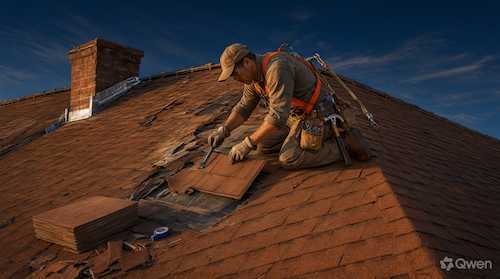
Roofing in Jacksonville is a wind and water question before it is an appearance question. The metro sits where tropical systems track, and a roof that fails there usually fails at the edges and attachments first — a lifted rake, a lost ridge cap, water forced under the covering at a gable end. That is why the parts of the specification worth arguing about are the underlayment, the fastening pattern and the deck attachment, none of which are visible from the street. With 31.6% of the housing stock predating 1980, many of the roofs being replaced now also sit on attics built before modern ventilation practice.
The wind rating is the headline number
Shingles carry a wind rating and it means nothing without the right fastening pattern underneath, so ask for both: the rated wind speed of the covering and the nailing schedule the installer intends to use. Edge metal, starter strip, drip edge and ridge cap all matter more here than in an inland market, because those are the components wind reaches first. Ask whether the proposal replaces them or reuses what is there, and whether the deck will be inspected for the fastening of the sheathing itself.
Underlayment is the second line of defense
Wind-driven rain gets under shingles in a storm regardless of how well they are installed, and what stops it from reaching the ceiling is the underlayment. Ask what product is being used, whether it covers the full deck or only the valleys and eaves, and how it is sealed at penetrations. On a low-slope section or a porch roof, the detail changes entirely. A proposal that specifies the shingle brand but not the underlayment has answered the least important question.
Attic heat and humidity in the same space
A Florida attic is both extremely hot in summer and humid year-round, and both conditions attack the deck from underneath. Balanced intake and exhaust matter, and a bath fan venting into the attic puts moisture directly where the plywood is. Ask what the ventilation calculation is, whether baffles will protect the soffit intake from insulation, and whether any fan discharging into the attic will be corrected while the roof is open. That last item is common in houses of this age and cheap to fix at that moment.
The dark streaks on the north slope
Streaking on a shaded roof is usually a growth that feeds on moisture and filler, and it is cosmetic more than structural. It is worth knowing that when comparing bids, because a cheaper shingle may streak sooner and a cleaning method that uses high pressure will damage the granules. Ask whether the proposed product carries a resistance rating for it and what cleaning approach the contractor recommends — a soft wash is not the same as a pressure wash.
Insurance, inspections and the age question
In this market insurers ask about roof age, and an inspection report can affect insurability and premiums. Ask what documentation the contractor provides — photographs, material specifications, permit records — and whether they will meet an adjuster on site after a storm. Keep the paperwork: a roof replacement with dated photographs and a permit trail is easier to insure and easier to explain at resale than a verbal history.
Questions to ask before signing
Where this page stops
This page does not inspect roofs and publishes no prices. Deck condition, attachment and storm damage require on-site assessment, and insurance and code questions belong to the carrier and the local authority.
Jacksonville metro context
ACS 2024 5-year estimates put the metro at about 1.68 million residents in 663,101 households and 732,419 housing units, with 66.5% owner-occupied and 63.7% single-family detached. About 31.6% of units were built before 1980, which is where original attic ventilation and first-generation decking are most likely. A climate station is not reported for this metro in the site dataset, so no wind, rain or temperature normals are published here.
Jacksonville housing and ownership indicators
| Indicator | Value | Source |
|---|---|---|
| Housing units built before 1980 | 31.6% | U.S. Census Bureau |
| Single-family detached share | 63.7% | U.S. Census Bureau |
| Owner-occupied share | 66.5% | U.S. Census Bureau |
| Housing units | 732,419 | U.S. Census Bureau |
| Metro households | 663,101 | U.S. Census Bureau |
| Metro population | 1,683,960 | U.S. Census Bureau |
No climate normals are shown because no station record is held for this metro in the site dataset. Wind exposure varies with proximity to the coast and with the exposure of the specific lot.
Frequently Asked Questions
What wind rating should a roof have here?
The rating has to match the requirements applicable to the location and be supported by the fastening pattern underneath. Ask for both the rated wind speed of the covering and the nailing schedule, and ask whether the sheathing fastening will be checked.
Is underlayment really that important?
In a wind-driven rain climate, yes. Water gets past shingles in a storm, and the underlayment is what keeps it out of the attic. Ask what product is used and whether it covers the whole deck rather than just the valleys and edges.
What causes the dark streaks on my roof?
Usually a growth that thrives on moisture on shaded slopes. It is largely cosmetic. Cleaning should be a soft wash, since high pressure removes granules and shortens the life of the covering.
Does attic ventilation matter in Florida?
Yes, for two reasons: heat in summer and humidity all year. Balanced intake and exhaust protect the deck from both, and a bath fan discharging into the attic works against them.
Will a new roof affect my insurance?
It can, since insurers here ask about roof age and condition. Keep the permit, the material specification and dated photographs, and ask the contractor whether they will document the installation for that purpose.
How do I compare two roofing bids?
Line up the same items: covering and wind rating, underlayment type and coverage, edge components, deck repair pricing, ventilation work, permit handling and warranty terms. A lower number with a narrower scope is not a lower number.
Sources and review date
- American Community Survey 2024 5-year estimates (CBSA tables) — U.S. Census Bureau, 2024 ACS 5-year estimates.
Reviewed on 2026-11-18.