
Miami, FL · metro guide
Roofing in Miami: Rain, Wind, and What to Compare
Miami roofs face about 67 inches of rain a year and tropical wind. Attachment details and drainage matter as much as the visible covering.
Metro snapshot
Miami in numbers
Sources named below each block
- Population
- 6.2M
- Households
- 2.3M
- Housing units
- 2.7M
- People / household
- 2.68
- population ÷ households
Owner-occupied homes 61%
The rest are rented. Owners are the ones who commission most exterior work.
Single-family detached 41%
Detached houses carry their own roof, gutters and exterior walls.
Built before 1980 45%
Older housing stock shapes what fails first: gutters, flashing, pipe material.
Season
The year in Miami
- Precipitation
- 67.4 in
- Snowfall
- 0 in
Average temperature by month, °F — the shape of the year is what decides when exterior work gets done.
Precipitation by month, inches.
| Month | Average temperature (°F) | Precipitation (in) | Snowfall (in) |
|---|---|---|---|
| January | 68.6°F | 1.83 in | 0.0 in |
| February | 70.7°F | 2.15 in | 0.0 in |
| March | 73.1°F | 2.46 in | 0.0 in |
| April | 76.7°F | 3.36 in | 0.0 in |
| May | 80.1°F | 6.32 in | 0.0 in |
| June | 82.8°F | 10.51 in | 0.0 in |
| July | 84.1°F | 7.36 in | 0.0 in |
| August | 84.2°F | 9.58 in | 0.0 in |
| September | 83.0°F | 10.22 in | 0.0 in |
| October | 80.1°F | 7.65 in | 0.0 in |
| November | 74.8°F | 3.53 in | 0.0 in |
| December | 71.2°F | 2.44 in | 0.0 in |
NOAA 1991–2020 climate normals, station MIAMI INTL AP, FL US (USW00012839). Station observations, not a metro-wide average — a metro that spans a mountain range can differ by more than this record shows.
Population, households and housing shares: U.S. Census Bureau, American Community Survey 2024 5-year estimates, metropolitan statistical area.
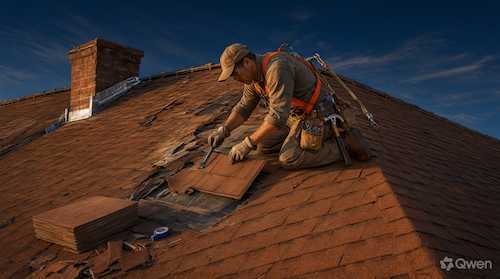
South Florida does not test a roof gently. The Miami station records about 67.4 inches of precipitation in a typical year and July averaging 84.1°F, and tropical systems can add wind to the water. A roof that looks fine from the street can still have the wrong fasteners, corroded attachments, or a drainage detail that only fails in a sustained storm.
Wind is an attachment question
When wind is the design case, the covering matters less than how it is held down. Ask how the assembly is attached, what fasteners and spacing are specified, and whether the product has the approvals required for the property's location. For tile, ask about the attachment method and the underlayment; for membrane roofs, ask about edge metal and termination details. These are the parts that decide whether the roof stays in place.
Rain and drainage
With high annual rainfall, drainage is not a seasonal concern. Ask how water leaves each roof area, what happens at parapets and scuppers, and how penetrations are sealed. On low-slope roofs, ponding and clogged drains are early warnings. On pitched roofs, valleys and wall transitions are where water is concentrated.
Coastal exposure and corrosion
In coastal parts of the metro, salt air affects fasteners, flashing, and metal components. Ask which materials are specified and whether they are suitable for the exposure. A proposal that names the covering but not the fasteners and flashing leaves out the parts most likely to corrode first.
Documentation and approvals
Ask for the inspection findings, product data, and the written scope, including removal, underlayment, attachment, flashing, drainage, and disposal. Confirm which permit and inspection steps apply to the address and who files them. If an insurance claim is involved, keep dated photos and the scope together.
Questions to ask before approving work
Where this page stops
This page does not inspect a roof or publish local prices. Wind-load requirements, product approvals, and permit rules depend on the property's location and must be confirmed with the authority responsible for the address.
Miami metro context
The 2024 ACS 5-year estimates put the metro at about 6.2 million residents and 2.3 million households. About 60.5% of occupied homes are owner-occupied, but only about 41.0% of housing units are single-family detached — a large share of the stock is attached or multi-unit, where roof decisions often involve a building or association. About 45.4% of housing units were built before 1980, so many roofs have been replaced more than once. NOAA's station records January averaging 68.6°F, July 84.1°F, and about 67.4 inches of precipitation a year.
Miami reference station and housing indicators
| Indicator | Value | Source |
|---|---|---|
| January mean temperature | 68.6°F | NOAA NCEI |
| July mean temperature | 84.1°F | NOAA NCEI |
| Annual precipitation | 67.4 in. | NOAA NCEI |
| Metro population | 6,249,291 | U.S. Census Bureau |
| Owner-occupied share | 60.5% | U.S. Census Bureau |
| Single-family detached share | 41.0% | U.S. Census Bureau |
| Housing units built before 1980 | 45.4% | U.S. Census Bureau |
Station normals are historical averages for one location, not a forecast. Census values describe the metro area, not an individual property.
Frequently Asked Questions
What should a Miami roof proposal include?
The existing assembly, removal scope, underlayment, attachment method and fasteners, flashing, drainage, edge metal, product approvals, permit handling, disposal, and warranty terms. The attachment details are as important as the covering.
How do I compare tile and membrane roofs in South Florida?
They are different assemblies with different failure points. Tile depends on underlayment and attachment; membrane roofs depend on seams, terminations, and drainage. Compare the inspection findings and the proposed layers rather than the surface appearance.
Does coastal air affect roofing materials?
Salt exposure can accelerate corrosion of fasteners, flashing, and metal components. Ask which materials are specified for the exposure and whether they are suitable for a coastal location.
How is drainage handled on a flat roof?
A flat-roof scope should describe drains, scuppers, slopes, and overflows, and how ponding is addressed. Standing water is a warning sign, not a cosmetic issue.
Who is responsible for roof work on a condo building?
Responsibility depends on the governing documents and the association. Ask the board or manager who authorizes the scope, which contractor is approved, and how assessments or reserves apply before work begins.
What is the population of the Miami metro area?
The U.S. Census Bureau's 2024 ACS 5-year estimates report about 6.2 million residents in the metro area. The figure describes regional scale, not the number of homes or providers.
Sources and review date
- American Community Survey 2024 5-year estimates (CBSA tables) — U.S. Census Bureau, 2024 ACS 5-year estimates.
- 1991–2020 station normals — MIAMI INTL AP, FL US (USW00012839) — NOAA National Centers for Environmental Information, 1991–2020 climate normals.
Reviewed on 2026-11-17.
Other Home Services in Miami–Fort Lauderdale–West Palm Beach
All guides for the Miami–Fort Lauderdale–West Palm Beach metro area