
Tampa, FL · metro guide
Roofing in Tampa: Wind, Rain, and What to Compare
A Tampa roof is judged by one question: does it stay on and stay dry when the wind arrives?
Metro snapshot
Tampa in numbers
Sources named below each block
- Population
- 3.3M
- Households
- 1.3M
- Housing units
- 1.5M
- People / household
- 2.48
- population ÷ households
Owner-occupied homes 68%
The rest are rented. Owners are the ones who commission most exterior work.
Single-family detached 56%
Detached houses carry their own roof, gutters and exterior walls.
Built before 1980 39%
Older housing stock shapes what fails first: gutters, flashing, pipe material.
Season
The year in Tampa
- Precipitation
- 49.5 in
- Snowfall
- 0 in
Average temperature by month, °F — the shape of the year is what decides when exterior work gets done.
Precipitation by month, inches.
| Month | Average temperature (°F) | Precipitation (in) | Snowfall (in) |
|---|---|---|---|
| January | 62.0°F | 2.65 in | 0.0 in |
| February | 64.7°F | 2.62 in | 0.0 in |
| March | 68.6°F | 2.52 in | 0.0 in |
| April | 73.9°F | 2.55 in | 0.0 in |
| May | 79.5°F | 2.60 in | 0.0 in |
| June | 82.9°F | 7.37 in | 0.0 in |
| July | 83.8°F | 7.75 in | 0.0 in |
| August | 84.0°F | 9.03 in | 0.0 in |
| September | 82.7°F | 6.09 in | 0.0 in |
| October | 77.4°F | 2.34 in | 0.0 in |
| November | 69.8°F | 1.40 in | 0.0 in |
| December | 64.9°F | 2.56 in | 0.0 in |
NOAA 1991–2020 climate normals, station TAMPA INTL AP, FL US (USW00012842). Station observations, not a metro-wide average — a metro that spans a mountain range can differ by more than this record shows.
Population, households and housing shares: U.S. Census Bureau, American Community Survey 2024 5-year estimates, metropolitan statistical area.
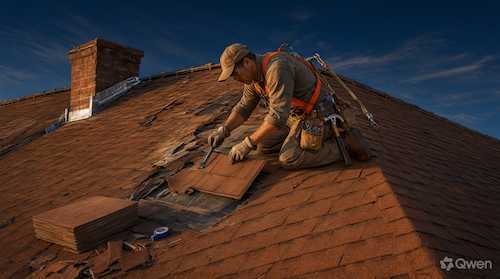
Tampa gets about 49.5 inches of rain a year, and July alone averages 7.75 inches. Rain is routine; wind is the event. A roof here has to shed water quickly and hold its covering when a tropical system passes, which makes the attachment details and the layers under the visible surface the parts worth comparing.
Wind-rated assembly, not just material
Ask what wind rating the proposed assembly carries and what documentation supports it. The rating depends on the whole system: underlayment, fasteners, edge metal, and the pattern in which fasteners are placed. Ask to see the manufacturer's installation instructions and confirm the proposal follows them, because a warranty usually depends on it.
Secondary water barrier
Ask whether a secondary water barrier is specified and how it is installed. When wind lifts or tears a covering, that layer determines how much water enters the house. It is one of the cheapest parts of a roof and one of the most frequently omitted.
Product approval and permits
Florida's building code includes a product-approval system for roofing materials, and local permitting adds its own requirements. Ask which products are specified, whether they carry the required approval, and who files the permit and schedules the inspection. A low price that skips approval is a problem at resale or after a claim.
Attic ventilation and heat
Ask how the roof assembly ventilates and whether intake and exhaust are balanced. In a hot, humid climate an under-ventilated attic holds heat and moisture, which shortens the life of the covering and stresses the air conditioning. Ask whether ventilation changes are part of the scope.
Questions to ask before signing
Where this page stops
This page does not inspect a roof or estimate cost for a specific property, and it does not certify code compliance. Requirements vary by jurisdiction and by the property's location, and should be confirmed on site and with the responsible local authority and insurer.
Tampa metro context
The 2024 ACS 5-year estimates put the metro at about 3.3 million residents and 1.3 million households. About 67.9% of occupied homes are owner-occupied, and about 56.2% of housing units are single-family detached. About 39.0% of housing units were built before 1980. NOAA's Tampa station records January averaging 62.0°F, July 83.8°F, with 7.75 inches of rain in July and about 49.5 inches a year.
Tampa reference station and housing indicators
| Indicator | Value | Source |
|---|---|---|
| January mean temperature | 62.0°F | NOAA NCEI |
| July mean temperature | 83.8°F | NOAA NCEI |
| July precipitation | 7.75 in. | NOAA NCEI |
| Annual precipitation | 49.5 in. | NOAA NCEI |
| Metro population | 3,304,691 | U.S. Census Bureau |
| Housing units built before 1980 | 39.0% | U.S. Census Bureau |
Station normals are historical averages for one location, not a forecast. Census values describe the metro area, not an individual property.
Frequently Asked Questions
How do I compare roofing estimates in Tampa?
Compare the specified assembly and wind rating, underlayment and secondary barrier, fastener pattern, edge metal, product approvals, permit handling, ventilation, decking allowances, disposal, exclusions, and both workmanship and manufacturer warranties.
What is a secondary water barrier?
It is a layer under the roof covering that keeps water out if the covering is lifted or damaged. Ask whether it is included and how it is installed at valleys and penetrations.
Does the roof need a permit?
Roof replacement normally requires a permit and inspection, and products may need to carry approval under the state code. Confirm the requirements for the address and ask who handles the filing.
Will a new roof lower my insurance premium?
Insurers often consider roof age, covering type, and wind rating, but the effect depends on the policy and the carrier. Ask your insurer what documentation they need before assuming a discount.
How long does a Tampa roof last?
It depends on the covering, ventilation, sun exposure, and storm history. Ask what the manufacturer's warranty says and what the inspection found rather than relying on an average.
What is the population of the Tampa metro area?
The U.S. Census Bureau's 2024 ACS 5-year estimates report about 3.3 million residents in the metro area. The figure describes regional scale, not the number of homes or providers.
Sources and review date
- American Community Survey 2024 5-year estimates (CBSA tables) — U.S. Census Bureau, 2024 ACS 5-year estimates.
- 1991–2020 station normals — TAMPA INTL AP, FL US (USW00012842) — NOAA National Centers for Environmental Information, 1991–2020 climate normals.
Reviewed on 2026-11-17.
Other Home Services in Tampa–St. Petersburg–Clearwater
All guides for the Tampa–St. Petersburg–Clearwater metro area