
Miami, FL · metro guide
HVAC in Miami: Year-Round Humidity and Salt Air
In Miami the air conditioner runs every month. Humidity control and corrosion protection matter as much as capacity.
Metro snapshot
Miami in numbers
Sources named below each block
- Population
- 6.2M
- Households
- 2.3M
- Housing units
- 2.7M
- People / household
- 2.68
- population ÷ households
Owner-occupied homes 61%
The rest are rented. Owners are the ones who commission most exterior work.
Single-family detached 41%
Detached houses carry their own roof, gutters and exterior walls.
Built before 1980 45%
Older housing stock shapes what fails first: gutters, flashing, pipe material.
Season
The year in Miami
- Precipitation
- 67.4 in
- Snowfall
- 0 in
Average temperature by month, °F — the shape of the year is what decides when exterior work gets done.
Precipitation by month, inches.
| Month | Average temperature (°F) | Precipitation (in) | Snowfall (in) |
|---|---|---|---|
| January | 68.6°F | 1.83 in | 0.0 in |
| February | 70.7°F | 2.15 in | 0.0 in |
| March | 73.1°F | 2.46 in | 0.0 in |
| April | 76.7°F | 3.36 in | 0.0 in |
| May | 80.1°F | 6.32 in | 0.0 in |
| June | 82.8°F | 10.51 in | 0.0 in |
| July | 84.1°F | 7.36 in | 0.0 in |
| August | 84.2°F | 9.58 in | 0.0 in |
| September | 83.0°F | 10.22 in | 0.0 in |
| October | 80.1°F | 7.65 in | 0.0 in |
| November | 74.8°F | 3.53 in | 0.0 in |
| December | 71.2°F | 2.44 in | 0.0 in |
NOAA 1991–2020 climate normals, station MIAMI INTL AP, FL US (USW00012839). Station observations, not a metro-wide average — a metro that spans a mountain range can differ by more than this record shows.
Population, households and housing shares: U.S. Census Bureau, American Community Survey 2024 5-year estimates, metropolitan statistical area.
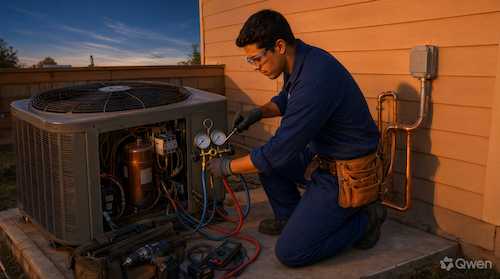
Miami's cooling season does not end. January at the airport station averages 68.6°F and July 84.1°F, with about 67.4 inches of rain a year, so the system is removing moisture almost continuously. That changes what a good installation looks like: long runtimes, controlled humidity, and equipment that survives salt air.
Sizing and humidity together
Ask whether a load calculation was performed and what it assumed about insulation, glass, and air sealing. An oversized unit cools quickly and shuts off before it has removed enough moisture, leaving the house cold and clammy. In this climate, slightly longer runtimes are usually better than extra capacity.
Salt air and coastal exposure
Ask how the equipment is protected where salt air reaches it: coil coatings, cabinet finish, and the condition of the pad and lineset. Ask whether the outdoor unit has been inspected for corrosion, not just for refrigerant charge. Coastal installations often fail at the cabinet and coil before the compressor does.
Condensate and drainage
Cooling produces a lot of water here, and a blocked drain can damage a ceiling or a wall in a day. Ask how condensate is routed, whether there is a secondary pan and float switch, and who checks the drain during maintenance. In a condo, ask where the line discharges and who is responsible if it clogs.
Storm preparation and equipment location
Ask how the outdoor unit is anchored, what happens to it during a storm, and whether the install meets local wind requirements. Ask where the air handler sits and whether that space can flood. Equipment placed at grade in a flood-prone area creates a replacement cost after every event.
Questions to ask before you decide
Where this page stops
This page does not diagnose an HVAC system remotely and does not publish local prices. Equipment selection, refrigerant handling, wind-load requirements, and permit requirements must be confirmed on site by a qualified professional and the responsible local authority.
Miami metro context
The 2024 ACS 5-year estimates put the metro at about 6.2 million residents and 2.3 million households. About 60.5% of occupied homes are owner-occupied, and about 41.0% of housing units are single-family detached, the lowest detached share in this set, so many systems serve condos and shared buildings. About 45.4% of housing units were built before 1980. NOAA's Miami station records January averaging 68.6°F, July 84.1°F, and about 67.4 inches of precipitation a year.
Miami reference station and housing indicators
| Indicator | Value | Source |
|---|---|---|
| January mean temperature | 68.6°F | NOAA NCEI |
| July mean temperature | 84.1°F | NOAA NCEI |
| July precipitation | 7.36 in. | NOAA NCEI |
| Annual precipitation | 67.4 in. | NOAA NCEI |
| Metro population | 6,249,291 | U.S. Census Bureau |
| Housing units built before 1980 | 45.4% | U.S. Census Bureau |
Station normals are historical averages for one location, not a forecast. Census values describe the metro area, not an individual property.
Frequently Asked Questions
How do I compare HVAC quotes in Miami?
Compare the load calculation, equipment models and humidity performance, coil and cabinet protection for coastal air, condensate details, anchoring, electrical work, permit handling, startup measurements, exclusions, and warranties.
Why does my house feel damp with the AC running?
Oversizing, short runtime, low airflow, duct leakage, or a fan setting that runs continuously can all leave moisture in the air. Ask for measurements of indoor humidity and airflow before deciding on equipment changes.
How often should the condensate drain be checked?
It should be part of routine maintenance, especially before the rainy season. Ask what the visit covers and whether a secondary pan and float switch are installed.
Does salt air damage air conditioners?
It corrodes coils, cabinets, and fasteners, especially within a few miles of the coast. Ask what protection the equipment offers and whether the outdoor unit has been inspected for corrosion.
What happens to an outdoor unit in a hurricane?
Anchoring and placement matter. Ask how the unit is secured, what local wind requirements apply, and whether the air handler is in a location that can flood.
What is the population of the Miami metro area?
The U.S. Census Bureau's 2024 ACS 5-year estimates report about 6.2 million residents in the metro area. The figure describes regional scale, not the number of homes or providers.
Sources and review date
- American Community Survey 2024 5-year estimates (CBSA tables) — U.S. Census Bureau, 2024 ACS 5-year estimates.
- 1991–2020 station normals — MIAMI INTL AP, FL US (USW00012839) — NOAA National Centers for Environmental Information, 1991–2020 climate normals.
Reviewed on 2026-11-17.
Other Home Services in Miami–Fort Lauderdale–West Palm Beach
All guides for the Miami–Fort Lauderdale–West Palm Beach metro area