
San Antonio, TX · metro guide
Landscaping in San Antonio: Live Oaks, Caliche and Water Rules
The plants have to survive both a dry summer and a downpour, on ground that is often part rock.
Metro snapshot
San Antonio in numbers
Sources named below each block
- Population
- 2.7M
- Households
- 967K
- Housing units
- 1.1M
- People / household
- 2.75
- population ÷ households
Owner-occupied homes 63%
The rest are rented. Owners are the ones who commission most exterior work.
Single-family detached 66%
Detached houses carry their own roof, gutters and exterior walls.
Built before 1980 33%
Older housing stock shapes what fails first: gutters, flashing, pipe material.
Season
The year in San Antonio
- Precipitation
- 32.4 in
- Snowfall
- 0.2 in
Average temperature by month, °F — the shape of the year is what decides when exterior work gets done.
Precipitation by month, inches.
Snowfall by month, inches.
| Month | Average temperature (°F) | Precipitation (in) | Snowfall (in) |
|---|---|---|---|
| January | 52.2°F | 1.96 in | 0.0 in |
| February | 56.3°F | 1.74 in | 0.1 in |
| March | 62.8°F | 2.31 in | 0.0 in |
| April | 69.4°F | 2.42 in | 0.0 in |
| May | 76.5°F | 4.40 in | 0.0 in |
| June | 82.6°F | 3.28 in | 0.0 in |
| July | 84.8°F | 2.41 in | 0.0 in |
| August | 85.5°F | 2.15 in | 0.0 in |
| September | 79.9°F | 3.88 in | 0.0 in |
| October | 71.3°F | 3.75 in | 0.0 in |
| November | 60.7°F | 2.08 in | 0.0 in |
| December | 53.5°F | 2.00 in | 0.1 in |
NOAA 1991–2020 climate normals, station SAN ANTONIO INTL AP, TX US (USW00012921). Station observations, not a metro-wide average — a metro that spans a mountain range can differ by more than this record shows.
Population, households and housing shares: U.S. Census Bureau, American Community Survey 2024 5-year estimates, metropolitan statistical area.
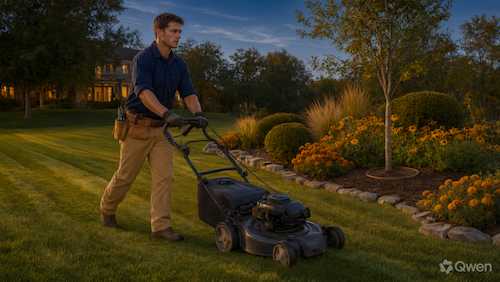
Two features define landscaping here. The first is caliche — a cemented layer that underlies much of the area and behaves like a shallow shelf, so water and roots struggle to get through it. The second is the shape of the rainfall: a 32.4-inch annual total that arrives in bursts, separated by long dry stretches. Plants therefore have to handle both extremes, and irrigation has to be designed for a climate where the interval between waterings is long and the delivery, when it comes, is heavy.
Live oaks are the asset
A mature live oak is worth more than everything else on a residential lot combined: it provides the shade that makes an outdoor space usable in an August afternoon, and it takes decades to replace. It is also easy to kill slowly, by changing the grade over its roots, compacting the soil with equipment, or planting something that needs summer water directly against the trunk. Ask how root zones will be protected during construction, whether the grade around existing trees will change, and how irrigation will be kept off the trunk.
Planting into caliche
A planting hole dug into caliche is a container: it fills with water and holds it, then dries to a hard shell. The remedies are practical rather than exotic — a much wider planting area, breaking through the layer where possible, planting on a slight mound so the crown sits above the surrounding grade, and choosing species that tolerate lean, alkaline soil. Ask how the soil was assessed, how wide the prepared area is rather than how deep, and what the drainage path is when a downpour arrives.
Irrigation, rules and the honest schedule
Watering rules in this region have been through repeated cycles of restriction, and they change the value of a design decision: a landscape that needs a daily sprinkle is a liability, while one that survives on deep, infrequent watering keeps working whatever the current stage is. Drip on separate zones, a controller that adjusts with the season, and mulch that keeps the soil temperature down all serve that goal. Ask how many zones the design creates, how the schedule differs between established trees and new planting, and what the current rules require.
Deer, and the hill-country edge
On the northern and western edges of the metro, particularly toward New Braunfels and the hill country, deer pressure turns a plant list into a negotiation, and the terrain adds slope and thin soil on top of it. Both push the same way: fewer wide lawns, more layered and tougher planting, and a fence or repellent strategy decided before planting rather than after the first season. Ask what the plant list assumes about browsing, whether the species suit the site's soil and slope, and how the first two years of watering will be handled.
Irrigation sized for the way it rains
Watering here has to cope with long dry intervals and then stand down when a storm does the work. That argues for zones, a controller that adjusts, and a rain sensor that is actually connected — an item frequently specified and equally frequently bypassed. Ask how many zones the design creates, whether a rain sensor is fitted and working, and how the schedule differs between established trees and new planting.
What to pin down in the design
Where this page stops
No prices are quoted and no site is assessed here. Water-use rules, tree protection and any recharge-zone requirements vary by jurisdiction and change, so current requirements should be confirmed with the local authority before work begins.
San Antonio metro context
The 2024 ACS 5-year estimates describe about 2.66 million residents in 967,488 households and 1,057,823 housing units, with 63.3% owner-occupied and 66.1% single-family detached. About 32.7% of units predate 1980, so much of the planting here sits around established houses and mature trees. At the reference station annual precipitation is 32.4 inches, with July averaging 84.8°F.
San Antonio reference station and housing indicators
| Indicator | Value | Source |
|---|---|---|
| January mean temperature | 52.2°F | NOAA NCEI |
| July mean temperature | 84.8°F | NOAA NCEI |
| Annual precipitation | 32.4 in. | NOAA NCEI |
| Metro population | 2,662,733 | U.S. Census Bureau |
| Owner-occupied share | 63.3% | U.S. Census Bureau |
| Housing units built before 1980 | 32.7% | U.S. Census Bureau |
Station normals are historical averages for one location, not a forecast. The annual total hides the pattern: long dry intervals between heavy storms, which is what a planting plan has to survive.
Frequently Asked Questions
Why do plants struggle in my soil?
Often caliche, a cemented layer that traps water in the planting hole. A wider prepared area, breaking through the layer and planting slightly high solves more than adding soil to a narrow hole.
Can I build a patio near a live oak?
Carefully. Changing grade or compacting soil over the root zone damages the tree in ways that show up years later. The design should protect the roots rather than work around them after the fact.
How often should I water an established tree?
Deeply and infrequently, on a schedule separate from shrubs and turf. Frequent shallow watering encourages shallow roots and does the tree no favors in a dry spell.
Do deer really limit what I can plant?
On the hill-country edge of the metro they do. The plant list should assume browsing pressure, and a fence or repellent strategy is worth deciding before planting rather than after the first season.
What about water restrictions?
They change with the season and the year, so the current stage should be confirmed locally. A design that survives on deep, infrequent watering stays workable through most of them.
Is a lawn impossible here?
Not impossible, but it is the most water-demanding option and the least resilient to restrictions. Reducing it usually improves both the bill and the survival of everything else on the lot.
Sources and review date
- American Community Survey 2024 5-year estimates (CBSA tables) — U.S. Census Bureau, 2024 ACS 5-year estimates.
- 1991–2020 station normals — SAN ANTONIO INTL AP, TX US (USW00012921) — NOAA National Centers for Environmental Information, 1991–2020 climate normals.
Reviewed on 2026-11-18.