
Minneapolis, MN-WI · metro guide
Landscaping in Minneapolis: Heavy Clay and a Four-Month Growing Season
Clay soil, a short season, and road salt that arrives before the last snowfall melts.
Metro snapshot
Minneapolis in numbers
Sources named below each block
- Population
- 3.7M
- Households
- 1.5M
- Housing units
- 1.6M
- People / household
- 2.51
- population ÷ households
Owner-occupied homes 71%
The rest are rented. Owners are the ones who commission most exterior work.
Single-family detached 60%
Detached houses carry their own roof, gutters and exterior walls.
Built before 1980 49%
Older housing stock shapes what fails first: gutters, flashing, pipe material.
Season
The year in Minneapolis
- Precipitation
- 31.6 in
- Snowfall
- 51.2 in
Average temperature by month, °F — the shape of the year is what decides when exterior work gets done.
Precipitation by month, inches.
Snowfall by month, inches.
| Month | Average temperature (°F) | Precipitation (in) | Snowfall (in) |
|---|---|---|---|
| January | 16.2°F | 0.89 in | 11.0 in |
| February | 20.6°F | 0.87 in | 9.5 in |
| March | 33.3°F | 1.68 in | 8.2 in |
| April | 47.1°F | 2.91 in | 3.5 in |
| May | 59.5°F | 3.91 in | 0.0 in |
| June | 69.7°F | 4.58 in | 0.0 in |
| July | 74.3°F | 4.06 in | 0.0 in |
| August | 71.8°F | 4.34 in | 0.0 in |
| September | 63.5°F | 3.02 in | 0.0 in |
| October | 49.5°F | 2.58 in | 0.8 in |
| November | 34.8°F | 1.61 in | 6.8 in |
| December | 22.0°F | 1.17 in | 11.4 in |
NOAA 1991–2020 climate normals, station MINNEAPOLIS/ST PAUL AP, MN US (USW00014922). Station observations, not a metro-wide average — a metro that spans a mountain range can differ by more than this record shows.
Population, households and housing shares: U.S. Census Bureau, American Community Survey 2024 5-year estimates, metropolitan statistical area.
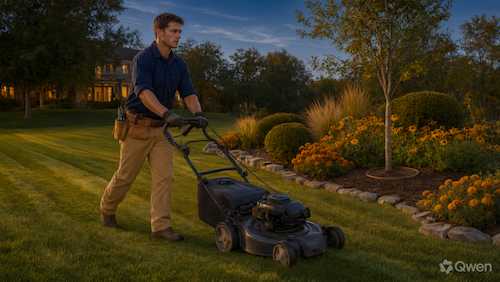
Twin Cities gardens are decided by two facts that do not appear in a plant catalog photograph: the soil is largely clay, and the growing season is short enough that a plant installed in the wrong month has no time to establish before the ground closes. Snow cover lingers into March across much of the metro, and the ground can still be frozen in places while the first warm week arrives. A plan that would work in Columbus or Kansas City needs a different plant list here, and a different schedule for installing it.
Clay holds water, then refuses it
Glacial clay under much of Minneapolis, St. Paul and the older inner-ring suburbs drains slowly in spring and shrinks hard by August. A bed dug into it acts like a bathtub with no outlet, and plants that tolerate wet roots in May can drown by June. The questions that matter are about grading and drainage rather than plant selection: where does water leave the property, does the bed get amended or mounded above grade, and is a rain garden being considered where the lot collects water. Grading away from the foundation also does double duty, keeping spring melt out of the basement.
One hardiness zone, many microclimates
Most of the metro sits in a cold zone, and the number on the tag only tells you whether a plant survives an average winter. What kills plants here is the combination of a cold root zone, drying winter wind, and sun on a frozen stem. A south foundation wall collects heat and behaves like a warmer zone; the north side of the same house behaves like a colder one, and the difference matters for hydrangeas, Japanese maples and anything marginal. Ask whether the design accounts for that, or whether the same list is used around the whole house.
The boulevard takes the worst of it
Road salt lands on the first four to six feet of turf and on the lower branches of street trees, and the damage shows up in spring as a brown margin along the curb, delayed leaf-out, and dieback on the road side of a tree. Salt-tolerant turf and perennials in that strip are a better bet than replacement sod every April. Also worth asking: whether the contractor will leave a mulch or gravel border at the curb, and whether the downspout discharges into the planting strip, which concentrates the problem.
Ash trees and the cost of a monoculture
The metro planted ash in quantity on boulevards decades ago, and emerald ash borer has been working through that stock for years, which means a lot of homeowners are now deciding what replaces a large shade tree. Species diversity is the practical answer, and so is matching the tree to the space: distance from the foundation, the sewer line, the overhead utility, and the neighbor's roof. Ask what the mature canopy width will be, not the nursery height, and ask who is responsible for the boulevard tree — the city or the homeowner.
The first two years decide the next twenty
A plant installed in May in clay needs water through the first summer and into the second, and a plant installed in September needs it until the ground freezes. Mulch should ring the plant rather than touch the stem, and young trees benefit from a trunk guard against sunscald and from protection against rabbits and deer, which are a real pressure in the inner-ring suburbs. Ask what the maintenance plan includes, who does the first-year watering, and whether replacing a plant that fails in the first season is covered.
Questions to put to a landscaping bid
Where this page stops
This page does not evaluate a specific property and does not publish local prices. Soil conditions, drainage and utility locations have to be confirmed on site, and any work near a foundation or a buried line should be checked against local requirements.
Twin Cities metro context
The 2024 ACS 5-year estimates count about 3.7 million residents in 1.48 million households across 1.55 million housing units; 70.7% are owner-occupied and 60.2% are single-family detached, which means most landscaping decisions here involve a yard the owner will live with. NOAA's station records January at 16.2°F, July at 74.3°F, 31.6 inches of precipitation and 51.2 inches of snow — a short working season with a long dormancy on either side.
Twin Cities season and precipitation indicators
| Indicator | Value | Source |
|---|---|---|
| January mean temperature | 16.2°F | NOAA NCEI |
| July mean temperature | 74.3°F | NOAA NCEI |
| July precipitation | 4.06 in. | NOAA NCEI |
| Annual snowfall | 51.2 in. | NOAA NCEI |
| Single-family detached share | 60.2% | U.S. Census Bureau |
| Metro households | 1,477,259 | U.S. Census Bureau |
Normals describe average conditions at one station. Soil temperature, frost depth and drainage vary by lot and cannot be inferred from these figures.
Frequently Asked Questions
When is the best time to plant in the Twin Cities?
Spring after the ground has warmed and fall while there is still time for roots to establish before the soil freezes are both workable. Mid-summer installation is possible with irrigation but demands more water. The worst outcome is planting late in the fall with no establishment window.
My yard is clay and water pools in spring. What comes first?
Drainage and grading, before plant selection. Amending a bed in a low spot holds more water rather than less. Redirecting downspouts, grading away from the foundation, and mounding beds above grade solve more problems than any plant choice.
What can I plant in the boulevard strip along the road?
Salt- and compaction-tolerant species, and turf varieties bred for wear. The strip takes plow damage, salt spray and reflected heat, so a plant list designed for the back yard will usually struggle there. Check with the city before changing anything on a public boulevard.
Is it worth replacing an ash tree before it fails?
Many homeowners in this metro are making that decision now. Removing a declining tree while it is still safe to work around is usually cheaper and less disruptive than an emergency removal, and it lets you choose the replacement and the planting position.
How much watering does new landscaping need in the first year?
More than most people expect, especially in clay that sheds water when dry. Frequent deep watering that soaks the root ball beats light daily sprinkling. Ask the contractor for a written schedule and for who performs it.
Should I use native plants here?
Native species are generally well adapted to the climate and support local pollinators, but the term is broad and adaptation still depends on the individual site. What matters most is matching the plant to the soil, the drainage and the light on that specific side of the house.
Sources and review date
- American Community Survey 2024 5-year estimates (CBSA tables) — U.S. Census Bureau, 2024 ACS 5-year estimates.
- 1991–2020 station normals — MINNEAPOLIS/ST PAUL AP, MN US (USW00014922) — NOAA National Centers for Environmental Information, 1991–2020 climate normals.
Reviewed on 2026-11-18.
Other Home Services in Minneapolis–St. Paul–Bloomington
All guides for the Minneapolis–St. Paul–Bloomington metro area