
Minneapolis, MN-WI · metro guide
HVAC in Minneapolis: A Heating Season That Runs Half the Year
The system here is designed for January, not July. Choosing it the other way round is the usual mistake.
Metro snapshot
Minneapolis in numbers
Sources named below each block
- Population
- 3.7M
- Households
- 1.5M
- Housing units
- 1.6M
- People / household
- 2.51
- population ÷ households
Owner-occupied homes 71%
The rest are rented. Owners are the ones who commission most exterior work.
Single-family detached 60%
Detached houses carry their own roof, gutters and exterior walls.
Built before 1980 49%
Older housing stock shapes what fails first: gutters, flashing, pipe material.
Season
The year in Minneapolis
- Precipitation
- 31.6 in
- Snowfall
- 51.2 in
Average temperature by month, °F — the shape of the year is what decides when exterior work gets done.
Precipitation by month, inches.
Snowfall by month, inches.
| Month | Average temperature (°F) | Precipitation (in) | Snowfall (in) |
|---|---|---|---|
| January | 16.2°F | 0.89 in | 11.0 in |
| February | 20.6°F | 0.87 in | 9.5 in |
| March | 33.3°F | 1.68 in | 8.2 in |
| April | 47.1°F | 2.91 in | 3.5 in |
| May | 59.5°F | 3.91 in | 0.0 in |
| June | 69.7°F | 4.58 in | 0.0 in |
| July | 74.3°F | 4.06 in | 0.0 in |
| August | 71.8°F | 4.34 in | 0.0 in |
| September | 63.5°F | 3.02 in | 0.0 in |
| October | 49.5°F | 2.58 in | 0.8 in |
| November | 34.8°F | 1.61 in | 6.8 in |
| December | 22.0°F | 1.17 in | 11.4 in |
NOAA 1991–2020 climate normals, station MINNEAPOLIS/ST PAUL AP, MN US (USW00014922). Station observations, not a metro-wide average — a metro that spans a mountain range can differ by more than this record shows.
Population, households and housing shares: U.S. Census Bureau, American Community Survey 2024 5-year estimates, metropolitan statistical area.
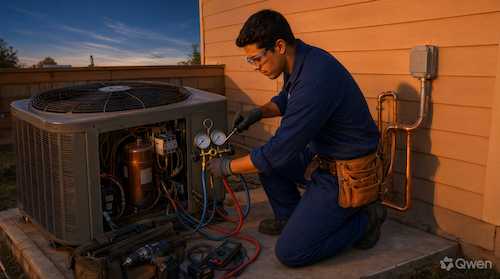
In most of the country a heating and cooling decision starts with air conditioning and treats the furnace as the default. Here it runs the other way. January averages 16.2°F at the Twin Cities station, cold snaps go well below zero, and the heating season stretches from October into April. July averages 74.3°F with real humidity, so cooling matters — but it is a shorter and less demanding job than keeping a house at 68°F through a January night. A system sized around the summer load and expected to carry the winter is the mistake that shows up as a cold house and a large gas bill.
Heat pumps work here, with caveats worth understanding
Cold-climate heat pumps have changed what is possible in this market, and they are now a realiztic primary heat source for many Twin Cities houses. What decides the outcome is the balance point and the backup. Ask what outdoor temperature the unit holds capacity at without auxiliary heat, what the auxiliary source is, and how many hours a year the design expects it to run. A system that is genuinely efficient at 5°F and one that quietly leans on electric resistance below 25°F can look identical on a proposal.
Boilers and radiators are still the backbone of the inner ring
A large share of Minneapolis and St. Paul houses built before 1950 are heated by hot water or steam radiators served by a boiler in the basement, and many of them work perfectly well. The important distinction is steam versus hot water: they are not interchangeable, they are maintained differently, and a contractor who treats one as the other will misdiagnose the problem. A working radiator system is also comfortable and quiet, which is why the sensible question is usually how to maintain or zone it rather than how to remove it.
Ductwork in houses that were never designed for it
A 1925 house in Powderhorn or Merriam Park has no duct chases, and retrofitting conventional ducts means boxing in corners, dropping soffits and losing closet space. That is where high-velocity small-duct systems and ductless mini-splits come in. Each has real trade-offs: small-duct systems need careful design and cannot be expanded casually, and mini-splits heat room by room unless the layout is planned. Ask how many heads or outlets the design uses, which rooms they serve, and what happens to the rooms that are left out.
A short cooling season still punishes oversizing
The temptation in a climate with a brief summer is to buy more capacity than needed, and it backfires: an oversized air conditioner cools the house quickly and removes less humidity, so the rooms feel clammy at the setpoint. Ask for a load calculation in writing rather than a rule of thumb based on square footage, and ask whether the proposal accounts for the ducts that already exist. If the house has a heat pump, the same calculation should cover both seasons.
The February failure is the one to plan for
Equipment fails when it is working hardest, which here means the coldest week of the year. Ask what the service response looks like in a cold snap, whether the contractor keeps common parts on the truck, and what the customer is expected to do while waiting. Filters, condensate lines and outdoor unit clearance are the routine items; a spare filter on the shelf and a known shutoff are the low-cost ones. If the system has auxiliary heat, know how to tell when it is running, because an unnoticed switch to resistance heat is expensive.
What a proposal should answer
Where this page stops
No prices are published and no equipment recommendation is made here. Sizing, combustion safety and refrigerant work require an on-site assessment by a licensed professional, and rebate or permit questions belong to the utility and the local authority.
Twin Cities metro context
The 2024 ACS 5-year estimates describe about 3.7 million residents, 1.48 million households and 1.55 million housing units, with 70.7% owner-occupied. Just 60.2% of units are single-family detached, which is low for a Midwestern metro and reflects the dense Minneapolis and St. Paul cores where boilers and radiators are common. About 49.0% of the housing predates 1980. NOAA's station records January at 16.2°F, July at 74.3°F, 51.2 inches of snow and 31.6 inches of precipitation.
Twin Cities heating and cooling season
| Indicator | Value | Source |
|---|---|---|
| January mean temperature | 16.2°F | NOAA NCEI |
| July mean temperature | 74.3°F | NOAA NCEI |
| January precipitation | 0.89 in. | NOAA NCEI |
| Housing units built before 1980 | 49.0% | U.S. Census Bureau |
| Single-family detached share | 60.2% | U.S. Census Bureau |
| Owner-occupied share | 70.7% | U.S. Census Bureau |
Monthly means are 30-year averages from one station. A design load uses a colder outdoor condition than the January mean, and it must be calculated for the specific house.
Mapped in OpenStreetMap
HVAC businesses mapped in the Minneapolis metro
OpenStreetMap contributors have mapped 33 hvac entries inside the Minneapolis-St. Paul-Bloomington, MN-WI CBSA; 31 have a name. This is a map-coverage indicator, not a count of all licensed hvac businesses in the metro.
- Mapped entries
- 33
- OSM features
- Phone listed
- 79%
- 26 of 33
- Website listed
- 79%
- 26 of 33
- Street address
- 82%
- 27 of 33
OSM coverage varies by area: a low count can mean low mapping activity, not a small market. OpenStreetMap does not record contractor licenses. To check a license, use the Minnesota DLI license and registration lookup. Residential building contractor or roofer licence. Specialty contractors who offer only one skill are exempt, as is anyone whose gross annual receipts for licensed specialty work stay under $15,000 (Minn. Stat. § 326B.805, subd. 6).
Query: craft=hvac.
Snapshot: 2026-11-17. Data:
© OpenStreetMap contributors,
ODbL 1.0.
CBSA boundary:
U.S. Census Bureau, 2023.
Frequently Asked Questions
Can a heat pump replace a furnace in Minneapolis?
In many houses, yes, with a cold-climate unit and a plan for the coldest days. What matters is the balance point, the backup source and how the system is controlled. Ask for the capacity at low outdoor temperatures rather than a general claim.
Should I keep my radiators or switch to forced air?
Radiators and a boiler in good condition are comfortable and worth keeping, especially in pre-war houses where ductwork means losing space to chases. The case for switching is usually air conditioning and filtration rather than heating performance, and mini-splits can often provide that without removing the radiators.
Why does my new air conditioner leave the house feeling damp?
Usually oversizing. A unit that is too large reaches the setpoint before it has run long enough to remove moisture. A load calculation and correct sizing solve it more reliably than lowering the thermostat.
How do I tell whether I have steam or hot water heat?
Steam systems have a boiler that boils water, radiators with a vent near the top, and pipes that may knock or whistle. Hot water systems run a circulator pump and radiators with no vent. The distinction changes maintenance and repair, so confirm it before booking service.
How often should heating equipment be serviced here?
Annual service before the heating season is the usual recommendation for combustion equipment, and cooling service before summer. In this climate the heating side does most of the work, so skipping it is the more expensive choice.
What happens to a heat pump in a Minnesota winter?
It keeps running, with lower capacity and a periodic defrost cycle that may produce visible steam. Efficiency drops as the outdoor temperature falls, and below the balance point the backup heat takes over. How often that happens is the number worth asking about.
Sources and review date
- American Community Survey 2024 5-year estimates (CBSA tables) — U.S. Census Bureau, 2024 ACS 5-year estimates.
- 1991–2020 station normals — MINNEAPOLIS/ST PAUL AP, MN US (USW00014922) — NOAA National Centers for Environmental Information, 1991–2020 climate normals.
- OpenStreetMap contributors — craft=hvac features in the Minneapolis-St. Paul-Bloomington, MN-WI CBSA — OpenStreetMap contributors, Snapshot 2026-11-17.
Reviewed on 2026-11-18.
Other Home Services in Minneapolis–St. Paul–Bloomington
All guides for the Minneapolis–St. Paul–Bloomington metro area