
Pittsburgh, PA · metro guide
Landscaping in Pittsburgh: Slopes, Clay, and Water Running Downhill
Almost every planting decision on a Pittsburgh hillside is really a drainage decision.
Metro snapshot
Pittsburgh in numbers
Sources named below each block
- Population
- 2.4M
- Households
- 1.1M
- Housing units
- 1.2M
- People / household
- 2.30
- population ÷ households
Owner-occupied homes 71%
The rest are rented. Owners are the ones who commission most exterior work.
Single-family detached 68%
Detached houses carry their own roof, gutters and exterior walls.
Built before 1980 73%
Older housing stock shapes what fails first: gutters, flashing, pipe material.
Season
The year in Pittsburgh
- Precipitation
- 39.6 in
- Snowfall
- 44.1 in
Average temperature by month, °F — the shape of the year is what decides when exterior work gets done.
Precipitation by month, inches.
Snowfall by month, inches.
| Month | Average temperature (°F) | Precipitation (in) | Snowfall (in) |
|---|---|---|---|
| January | 28.8°F | 2.96 in | 13.3 in |
| February | 31.4°F | 2.62 in | 11.7 in |
| March | 39.7°F | 3.15 in | 7.6 in |
| April | 51.5°F | 3.32 in | 1.0 in |
| May | 61.2°F | 3.83 in | 0.0 in |
| June | 69.4°F | 4.12 in | 0.0 in |
| July | 73.2°F | 4.26 in | 0.0 in |
| August | 71.8°F | 3.52 in | 0.0 in |
| September | 64.9°F | 3.30 in | 0.0 in |
| October | 53.4°F | 2.83 in | 0.4 in |
| November | 42.6°F | 2.86 in | 2.4 in |
| December | 33.7°F | 2.84 in | 7.7 in |
NOAA 1991–2020 climate normals, station PITTSBURGH INTL AP, PA US (USW00094823). Station observations, not a metro-wide average — a metro that spans a mountain range can differ by more than this record shows.
Population, households and housing shares: U.S. Census Bureau, American Community Survey 2024 5-year estimates, metropolitan statistical area.
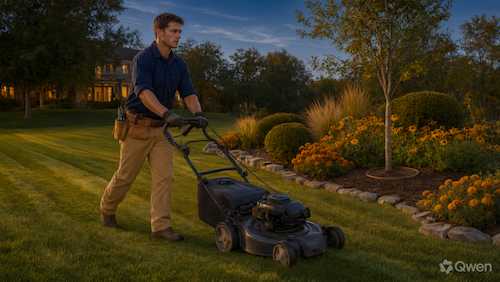
Pittsburgh gardens are shaped by topography first. A lot on a slope receives water from everything above it, sends it to everything below, and holds very little in between — and the soil underneath is heavy clay that accepts water slowly once it is saturated. Add a mature canopy that shades much of the ground, a short growing season, and soils that tend toward the acid side, and the brief stops being about plants and starts being about grading, walls and where the water is going to go in a February thaw.
The slope decides the design
On a hillside lot, planting without addressing grade is landscaping that lasts until the first heavy rain. The useful questions are about control: where water enters the property, where it leaves, whether a swale or a terrace is needed, and whether the slope is stable enough to plant or needs a retaining structure first. Ask how the contractor intends to handle the gradient, whether any wall is proposed and who engineers it, and what happens to the ground above the property — because water arriving from a neighbor's slope is often the real source of the problem.
Retaining walls are engineering, not decoration
A wall holding back a slope has to deal with water behind it, and the most common failure is a wall built without drainage that leans and then collapses after a wet winter. Ask whether the wall is designed for the height and the soil, whether drainage aggregate and weep points are included, and whether a permit is required for the height proposed. Above a certain height most municipalities require an engineered design, and a contractor who treats that as paperwork is not the right contractor.
Clay, acid soil and what grows anyway
The clay here holds water in spring and shrinks in a dry spell, and the local soil tends acidic, which suits some plants and limits others. Rather than fighting it with amendment in a narrow planting hole, the practical approach is to choose species that tolerate the conditions, plant on a mound where drainage is poor, and improve the soil across a wide area where it matters. Ask whether the soil has been tested, what the pH is, and whether the plant list was chosen for the site or copied from a catalog.
Living under a mature canopy
Older neighborhoods here are heavily shaded, which is an asset for cooling and a constraint for planting. Root competition means new plants get less water than the rainfall suggests, and shade limits what will flower. Ask how the plan deals with root competition, whether irrigation is proposed and where, and how existing trees will be protected during any excavation. Removing a mature street tree normally requires local approval, and the replacement obligation is often part of the permit.
A short season and a wet start
With January averaging 28.8°F and 39.6 inches of precipitation a year, spring soils are often waterlogged well into the season and autumn closes early. That narrows the window in which a plant can establish before it has to survive a winter. Ask what planting window is proposed, whether the contractor warranties plants through the first winter, and who waters in the first two summers. A plan that assumes daily watering for two years is a plan with an expiry date.
What to put in a landscaping brief
Where this page stops
This page does not evaluate a property and publishes no prices. Slope stability, retaining structures and drainage require on-site assessment by someone qualified to judge them, and permits belong to the local authority.
Pittsburgh metro context
The 2024 ACS 5-year estimates count about 2.44 million residents in 1,061,705 households across 1,174,149 housing units, with 70.7% owner-occupied and 68.0% single-family detached. About 73.1% of units predate 1980 — the oldest stock on this site — which means most gardens sit on lots that were graded before modern stormwater practice. NOAA's station records January at 28.8°F, July at 73.2°F, 39.6 inches of precipitation and 44.1 inches of snow.
Pittsburgh season, precipitation and housing age
| Indicator | Value | Source |
|---|---|---|
| January mean temperature | 28.8°F | NOAA NCEI |
| July mean temperature | 73.2°F | NOAA NCEI |
| Annual precipitation | 39.6 in. | NOAA NCEI |
| July precipitation | 4.26 in. | NOAA NCEI |
| Housing units built before 1980 | 73.1% | U.S. Census Bureau |
| Single-family detached share | 68.0% | U.S. Census Bureau |
Station normals describe average conditions at one location. Slope, soil depth and drainage vary enormously from lot to lot across this metro and cannot be inferred from these figures.
Frequently Asked Questions
Why does my hillside garden wash out?
Because water arriving from above has nowhere to slow down. Swales, terraces, planted buffers and correctly drained retaining walls control it; planting alone does not. The water's route has to be designed before the plants go in.
Do I need a permit for a retaining wall?
Above a certain height most municipalities require a permit and often an engineered design, because a wall retains water as well as soil. Confirm the threshold with the local authority for the address before the wall is built.
Why is the soil so hard to work with here?
Clay holds water and then dries hard, and local soils tend acidic. Planting on a mound, amending widely rather than in a narrow hole, and choosing tolerant species work better than fighting the soil in one spot.
Can I plant under mature trees?
Yes, with realiztic expectations. Roots take most of the water and the canopy limits light, so plants need to be chosen for dry shade. Irrigation helps if it is placed where the new plants can reach it.
When is the best time to plant?
Spring after the soil drains and early autumn while there is still time to establish. The window is narrower than in milder regions, and late-autumn planting leaves a plant with no time before the ground freezes.
Do I need approval to remove a street tree?
In most of this metro, yes. Street trees are usually public property and removal requires an application, often with a replacement requirement. Ask the local public works or shade tree commission before scheduling work.
Sources and review date
- American Community Survey 2024 5-year estimates (CBSA tables) — U.S. Census Bureau, 2024 ACS 5-year estimates.
- 1991–2020 station normals — PITTSBURGH INTL AP, PA US (USW00094823) — NOAA National Centers for Environmental Information, 1991–2020 climate normals.
Reviewed on 2026-11-18.