
San Jose, CA · metro guide
Gutter Cleaning in San Jose: Valley Silt, Screens and Association Rules
Dry air sets the silt hard, and half the properties are attached homes with someone else responsible.
Metro snapshot
San Jose in numbers
Sources named below each block
- Population
- 2.0M
- Households
- 680K
- Housing units
- 720K
- People / household
- 2.90
- population ÷ households
Owner-occupied homes 56%
The rest are rented. Owners are the ones who commission most exterior work.
Single-family detached 52%
Detached houses carry their own roof, gutters and exterior walls.
Built before 1980 59%
Older housing stock shapes what fails first: gutters, flashing, pipe material.
Season
The year in San Jose
- Precipitation
- 13.5 in
- Snowfall
- —
Average temperature by month, °F — the shape of the year is what decides when exterior work gets done.
Precipitation by month, inches.
| Month | Average temperature (°F) | Precipitation (in) | Snowfall (in) |
|---|---|---|---|
| January | 50.8°F | 2.80 in | — |
| February | 53.2°F | 2.69 in | — |
| March | 56.1°F | 2.08 in | — |
| April | 58.8°F | 1.07 in | — |
| May | 63.0°F | 0.39 in | — |
| June | 67.3°F | 0.18 in | — |
| July | 69.5°F | 0.00 in | — |
| August | 70.0°F | 0.05 in | — |
| September | 69.0°F | 0.07 in | — |
| October | 64.3°F | 0.53 in | — |
| November | 55.9°F | 1.33 in | — |
| December | 50.6°F | 2.29 in | — |
NOAA 1991–2020 climate normals, station SAN JOSE, CA US (USW00023293). Station observations, not a metro-wide average — a metro that spans a mountain range can differ by more than this record shows.
Population, households and housing shares: U.S. Census Bureau, American Community Survey 2024 5-year estimates, metropolitan statistical area.
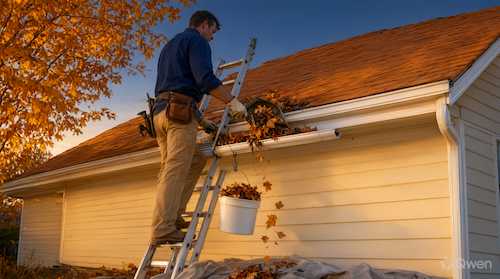
San Jose gets very little summer rain, and the material that collects in a gutter here is fine valley dust and grit rather than leaf litter, which sets hard once it has been wetted and dried. Screens are common and they blind rather than pass water. Only 51.6% of the housing is detached and 55.5% is owner-occupied, so a large share of the drainage is attached housing where the association may control the roofline.
Valley silt that sets
Fine dust settles on roofs and washes into runs, where it collects at low points and in outlets, and the dry heat sets it hard. It does not look like debris and an ordinary flush does not move it. Ask how set material is removed.
Screens that fill instead of passing
Screens trap fine material rather than letting it through, so the run ends up with a layer on top of a screen and a layer of silt beneath it. Ask whether screens are lifted and the channel cleared underneath.
A dry season and a short wet one
With months of no rain, debris accumulates without ever being flushed, and the first winter storms are the only test the run gets. Ask whether the clean is scheduled before that season.
Attached homes and association responsibility
With 51.6% detached housing, many roofs are managed by an association, and the roofline may not be the occupant's to arrange. Ask who is responsible and what notice the association requires.
Older runs and added area
With 59.0% of the stock predating 1980, original runs and fascia are common, and additions have usually increased the roof area. Ask what profile is fitted and whether the run is carrying more roof than it was sized for.
What to pin down in the estimate
Where this page stops
No prices are quoted and no property is assessed here. Roof condition, fascia rot and association responsibility need a contractor or a written answer from the association.
San Jose metro context
The 2024 ACS 5-year estimates describe about 1.97 million residents in 679,914 households and 720,159 housing units, with 55.5% owner-occupied and 51.6% single-family detached. About 59.0% of units predate 1980. No climate station is reported for this metro in the site dataset, so no temperature or precipitation normals appear on this page.
San Jose housing indicators
| Indicator | Value | Source |
|---|---|---|
| Housing units built before 1980 | 59.0% | U.S. Census Bureau |
| Single-family detached share | 51.6% | U.S. Census Bureau |
| Owner-occupied share | 55.5% | U.S. Census Bureau |
| Metro households | 679,914 | U.S. Census Bureau |
| Housing units | 720,159 | U.S. Census Bureau |
| Metro population | 1,969,337 | U.S. Census Bureau |
Station normals are historical averages for one location, not a forecast. What a gutter has to carry depends on roof area, pitch, the debris the surrounding trees drop and whether downspouts discharge where the water can leave.
Frequently Asked Questions
What blocks gutters here with no trees?
Valley silt and roof grit. It settles, sets hard and blocks the outlets without looking like debris.
Do screens help?
They trap fine material rather than passing it, so they blind the run. The channel under them still needs clearing.
When should gutters be cleaned in San Jose?
Before the winter rains, so the run is clear when it is finally tested.
Who is responsible in a townhouse?
Usually the association for the roofline. Confirm in writing before booking.
Is a four-inch run a problem?
It holds less, and additions usually increased the roof area it drains.
Do I need to be home?
Exterior work can be done with agreed access. Nothing inside the house is involved.
Sources and review date
- American Community Survey 2024 5-year estimates (CBSA tables) — U.S. Census Bureau, 2024 ACS 5-year estimates.
Reviewed on 2026-11-18.
Other Home Services in San Jose-Sunnyvale-Santa Clara
All guides for the San Jose-Sunnyvale-Santa Clara metro area