
Austin, TX · metro guide
Painting in Austin: Sun, Stone, and Stucco
Austin coatings fail from sun before anything else. Surface preparation decides how long the next layer survives.
Metro snapshot
Austin in numbers
Sources named below each block
- Population
- 2.4M
- Households
- 989K
- Housing units
- 1.0M
- People / household
- 2.45
- population ÷ households
Owner-occupied homes 58%
The rest are rented. Owners are the ones who commission most exterior work.
Single-family detached 59%
Detached houses carry their own roof, gutters and exterior walls.
Built before 1980 19%
Older housing stock shapes what fails first: gutters, flashing, pipe material.
Season
The year in Austin
- Precipitation
- 36.2 in
- Snowfall
- 0.2 in
Average temperature by month, °F — the shape of the year is what decides when exterior work gets done.
Precipitation by month, inches.
Snowfall by month, inches.
| Month | Average temperature (°F) | Precipitation (in) | Snowfall (in) |
|---|---|---|---|
| January | 52.2°F | 2.64 in | 0.0 in |
| February | 56.1°F | 1.89 in | 0.2 in |
| March | 62.8°F | 2.88 in | 0.0 in |
| April | 69.6°F | 2.42 in | 0.0 in |
| May | 76.8°F | 5.04 in | 0.0 in |
| June | 83.0°F | 3.68 in | 0.0 in |
| July | 85.8°F | 1.96 in | 0.0 in |
| August | 86.5°F | 2.74 in | 0.0 in |
| September | 80.8°F | 3.45 in | 0.0 in |
| October | 71.6°F | 3.91 in | 0.0 in |
| November | 61.0°F | 2.92 in | 0.0 in |
| December | 53.6°F | 2.72 in | 0.0 in |
NOAA 1991–2020 climate normals, station AUSTIN-CAMP MABRY, TX US (USW00013958). Station observations, not a metro-wide average — a metro that spans a mountain range can differ by more than this record shows.
Population, households and housing shares: U.S. Census Bureau, American Community Survey 2024 5-year estimates, metropolitan statistical area.
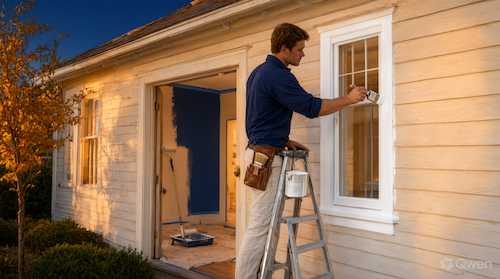
July at Austin's Camp Mabry averages 85.8°F, and the sun here works on exteriors for most of the year. Most homes are stucco, masonry, or fiber cement, materials that absorb heat and release it slowly. The useful comparison is not which color looks best but how the surface is prepared and which products are specified for a hot, high-UV climate.
UV, heat, and color
Ask which products and colors are specified for the sunniest surfaces. Darker colors absorb more heat, which stresses both the coating and the wall behind it. Ask about sheen choice for each material and get product names and coat counts in the written scope.
Stucco and masonry prep
Ask how the surface is cleaned, how cracks and hollow areas are repaired, and whether patching material matches the existing texture. Efflorescence needs treatment rather than a coat of paint over it. Compare prep descriptions line by line before comparing totals.
Hail damage before painting
Ask how impact marks, chips, and bruised trim are identified and repaired. Painting over damaged substrate hides the problem for a season and then shows it again. Ask whether carpentry or stucco repair is included or priced separately.
Timing around heat and storms
Ask how the schedule accounts for the heat of direct sun on a wall and for spring storms. Coatings applied to a hot surface can dry too fast to bond properly. Ask how surfaces are protected between coats and whether the crew returns after weather delays.
Questions to ask before you sign
Where this page stops
This page does not estimate cost or specify products for a particular property. Coating performance depends on the substrate, moisture, preparation, and application, and lead-safe requirements apply to older housing, which should be confirmed with the responsible local authority.
Austin metro context
The 2024 ACS 5-year estimates put the metro at about 2.4 million residents and 989,000 households. About 58.3% of occupied homes are owner-occupied, and about 59.0% of housing units are single-family detached, so most exterior work happens on private homes. About 19.2% of housing units were built before 1980, so lead-based paint is less likely here than in older metros but still possible in the oldest neighborhoods. NOAA's Austin station records January averaging 52.2°F, July 85.8°F, and about 36.2 inches of precipitation a year.
Austin reference station and housing indicators
| Indicator | Value | Source |
|---|---|---|
| January mean temperature | 52.2°F | NOAA NCEI |
| July mean temperature | 85.8°F | NOAA NCEI |
| Annual precipitation | 36.2 in. | NOAA NCEI |
| Metro population | 2,426,592 | U.S. Census Bureau |
| Owner-occupied share | 58.3% | U.S. Census Bureau |
| Single-family detached share | 59.0% | U.S. Census Bureau |
Station normals are historical averages for one location, not a forecast. Census values describe the metro area, not an individual property.
Frequently Asked Questions
How often should an Austin exterior be repainted?
Sun exposure drives the interval more than anything else. Ask a contractor to assess the current coating's condition rather than relying on a fixed schedule.
Does high heat affect paint?
It affects curing and it stresses coatings over time, especially dark colors on sun-facing walls. Ask which products are specified for that exposure.
How are hail marks handled before painting?
Damaged areas need patching, sanding, and priming before coating. Ask how impact damage is identified and repaired, and whether stucco or carpentry work is included.
What is efflorescence on stucco?
It is a mineral deposit that appears when moisture moves through masonry and evaporates at the surface. It needs treatment and the moisture source considered, not simply painted over.
What should a painting estimate include?
Surface preparation, stucco or carpentry repair, priming, products with names and sheens, coat counts, protection of adjacent surfaces, schedule, exclusions, and the warranty.
What is the population of the Austin metro area?
The U.S. Census Bureau's 2024 ACS 5-year estimates report about 2.4 million residents in the metro area. The figure describes regional scale, not the number of homes or providers.
Sources and review date
- American Community Survey 2024 5-year estimates (CBSA tables) — U.S. Census Bureau, 2024 ACS 5-year estimates.
- 1991–2020 station normals — AUSTIN-CAMP MABRY, TX US (USW00013958) — NOAA National Centers for Environmental Information, 1991–2020 climate normals.
Reviewed on 2026-11-18.