
Miami, FL · metro guide
Gutter Cleaning in Miami: 67 Inches of Rain, Salt Corrosion and Condo Roof Drains
The heaviest rainfall of any metro here, on metal that the salt air is already eating.
Metro snapshot
Miami in numbers
Sources named below each block
- Population
- 6.2M
- Households
- 2.3M
- Housing units
- 2.7M
- People / household
- 2.68
- population ÷ households
Owner-occupied homes 61%
The rest are rented. Owners are the ones who commission most exterior work.
Single-family detached 41%
Detached houses carry their own roof, gutters and exterior walls.
Built before 1980 45%
Older housing stock shapes what fails first: gutters, flashing, pipe material.
Season
The year in Miami
- Precipitation
- 67.4 in
- Snowfall
- 0 in
Average temperature by month, °F — the shape of the year is what decides when exterior work gets done.
Precipitation by month, inches.
| Month | Average temperature (°F) | Precipitation (in) | Snowfall (in) |
|---|---|---|---|
| January | 68.6°F | 1.83 in | 0.0 in |
| February | 70.7°F | 2.15 in | 0.0 in |
| March | 73.1°F | 2.46 in | 0.0 in |
| April | 76.7°F | 3.36 in | 0.0 in |
| May | 80.1°F | 6.32 in | 0.0 in |
| June | 82.8°F | 10.51 in | 0.0 in |
| July | 84.1°F | 7.36 in | 0.0 in |
| August | 84.2°F | 9.58 in | 0.0 in |
| September | 83.0°F | 10.22 in | 0.0 in |
| October | 80.1°F | 7.65 in | 0.0 in |
| November | 74.8°F | 3.53 in | 0.0 in |
| December | 71.2°F | 2.44 in | 0.0 in |
NOAA 1991–2020 climate normals, station MIAMI INTL AP, FL US (USW00012839). Station observations, not a metro-wide average — a metro that spans a mountain range can differ by more than this record shows.
Population, households and housing shares: U.S. Census Bureau, American Community Survey 2024 5-year estimates, metropolitan statistical area.
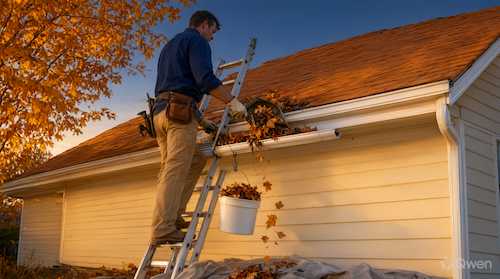
Miami gets 67.4 inches of rain, more than any other metro in this set, and the salt in the air corrodes metal runs and hangers while the rain is still trying to pass through them. A large share of the housing is attached — only 41.0% is detached — so many buildings drain flat or low-slope roofs through scuppers and internal conductors rather than eaves gutters, and those outlets are where storm-season failures happen.
Salt air and aluminum
Salt holds moisture against the run and its hangers, and aluminum that would last decades inland corrodes far sooner here. Corrosion often starts at fasteners and seams, which are exactly the places a leak begins. Ask whether the run's condition is assessed, not only cleared.
Rainfall that exceeds any system
Nearly seventy inches a year means the run is often working at its limit, and a partial blockage turns overflow into water down the wall. Ask whether the outlets are confirmed to flow rather than only cleared.
Flat roofs, scuppers and internal conductors
On the region's low-rise and mid-rise buildings, water leaves through scuppers at the roof edge or through internal conductors, and either can block out of sight. Ask whether roof drainage is included in the service, because many quotes cover only eaves gutters.
Storm season preparation
June to November sets the calendar, and the useful visit is the one before the season rather than after the first storm. Ask whether a pre-season clean can be scheduled deliberately, including the roof drainage.
Associations and building rules
In a metro where most people do not own the exterior wall, access, insurance certificates and vendor registration are usually controlled by an association. Ask what the building requires and who is responsible for the roof drainage.
What to pin down in the estimate
Where this page stops
No prices are quoted and no property is assessed here. Roof drainage repair, structural work and association responsibility need a roofer, an engineer or a written answer from the building.
Miami metro context
The 2024 ACS 5-year estimates describe about 6.25 million residents in 2,334,797 households and 2,680,465 housing units, with 60.5% owner-occupied and 41.0% single-family detached. About 45.4% of units predate 1980. At the Miami Intl Ap reference station January averages 68.6°F and July 84.1°F, on 67.4 inches of annual precipitation.
Miami reference station and housing indicators
| Indicator | Value | Source |
|---|---|---|
| January mean temperature | 68.6°F | NOAA NCEI |
| July mean temperature | 84.1°F | NOAA NCEI |
| Annual precipitation | 67.4 in. | NOAA NCEI |
| Metro population | 6,249,291 | U.S. Census Bureau |
| Owner-occupied share | 60.5% | U.S. Census Bureau |
| Housing units built before 1980 | 45.4% | U.S. Census Bureau |
Station normals are historical averages for one location, not a forecast. What a gutter has to carry depends on roof area, pitch, the debris the surrounding trees drop and whether downspouts discharge where the water can leave.
Frequently Asked Questions
Why do aluminum gutters corrode so fast here?
Salt holds moisture against the metal and its fasteners. Corrosion starts at seams and fixings, which is where leaks appear.
What is a scupper?
An outlet at the roof edge on a flat or low-slope building. It blocks with debris and is often missed by a quote that covers only eaves gutters.
When should gutters be cleaned in Miami?
Before storm season, so the run and the roof drainage are clear when the heavy rain arrives.
Will clear gutters stop flooding?
No. Nearly seventy inches a year exceeds any residential system. The run just needs to work as well as it can.
Who is responsible in a condominium?
Usually the association for the roof and exterior. Confirm in writing before booking.
Do I need to be home?
Exterior work can be done with agreed access. Interior work is a separate scope.
Sources and review date
- American Community Survey 2024 5-year estimates (CBSA tables) — U.S. Census Bureau, 2024 ACS 5-year estimates.
- 1991–2020 station normals — MIAMI INTL AP, FL US (USW00012839) — NOAA National Centers for Environmental Information, 1991–2020 climate normals.
Reviewed on 2026-11-18.
Other Home Services in Miami–Fort Lauderdale–West Palm Beach
All guides for the Miami–Fort Lauderdale–West Palm Beach metro area