
New Orleans, LA · metro guide
Gutter Cleaning in New Orleans: Wood, Termites and Tropical Rain
In this climate, a gutter that keeps wood wet is an invitation to something worse than rot.
Metro snapshot
New Orleans in numbers
Sources named below each block
- Population
- 982K
- Households
- 399K
- Housing units
- 465K
- People / household
- 2.46
- population ÷ households
Owner-occupied homes 61%
The rest are rented. Owners are the ones who commission most exterior work.
Single-family detached 58%
Detached houses carry their own roof, gutters and exterior walls.
Built before 1980 64%
Older housing stock shapes what fails first: gutters, flashing, pipe material.
Season
The year in New Orleans
- Precipitation
- 63.4 in
- Snowfall
- 0 in
Average temperature by month, °F — the shape of the year is what decides when exterior work gets done.
Precipitation by month, inches.
| Month | Average temperature (°F) | Precipitation (in) | Snowfall (in) |
|---|---|---|---|
| January | 54.3°F | 5.18 in | 0.0 in |
| February | 58.0°F | 4.13 in | 0.0 in |
| March | 63.8°F | 4.36 in | 0.0 in |
| April | 70.1°F | 5.22 in | 0.0 in |
| May | 77.1°F | 5.64 in | 0.0 in |
| June | 82.4°F | 7.62 in | 0.0 in |
| July | 83.9°F | 6.79 in | 0.0 in |
| August | 84.0°F | 6.91 in | 0.0 in |
| September | 80.8°F | 5.11 in | 0.0 in |
| October | 72.5°F | 3.70 in | 0.0 in |
| November | 62.4°F | 3.87 in | 0.0 in |
| December | 56.6°F | 4.82 in | 0.0 in |
NOAA 1991–2020 climate normals, station NEW ORLEANS INTL AP, LA US (USW00012916). Station observations, not a metro-wide average — a metro that spans a mountain range can differ by more than this record shows.
Population, households and housing shares: U.S. Census Bureau, American Community Survey 2024 5-year estimates, metropolitan statistical area.
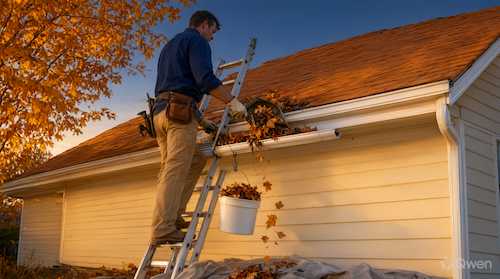
New Orleans is 63.5% pre-1980 and largely wood-framed, and it is one of the few places where the reason to keep gutters working is not the gutter at all. A run that overflows keeps fascia, soffit and siding damp, and damp structural wood in this city is what subterranean and drywood termites look for. The rain is tropical, arriving hard and often, and many original runs have been repaired or replaced piecemeal over decades.
Damp wood and termite pressure
The city has heavy termite pressure, and a gutter that wets the fascia and wall every storm creates exactly the conditions that attract it. Keeping the run clear and the discharge away from the house is part of protecting the structure. Ask whether the contractor reports wet or soft wood at the roofline.
Wood fascia, soffit and piecemeal repairs
Older runs have often been patched section by section, and joints between old and new metal are where leaks start. Ask whether joints and seams are checked rather than only the debris.
Tropical downpours
Rain arrives in heavy events, so a restricted run overflows at the fascia rather than at the outlet. Ask whether the outlets are confirmed to flow.
Shutters, hardware and storm preparation
Operable shutters and their hardware are part of storm preparation, and the run above them discharges onto them when it overflows. Ask whether the discharge and the shutters are considered together before the season.
Sagging runs on old hangers
Old spike-and-ferrule hangers on old fascia loosen, and a sagging run holds water even when clear. Ask whether pitch and hangers are checked.
What to pin down in the estimate
Where this page stops
No prices are quoted and no property is assessed here. Termite activity, rot and structural repair need a licensed specializt, and nothing here is a pest inspection.
New Orleans metro context
The 2024 ACS 5-year estimates describe about 0.98 million residents in 398,564 households and 465,148 housing units, with 60.6% owner-occupied and 58.4% single-family detached. About 63.5% of units predate 1980. No climate station is reported for this metro in the site dataset, so no temperature or precipitation normals appear on this page.
New Orleans housing indicators
| Indicator | Value | Source |
|---|---|---|
| Housing units built before 1980 | 63.5% | U.S. Census Bureau |
| Single-family detached share | 58.4% | U.S. Census Bureau |
| Owner-occupied share | 60.6% | U.S. Census Bureau |
| Metro households | 398,564 | U.S. Census Bureau |
| Housing units | 465,148 | U.S. Census Bureau |
| Metro population | 981,662 | U.S. Census Bureau |
Station normals are historical averages for one location, not a forecast. What a gutter has to carry depends on roof area, pitch, the debris the surrounding trees drop and whether downspouts discharge where the water can leave.
Frequently Asked Questions
Why does keeping gutters clear matter more here?
Because damp wood attracts termites. A run that wets the fascia every storm is a structural risk, not just a cosmetic one.
Do I need a termite inspection as well?
That is a separate service. A gutter visit can report soft or wet wood, but it is not a pest inspection.
How often should gutters be cleared?
At least twice a year, and before storm season, given the intensity of the rain.
Can patched gutters be cleaned?
Yes, but joints between old and new sections are where leaks start, so they should be checked.
Why does my gutter sag?
Old hangers loosen in old fascia, and a sag holds water even when the channel is clear.
Do I need to be home?
Exterior work can be done with agreed access. Nothing inside the house is involved.
Sources and review date
- American Community Survey 2024 5-year estimates (CBSA tables) — U.S. Census Bureau, 2024 ACS 5-year estimates.
Reviewed on 2026-11-18.