
San Diego, CA · metro guide
Landscaping in San Diego: Imported Water and Slopes
San Diego gardens are designed around limited water and uneven ground. Irrigation and grading carry the plan.
Metro snapshot
San Diego in numbers
Sources named below each block
- Population
- 3.3M
- Households
- 1.2M
- Housing units
- 1.3M
- People / household
- 2.81
- population ÷ households
Owner-occupied homes 55%
The rest are rented. Owners are the ones who commission most exterior work.
Single-family detached 50%
Detached houses carry their own roof, gutters and exterior walls.
Built before 1980 50%
Older housing stock shapes what fails first: gutters, flashing, pipe material.
Season
The year in San Diego
- Precipitation
- 9.8 in
- Snowfall
- —
Average temperature by month, °F — the shape of the year is what decides when exterior work gets done.
Precipitation by month, inches.
| Month | Average temperature (°F) | Precipitation (in) | Snowfall (in) |
|---|---|---|---|
| January | 58.4°F | 1.98 in | — |
| February | 59.0°F | 2.20 in | — |
| March | 60.7°F | 1.46 in | — |
| April | 62.9°F | 0.65 in | — |
| May | 64.8°F | 0.28 in | — |
| June | 67.2°F | 0.05 in | — |
| July | 70.7°F | 0.08 in | — |
| August | 72.4°F | 0.01 in | — |
| September | 71.7°F | 0.12 in | — |
| October | 68.1°F | 0.50 in | — |
| November | 62.7°F | 0.79 in | — |
| December | 57.9°F | 1.67 in | — |
NOAA 1991–2020 climate normals, station SAN DIEGO LINDBERGH FLD, CA US (USW00023188). Station observations, not a metro-wide average — a metro that spans a mountain range can differ by more than this record shows.
Population, households and housing shares: U.S. Census Bureau, American Community Survey 2024 5-year estimates, metropolitan statistical area.
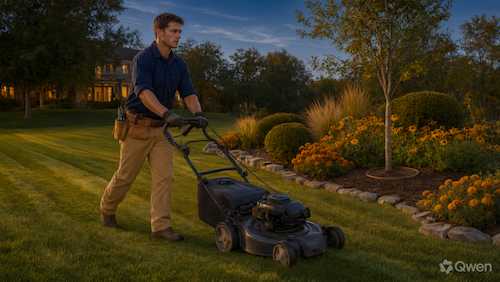
San Diego's landscape is constrained by water that has to be imported and by terrain that is rarely flat. Rain arrives in a short winter window, and the rest of the year is dry. A plan that assumes regular summer rain will fail, and one that ignores slope will send both irrigation water and storm runoff where nobody wants them.
Plant selection and water budget
Ask which plants are proposed and what their water needs are once established, not just in the first season. Mediterranean and native species generally need less, but they still have soil and exposure preferences. Ask whether the plan distinguishes between a low-water planting and a no-irrigation one, because those are different commitments.
Efficient irrigation
Ask how zones are divided, what emitter layout is proposed, and whether the controller can be adjusted seasonally. Ask how the plan handles overspray onto walls, paving, and slopes, where runoff wastes water and can stain surfaces. A system nobody knows how to adjust usually runs too long.
Slope, grading, and runoff
Ask how the design moves water away from the foundation and where it goes on a sloped lot. Terracing, swales, and retaining walls change the cost and the engineering. Ask whether any structural work is included and who is responsible for permits if a wall is needed.
Fire-safe spacing near open land
If the property borders open land or a canyon, planting choice and spacing near the house matter. Ask how the plan treats the zone closest to the structure and whether irrigation is maintained there. Requirements vary by location and should be confirmed with the local authority.
Questions to ask before approving a plan
Where this page stops
This page does not design a landscape or estimate cost for a specific property. Water-use rules, grading requirements, and fire-safety rules vary by city and by site, and should be confirmed locally.
San Diego metro context
The 2024 ACS 5-year estimates put the metro at about 3.3 million residents and 1.2 million households. About 54.6% of occupied homes are owner-occupied, and about 50.0% of housing units are single-family detached, so most landscaping work happens on private lots. About 49.5% of housing units were built before 1980. This page reports Census indicators only; a NOAA station is not included for this metro in the site dataset.
San Diego metro housing indicators
| Indicator | Value | Source |
|---|---|---|
| Metro population | 3,288,774 | U.S. Census Bureau |
| Households | 1,171,278 | U.S. Census Bureau |
| Owner-occupied share | 54.6% | U.S. Census Bureau |
| Single-family detached share | 50.0% | U.S. Census Bureau |
| Housing units built before 1980 | 49.5% | U.S. Census Bureau |
Census values describe the metro area, not an individual property. A climate station is not reported for this metro in the site dataset.
Frequently Asked Questions
What should a San Diego landscaping estimate include?
Ask for the plan drawing, plant list with sizes and water needs, soil preparation, mulch, irrigation layout and controller, grading or drainage work, hardscape, disposal, a schedule, exclusions, and the establishment terms.
How do I reduce outdoor water use?
Plant selection and irrigation efficiency do most of the work: species suited to the site, matched hydrozones, and a controller that is adjusted seasonally. Ask what the plan expects in gallons per week at maturity.
How should a sloped yard be handled?
Slopes need grading, terracing, or drainage to control both irrigation runoff and storm water. Ask where water goes and whether structural work is included.
Do I need a permit for a retaining wall?
Often yes, depending on height and location. Confirm with the local authority and ask whether the contract includes permit handling.
Who replaces plants that die in the first year?
It depends on the contract. Ask whether replacement is included, for how long, and under what conditions, such as proper irrigation or maintenance by the owner.
What is the population of the San Diego metro area?
The U.S. Census Bureau's 2024 ACS 5-year estimates report about 3.3 million residents in the metro area. The figure describes regional scale, not the number of homes or providers.
Sources and review date
- American Community Survey 2024 5-year estimates (CBSA tables) — U.S. Census Bureau, 2024 ACS 5-year estimates.
Reviewed on 2026-11-17.
Other Home Services in San Diego-Chula Vista-Carlsbad
All guides for the San Diego-Chula Vista-Carlsbad metro area