
San Jose, CA · metro guide
Landscaping in San Jose: Water Rules, Clay, and the Fire Edge
Water is metered and regulated, the soil is clay, and on the hills the planting plan is also a fire plan.
Metro snapshot
San Jose in numbers
Sources named below each block
- Population
- 2.0M
- Households
- 680K
- Housing units
- 720K
- People / household
- 2.90
- population ÷ households
Owner-occupied homes 56%
The rest are rented. Owners are the ones who commission most exterior work.
Single-family detached 52%
Detached houses carry their own roof, gutters and exterior walls.
Built before 1980 59%
Older housing stock shapes what fails first: gutters, flashing, pipe material.
Season
The year in San Jose
- Precipitation
- 13.5 in
- Snowfall
- —
Average temperature by month, °F — the shape of the year is what decides when exterior work gets done.
Precipitation by month, inches.
| Month | Average temperature (°F) | Precipitation (in) | Snowfall (in) |
|---|---|---|---|
| January | 50.8°F | 2.80 in | — |
| February | 53.2°F | 2.69 in | — |
| March | 56.1°F | 2.08 in | — |
| April | 58.8°F | 1.07 in | — |
| May | 63.0°F | 0.39 in | — |
| June | 67.3°F | 0.18 in | — |
| July | 69.5°F | 0.00 in | — |
| August | 70.0°F | 0.05 in | — |
| September | 69.0°F | 0.07 in | — |
| October | 64.3°F | 0.53 in | — |
| November | 55.9°F | 1.33 in | — |
| December | 50.6°F | 2.29 in | — |
NOAA 1991–2020 climate normals, station SAN JOSE, CA US (USW00023293). Station observations, not a metro-wide average — a metro that spans a mountain range can differ by more than this record shows.
Population, households and housing shares: U.S. Census Bureau, American Community Survey 2024 5-year estimates, metropolitan statistical area.
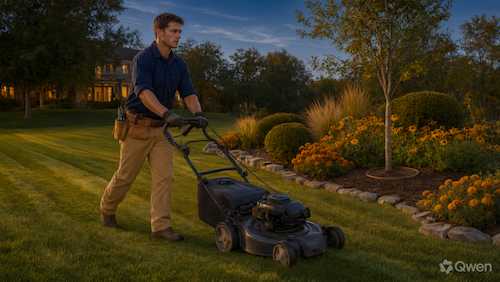
Landscaping in Santa Clara Valley is designed inside a water budget. California's rules on irrigation and on turf have tightened repeatedly, local water retailers set their own programs and restrictions, and a garden that ignores all of that becomes expensive before it becomes attractive. The valley floor is largely clay, which drains slowly and holds salt, while the hills above it bring a different constraint entirely: fire. A planting plan for a property near the wildland edge is a defensible-space plan, and it is reviewed as such.
The water budget is the design
Ask how the irrigation system is zoned, whether it uses drip for beds and separate valves for turf, whether the controller adjusts to weather, and who tunes it through the year. Then ask what the current local rules require for the address: some districts limit turf area on new or renovated landscapes, and many offer conversion programs. A design that assumes unlimited water is the most common way these projects fail financially, and it usually fails in the second summer rather than the first.
Clay soil, drainage and salt
Valley clay accepts water slowly and holds it, so a planting hole can become a basin and winter rain can stand for days. Amending a bed in a low spot makes it worse rather than better; grading and drainage come first. Irrigation with local water also adds salts over time, which accumulate where drainage is poor. Ask where water stands in winter, whether the design raises beds above grade, and how any low point is being addressed.
Mature trees are an asset with a cost
Older neighborhoods have large trees that shade the garden and the house, and they also occupy the soil where new planting is proposed. Ask how the contractor will protect roots during any excavation, whether the irrigation layout avoids cutting major roots, and how the plant list accounts for the shade the canopy creates. Removing a protected or street tree in this region requires permits, and the approval process is not quick.
On the hills, the plan is a fire plan
Properties near open space in the Santa Cruz Mountains foothills or the eastern hills fall within areas where defensible space requirements apply: clearing near the structure, limiting flammable vegetation, and maintaining separation between plants and the building. Those requirements change the plant list and the maintenance regime, and they are assessed by the local fire authority. Ask whether the property is in such a zone, what the current requirements are, and whether the contractor has designed for them before.
Who keeps it alive afterwards
A water-efficient garden is not a maintenance-free one: it needs seasonal adjustment of the irrigation, pruning at the right time, and replacement of mulch. Ask what the maintenance agreement covers, who adjusts the controller between seasons, and what happens if the household wants to reduce the work later. A design that assumes a gardener forever is a design that fails when the gardener leaves.
What to put in a landscaping brief
Where this page stops
This page does not evaluate a property and publishes no prices. Soil, drainage and utility locations must be confirmed on site, and water-use rules, tree protection and fire-safety requirements are set locally and change over time.
San Jose metro context
The 2024 ACS 5-year estimates count about 1.97 million residents in 679,914 households across 720,159 housing units. Owner occupancy is 55.5% and only 51.6% of units are single-family detached — one of the lower detached shares on this site — while 59.0% of units predate 1980. A climate station is not reported for this metro in the site dataset, so no temperature or precipitation figures appear on this page.
San Jose housing and ownership indicators
| Indicator | Value | Source |
|---|---|---|
| Metro population | 1,969,337 | U.S. Census Bureau |
| Metro households | 679,914 | U.S. Census Bureau |
| Housing units | 720,159 | U.S. Census Bureau |
| Housing units built before 1980 | 59.0% | U.S. Census Bureau |
| Single-family detached share | 51.6% | U.S. Census Bureau |
| Owner-occupied share | 55.5% | U.S. Census Bureau |
No climate normals are shown because no station record is held for this metro in the site dataset. Water supply conditions vary by district and by year, so current rules should be confirmed for the address.
Frequently Asked Questions
How much turf can I have?
It depends on the water retailer and on whether the landscape is new or being renovated, and the rules have tightened over time. Some districts restrict turf area and many offer conversion incentives. Confirm the current requirement for the address before the design is finalized.
Why does my clay soil hold water?
Valley clay drains slowly once saturated, so a low spot or an amended planting hole can hold water for days. Grading, raised beds and drainage come before plant selection, and amending a basin makes the problem worse rather than better.
Can I remove a large tree?
Often a permit is required, particularly for street trees and for species the city protects, and the process takes time. Ask the local authority before planning around removal, and consider a design that keeps the tree and works with its shade and roots.
What is defensible space and does it apply to me?
It is the set of vegetation and clearance requirements intended to reduce fire risk near a structure, and it applies in designated areas near wildland. It changes what can be planted close to the building and how it must be maintained. Ask the local fire authority whether the property is in such a zone.
Is a drought-tolerant garden low maintenance?
Lower than a lawn, but not maintenance-free. The irrigation still needs seasonal adjustment, plants need pruning at the right time, and mulch needs renewing. A maintenance agreement should say who does that work and how often.
Should I install artificial turf?
It removes irrigation from that area and is permitted in many places, but it gets very hot in direct sun, has a limited lifespan and may not qualify for conversion incentives. It is a trade-off rather than a free solution.
Sources and review date
- American Community Survey 2024 5-year estimates (CBSA tables) — U.S. Census Bureau, 2024 ACS 5-year estimates.
Reviewed on 2026-11-18.
Other Home Services in San Jose-Sunnyvale-Santa Clara
All guides for the San Jose-Sunnyvale-Santa Clara metro area