
Sacramento, CA · metro guide
Landscaping in Sacramento: Irrigation, Valley Oaks and Clay Soil
The trees that make these neighborhoods are the most valuable thing on the lot — and the hardest thing to replace.
Metro snapshot
Sacramento in numbers
Sources named below each block
- Population
- 2.4M
- Households
- 882K
- Housing units
- 955K
- People / household
- 2.75
- population ÷ households
Owner-occupied homes 63%
The rest are rented. Owners are the ones who commission most exterior work.
Single-family detached 68%
Detached houses carry their own roof, gutters and exterior walls.
Built before 1980 44%
Older housing stock shapes what fails first: gutters, flashing, pipe material.
Season
The year in Sacramento
- Precipitation
- 18.1 in
- Snowfall
- —
Average temperature by month, °F — the shape of the year is what decides when exterior work gets done.
Precipitation by month, inches.
| Month | Average temperature (°F) | Precipitation (in) | Snowfall (in) |
|---|---|---|---|
| January | 47.6°F | 3.66 in | — |
| February | 51.4°F | 3.49 in | — |
| March | 55.4°F | 2.68 in | — |
| April | 59.5°F | 1.26 in | — |
| May | 66.1°F | 0.75 in | — |
| June | 72.2°F | 0.23 in | — |
| July | 75.9°F | 0.00 in | — |
| August | 75.3°F | 0.04 in | — |
| September | 72.5°F | 0.09 in | — |
| October | 64.5°F | 0.85 in | — |
| November | 53.9°F | 1.66 in | — |
| December | 47.3°F | 3.43 in | — |
NOAA 1991–2020 climate normals, station SACRAMENTO EXECUTIVE AP, CA US (USW00023232). Station observations, not a metro-wide average — a metro that spans a mountain range can differ by more than this record shows.
Population, households and housing shares: U.S. Census Bureau, American Community Survey 2024 5-year estimates, metropolitan statistical area.
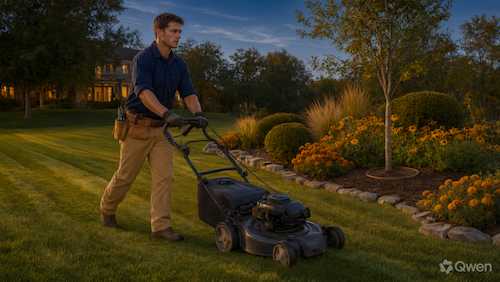
Sacramento's older neighborhoods are defined by their canopy: mature valley oaks, Chinese pistache, crape myrtle and an avenue of street trees planted a century ago. That canopy is also the part of the landscape that cannot be replaced on any human schedule, which changes the priorities on a project here. The rest of the design responds to a Mediterranean pattern — wet winters, dry summers — and to clay soil that holds winter water and then dries to something like concrete. With 68.4% of the stock single-family detached and 43.9% predating 1980, most yards are mature landscapes being reworked rather than blank lots.
Work around the trees, not through them
A mature oak's roots extend far beyond the canopy, and the damage from construction is often invisible for years: grade changes, compaction from equipment, roots cut for a patio. Many jurisdictions also protect designated or heritage trees, so removal may need a permit and replacement planting. The practical sequence is to map what is there and where the root zones are before designing anything hard. Ask how the design protects root zones during construction, whether any tree on the site is protected, and what the plan is for the trees the work will disturb.
The irrigation conversion is the design
When a lawn goes, the spray heads that watered it usually stay, and a drip system running on a turf schedule either starves the new plants or drowns them. A proper conversion splits the zones, matches the emitters to the plant groups, adds a controller that adjusts with the season, and keeps the trees on their own schedule — established trees need deep, infrequent water, not a daily sprinkle. Ask how many zones the design creates, what each group of plants is watered by, and whether the trees are separated from the shrubs.
Clay, drainage and the winter water table
This clay holds water in winter and drains slowly, so a planting hole can fill and stay full through a wet January — which is how a surprising number of plants drown in a region that is dry half the year. The details that matter are the width of the amended area, planting depth above the grade rather than below it, and where the site drains when the ground is saturated. Ask how the planting detail handles winter drainage, how wide the amendment goes, and where the low corner of the lot sends water.
Water rules, rebates and the honest plant list
Water use rules and rebate programs in this region have changed repeatedly, and they shape what a conversion is worth doing now versus later. They also change the plant list: species sold as drought-tolerant in a coastal garden can struggle in a valley that bakes through July and August. Ask what the current rules and any rebate terms require, whether the plant list was chosen for this valley rather than for a generic California garden, and how the first two summers of watering will be handled.
The first two summers decide the design
A converted landscape either establishes or it does not, and the decision is made in the first two summers rather than on the day it is planted. New plants need consistent water while their roots reach out into surrounding soil, and the trees need more than the shrubs do. Ask who is responsible for watering during establishment, how the schedule changes between the first and second summer, and what happens if a plant fails in that period.
What to pin down in the design
Where this page stops
No prices are quoted and no site is assessed here. Tree protection ordinances, water-use rules and rebate terms vary by jurisdiction and change, so the current requirements should be confirmed with the local agency before work begins.
Sacramento metro context
The 2024 ACS 5-year estimates describe about 2.43 million residents in 881,889 households and 954,751 housing units, with 63.0% owner-occupied and 68.4% single-family detached. About 43.9% of units predate 1980, which is why most of the landscapes here are established gardens with mature trees rather than new build sites. No climate station is reported for this metro in the site dataset, so no temperature or precipitation normals appear on this page.
Sacramento housing indicators
| Indicator | Value | Source |
|---|---|---|
| Housing units built before 1980 | 43.9% | U.S. Census Bureau |
| Single-family detached share | 68.4% | U.S. Census Bureau |
| Owner-occupied share | 63.0% | U.S. Census Bureau |
| Metro households | 881,889 | U.S. Census Bureau |
| Housing units | 954,751 | U.S. Census Bureau |
| Metro population | 2,426,388 | U.S. Census Bureau |
No climate normals are shown because no station record is held for this metro in the site dataset. The high share of pre-1980 housing is the reason mature trees and established irrigation systems dominate the work.
Frequently Asked Questions
Can I remove a large tree from my yard?
Possibly, but many jurisdictions protect designated or heritage trees and require a permit, sometimes with replacement planting. Identify the species and size and confirm the rule before scheduling any removal.
Why should the trees be on a separate irrigation zone?
Because established trees want deep, infrequent watering while shrubs and perennials want something different. On one schedule, either the trees are overwatered or the new plants are stressed.
Why do plants die in winter here?
Because clay soil holds winter rain, and a planting hole can stay saturated for weeks. Correct planting depth and a wide amended area — not just a deep hole — are what prevent it.
Is a drought-tolerant plant list enough?
Only if the species suit valley heat rather than a coastal climate. A plant that tolerates low water in fog can still scorch in a Sacramento July.
Should I remove the lawn completely?
That is a design decision, and rules or rebate terms may influence it. What matters technically is that removing turf also means changing the irrigation, or the replacement planting inherits a schedule designed for grass.
How long does a conversion need help?
New plants need consistent water through their establishment period, usually the first two summers. A design that assumes otherwise tends to lose plants in the second year.
Sources and review date
- American Community Survey 2024 5-year estimates (CBSA tables) — U.S. Census Bureau, 2024 ACS 5-year estimates.
Reviewed on 2026-11-18.