
Sacramento, CA · metro guide
Window Cleaning in Sacramento: Valley Dust, Oak Pollen and Hard Water
A valley floor that traps dust and pollen, with water that leaves marks of its own.
Metro snapshot
Sacramento in numbers
Sources named below each block
- Population
- 2.4M
- Households
- 882K
- Housing units
- 955K
- People / household
- 2.75
- population ÷ households
Owner-occupied homes 63%
The rest are rented. Owners are the ones who commission most exterior work.
Single-family detached 68%
Detached houses carry their own roof, gutters and exterior walls.
Built before 1980 44%
Older housing stock shapes what fails first: gutters, flashing, pipe material.
Season
The year in Sacramento
- Precipitation
- 18.1 in
- Snowfall
- —
Average temperature by month, °F — the shape of the year is what decides when exterior work gets done.
Precipitation by month, inches.
| Month | Average temperature (°F) | Precipitation (in) | Snowfall (in) |
|---|---|---|---|
| January | 47.6°F | 3.66 in | — |
| February | 51.4°F | 3.49 in | — |
| March | 55.4°F | 2.68 in | — |
| April | 59.5°F | 1.26 in | — |
| May | 66.1°F | 0.75 in | — |
| June | 72.2°F | 0.23 in | — |
| July | 75.9°F | 0.00 in | — |
| August | 75.3°F | 0.04 in | — |
| September | 72.5°F | 0.09 in | — |
| October | 64.5°F | 0.85 in | — |
| November | 53.9°F | 1.66 in | — |
| December | 47.3°F | 3.43 in | — |
NOAA 1991–2020 climate normals, station SACRAMENTO EXECUTIVE AP, CA US (USW00023232). Station observations, not a metro-wide average — a metro that spans a mountain range can differ by more than this record shows.
Population, households and housing shares: U.S. Census Bureau, American Community Survey 2024 5-year estimates, metropolitan statistical area.
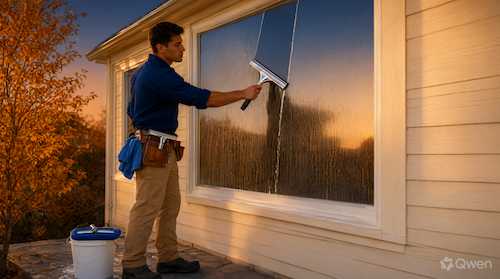
Sacramento sits at the floor of a valley that holds what the air carries, and the air carries a lot: agricultural dust from surrounding farmland, olive and oak pollen in spring, and the film that comes with a hot, still summer. Rain is concentrated into a short winter and the summers are dry, so nothing rinses the glass for months. The water is hard, which turns irrigation into a deposit problem, and 43.9% of the housing predates 1980 so a good share of the glass is older single glazing.
Valley dust that does not leave
Surrounding farmland and the still summer air mean fine dust settles and stays. It is not a dramatic coat; it is an even film that gradually dulls the glass and is only removed when someone removes it. Ask how the interval is decided for a house that gets no help from the weather.
Oak and olive pollen
Spring brings a heavy pollen load from the region's oaks and the olive trees that are common in older neighborhoods, and rain that arrives late sets it rather than washing it off. Ask when the contractor considers the season over.
Hard water and irrigation
Local water carries minerals, and irrigation in a dry summer runs constantly. Overspray dries on glass and deposits minerals cyclically at the same place, which is how marks become permanent. Ask whether heads can be adjusted and whether the final rinse is purified.
A hot, dry summer
Glass in direct sun dries solution fast enough to streak and to bake on whatever is beneath it. That is a sequencing problem rather than a product problem. Ask how the elevations are ordered through the day.
Older glazing and coated units side by side
With 43.9% of the stock predating 1980 and constant new building, the metro has both: older single glazing that scratches if grit is wiped dry, and newer coated units that are chemically sensitive. Ask which applies before a method is chosen.
What to pin down in the estimate
Where this page stops
No prices are quoted and no property is assessed here. Etched glass, coating damage and irrigation layout need inspection or a specializt rather than a cleaning opinion.
Sacramento metro context
The 2024 ACS 5-year estimates describe about 2.43 million residents in 881,889 households and 954,751 housing units, with 63.0% owner-occupied and 68.4% single-family detached. About 43.9% of units predate 1980. No climate station is reported for this metro in the site dataset, so no temperature or precipitation normals appear on this page.
Sacramento housing indicators
| Indicator | Value | Source |
|---|---|---|
| Housing units built before 1980 | 43.9% | U.S. Census Bureau |
| Single-family detached share | 68.4% | U.S. Census Bureau |
| Owner-occupied share | 63.0% | U.S. Census Bureau |
| Metro households | 881,889 | U.S. Census Bureau |
| Housing units | 954,751 | U.S. Census Bureau |
| Metro population | 2,426,388 | U.S. Census Bureau |
Station normals are historical averages for one location, not a forecast. Glass condition depends on how often the surface is wetted and what the water carries.
Frequently Asked Questions
Why does the glass stay dull even after cleaning?
Valley dust returns continuously and nothing rinses it. If a clean looks dull immediately, the film was not fully removed rather than having come back.
Can the marks from irrigation be removed?
Fresh deposits usually can. Baked-on deposits may have etched the glass, and that is permanent.
Should I clean during pollen season?
After it. Rain sets the pollen, and cleaning at the peak means it re-coats within days.
Is cleaning safe for newer windows?
With the coating in mind. Ammonia and abrasives can damage low-emissivity glass permanently.
Why do windows streak in summer?
Heat dries the solution before it can be removed. It is fixed by working those elevations at a different time of day.
How often should windows be cleaned in Sacramento?
Often enough that the film never bakes on. Look at the glass after a month and set the interval from that.
Sources and review date
- American Community Survey 2024 5-year estimates (CBSA tables) — U.S. Census Bureau, 2024 ACS 5-year estimates.
Reviewed on 2026-11-18.