
Salt Lake City, UT · metro guide
HVAC in Salt Lake City: Swamp Coolers, Altitude, and Winter Inversions
Two systems coexist here: evaporative cooling for the dry summer, and a furnace that has to run clean in a valley that traps air.
Metro snapshot
Salt Lake City in numbers
Sources named below each block
- Population
- 1.3M
- Households
- 450K
- Housing units
- 475K
- People / household
- 2.83
- population ÷ households
Owner-occupied homes 67%
The rest are rented. Owners are the ones who commission most exterior work.
Single-family detached 61%
Detached houses carry their own roof, gutters and exterior walls.
Built before 1980 42%
Older housing stock shapes what fails first: gutters, flashing, pipe material.
Season
The year in Salt Lake City
- Precipitation
- 15.5 in
- Snowfall
- 51.9 in
Average temperature by month, °F — the shape of the year is what decides when exterior work gets done.
Precipitation by month, inches.
Snowfall by month, inches.
| Month | Average temperature (°F) | Precipitation (in) | Snowfall (in) |
|---|---|---|---|
| January | 31.4°F | 1.43 in | 12.7 in |
| February | 36.6°F | 1.30 in | 10.7 in |
| March | 45.8°F | 1.75 in | 5.9 in |
| April | 51.8°F | 2.16 in | 2.9 in |
| May | 61.5°F | 1.82 in | 0.1 in |
| June | 71.6°F | 0.95 in | 0.0 in |
| July | 81.1°F | 0.49 in | 0.0 in |
| August | 79.1°F | 0.58 in | 0.0 in |
| September | 68.4°F | 1.06 in | 0.0 in |
| October | 54.6°F | 1.26 in | 0.5 in |
| November | 41.7°F | 1.32 in | 7.0 in |
| December | 32.2°F | 1.40 in | 12.1 in |
NOAA 1991–2020 climate normals, station SALT LAKE CITY INTL AP, UT US (USW00024127). Station observations, not a metro-wide average — a metro that spans a mountain range can differ by more than this record shows.
Population, households and housing shares: U.S. Census Bureau, American Community Survey 2024 5-year estimates, metropolitan statistical area.
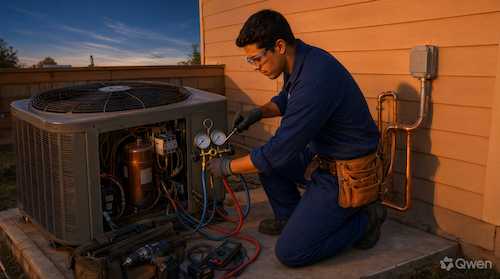
The Wasatch Front has an unusual HVAC profile. The air is dry enough in summer that evaporative cooling works well and has been the default choice on a great deal of the housing stock — a fact that surprises people arriving from humid parts of the country, where the same equipment performs poorly. The other half of the year is cold enough to need real heating, and the valley's winter inversions trap emissions close to the ground, which turns combustion equipment and wood burning from a private decision into a public one. Add a metro where 42.3% of housing predates 1980 and the ducts in that older stock are often original, and the questions worth asking become quite specific.
Evaporative cooling is a real option here
A swamp cooler drops supply air temperature by evaporating water into the airstream, which works when the outside air is dry and fails when it is not. On the Wasatch Front it delivers comfortable cooling for most of the summer at a fraction of the electrical draw of a compressor system, which is why it is so common. It also needs water, a bleed to prevent mineral buildup, a winter cover or shutdown procedure, and roof access for service. Ask what the water use is likely to be, how the unit is protected in winter, and whether the roof structure and curb are in good condition — a leaking cooler curb is a classic source of ceiling damage.
Altitude changes how combustion equipment behaves
The valley floor sits high enough above sea level that gas appliances need attention to derating and to the air-fuel mixture; a furnace or boiler rated at sea level will not perform the same way here without adjustment or a high-altitude kit. This is not a detail homeowners usually think to ask about, and it directly affects safety and efficiency. Ask whether the equipment being installed is specified for the altitude of the address, whether a conversion kit is required, and whether the installer will verify combustion after installation rather than simply lighting the burner and leaving.
Winter inversions put a premium on clean combustion
In winter the valley can hold a shallow layer of cold air beneath warmer air above, trapping pollutants near the ground for days. During those periods, restrictions on solid-fuel burning and voluntary actions to reduce emissions are part of living here, and they make an old, poorly tuned furnace into a neighborhood issue as well as a household one. Ask about the equipment's emissions and efficiency, whether the venting is correct, and whether the system has a way to run fan-only circulation with a filter to improve indoor air during an inversion. If wood burning is part of the plan, check the current rules first.
Ducts from 1975 are still moving air
In a metro where 42.3% of the housing predates 1980, a lot of the ductwork in service was installed when energy was cheap: undersized returns, unsealed joints, and insulation that has since slumped or been compressed. That matters more here than a simple efficiency argument suggests, because a leaky duct system in a house with an evaporative cooler can also pull attic air and dust into the supply. Ask whether the ducts will be inspected and sealed, whether the return path is adequate, and how the work interacts with any change from evaporative to refrigerated cooling.
Switching from evaporative to refrigerated cooling
Many homeowners consider the change and then discover the details: a compressor system needs a condensing unit outside, a coil in the air handler, a properly sized electrical circuit that the existing service may not have, and ductwork that can handle the different airflow. None of that is insurmountable, and none of it is free. Ask what the electrical service will need, whether the existing ducts are compatible, whether both systems will coexist for a season, and how the roof or wall penetration for the old cooler will be closed and weatherproofed.
What a proposal should answer
Where this page stops
No prices and no equipment recommendations are published here. Combustion safety, venting and refrigerant work require on-site assessment by a licensed professional, and winter burning restrictions belong to the state and local air-quality authority.
Salt Lake City metro context
The 2024 ACS 5-year estimates count about 1.28 million residents in 450,170 households across 474,627 housing units, with 67.0% owner-occupied and 60.9% single-family detached. About 42.3% of units were built before 1980, which is the share most likely to have original ductwork and older combustion equipment. A climate station is not reported for this metro in the site dataset, so no temperature or precipitation normals appear on this page.
Salt Lake City housing and ownership indicators
| Indicator | Value | Source |
|---|---|---|
| Metro population | 1,275,870 | U.S. Census Bureau |
| Metro households | 450,170 | U.S. Census Bureau |
| Housing units | 474,627 | U.S. Census Bureau |
| Housing units built before 1980 | 42.3% | U.S. Census Bureau |
| Single-family detached share | 60.9% | U.S. Census Bureau |
| Owner-occupied share | 67.0% | U.S. Census Bureau |
No NOAA climate normals are shown for this metro because no station record is held in the site dataset. Altitude and inversion behavior depend on the specific location along the valley, not on a metro-wide average.
Frequently Asked Questions
Does a swamp cooler actually work in Salt Lake City?
For most of the summer, yes, because the air is dry enough for evaporative cooling to be effective. It performs best on the hottest, driest afternoons and less well during the occasional humid spell. Water use, roof access and winter shutdown are the practical trade-offs.
Why does altitude matter for a furnace?
Thinner air at altitude changes the air-fuel mixture and the appliance's rated input, so equipment has to be specified or converted for the elevation. A furnace installed without that adjustment can run inefficiently or unsafely. Ask for the altitude rating and for combustion verification after installation.
What can I do about indoor air during an inversion?
Running the fan to circulate air through a good filter, keeping windows closed, and avoiding indoor combustion during the worst days are the usual measures. Equipment condition matters too, since a poorly tuned furnace adds to both outdoor and indoor pollution.
Can I keep the swamp cooler and add air conditioning?
Some houses run both, using the evaporative unit in dry weather and the compressor in humid spells. That requires compatible ductwork and enough electrical capacity, and it needs the changeover to be planned rather than improvised so that neither system fights the other.
Is wood burning allowed?
Restrictions apply during inversion periods and can change. Check the current rules from the state or local air-quality authority before relying on a wood stove or fireplace as part of your heating plan.
How often should older ductwork be looked at?
Whenever a system is replaced or a comfort problem persists, and periodically in houses built before 1980. Common findings are unsealed joints, disconnected sections, crushed flex duct and inadequate return air, all of which reduce performance regardless of equipment quality.
Sources and review date
- American Community Survey 2024 5-year estimates (CBSA tables) — U.S. Census Bureau, 2024 ACS 5-year estimates.
Reviewed on 2026-11-18.