
Portland, OR-WA · metro guide
HVAC in Portland: A Mild Climate That Suddenly Needs Cooling
Houses here were designed for a climate that no longer quite exists — and most of them have no ductwork to retrofit.
Metro snapshot
Portland in numbers
Sources named below each block
- Population
- 2.5M
- Households
- 1.0M
- Housing units
- 1.1M
- People / household
- 2.50
- population ÷ households
Owner-occupied homes 62%
The rest are rented. Owners are the ones who commission most exterior work.
Single-family detached 60%
Detached houses carry their own roof, gutters and exterior walls.
Built before 1980 46%
Older housing stock shapes what fails first: gutters, flashing, pipe material.
Season
The year in Portland
- Precipitation
- 36.9 in
- Snowfall
- 4.2 in
Average temperature by month, °F — the shape of the year is what decides when exterior work gets done.
Precipitation by month, inches.
Snowfall by month, inches.
| Month | Average temperature (°F) | Precipitation (in) | Snowfall (in) |
|---|---|---|---|
| January | 41.9°F | 5.03 in | 1.7 in |
| February | 44.1°F | 3.68 in | 1.2 in |
| March | 48.3°F | 3.97 in | 0.1 in |
| April | 52.8°F | 2.89 in | 0.0 in |
| May | 59.4°F | 2.51 in | 0.0 in |
| June | 64.2°F | 1.63 in | 0.0 in |
| July | 70.2°F | 0.51 in | 0.0 in |
| August | 70.6°F | 0.54 in | 0.0 in |
| September | 65.4°F | 1.52 in | 0.0 in |
| October | 55.6°F | 3.42 in | 0.0 in |
| November | 47.1°F | 5.45 in | 0.0 in |
| December | 41.6°F | 5.77 in | 1.2 in |
NOAA 1991–2020 climate normals, station PORTLAND INTL AP, OR US (USW00024229). Station observations, not a metro-wide average — a metro that spans a mountain range can differ by more than this record shows.
Population, households and housing shares: U.S. Census Bureau, American Community Survey 2024 5-year estimates, metropolitan statistical area.
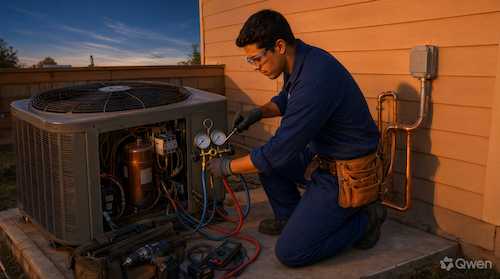
For most of the last century this was a heating-only market. January averages 41.9°F and July only 70.2°F at the reference station, so central air conditioning was rare and houses were built accordingly: a furnace, a few baseboards or a wood stove, and no duct system sized for cooling. Then the summers changed, and the same households that never needed cooling started asking for it — in houses with no ducts, finished basements and 45.5% of the stock predating 1980. That is why the work here is less about equipment than about routing and ventilation.
Cooling a house that was never ducted
The realiztic options in an older Portland bungalow are ductless heads in the rooms that matter, a small-duct high-velocity system that fits in existing cavities, or conventional ductwork with a real cost in disruption. Each changes how the house feels and how much wall gets opened. Ask how the routing was designed, how many zones are proposed, and whether the plan conditions only part of the house deliberately rather than by accident.
Why heat pumps suit this climate
A mild winter is easy work for a heat pump, and a cooling season that is short but real makes the same equipment useful in both directions. That combination is why the technology has been adopted quickly here. The details that decide satisfaction are less glamorous: correct sizing, a defrost cycle that works in a damp cold, and controls that do not call for auxiliary heat unnecessarily. Ask for a load calculation, what the cold-weather capacity is at the temperatures this metro actually sees, and how the system is configured for the shoulder months.
Smoke season and indoor air
Summer wildfire smoke has become a recurring feature of the region, and it arrives exactly when windows would otherwise be open. Filtration that the blower can support, a sealed return path and a house that can be closed up are what make a difference. Ductless systems filter their own airstream but serve fewer rooms. Ask what filtration the equipment can handle, whether the return and cabinet are sealed, and whether a standalone filtration unit is a better answer for a house without ducts.
A damp climate and a tight house
In a wet climate, an older house leaks air enough to dry itself, which is inefficient but forgiving. Tightening one up without adding ventilation can trap moisture indoors — bathrooms and kitchens exhausting into an attic rather than outside is a common find. As heating systems are replaced and envelopes are improved, the ventilation question has to be answered. Ask where the bath and kitchen exhaust ducts actually terminate, whether any mechanical ventilation is proposed, and how the house will manage humidity once it is tighter.
Service before the wet season
The equipment here works hardest in the cold, damp months and is idle in the dry ones, which makes late summer the sensible moment for a service rather than the first cold week. Filters, coils, condensate and the condition of any outdoor unit are the ordinary items, and a heat pump adds defrost behavior to check. Ask what the annual visit covers, whether the outdoor unit is checked before winter, and what the owner can reasonably inspect between visits.
What to pin down in the estimate
Where this page stops
No prices, sizes or efficiency figures are quoted here. Refrigerant rules, code requirements and equipment ratings change, and the applicable version should be confirmed from the manufacturer's literature and the local authority.
Portland metro context
The 2024 ACS 5-year estimates describe about 2.52 million residents in 1,010,265 households and 1,062,495 housing units, with 61.7% owner-occupied and 60.2% single-family detached. About 45.5% of units predate 1980, which is the cohort least likely to have any ductwork for cooling. At the reference station January averages 41.9°F and July 70.2°F, on 36.9 inches of annual precipitation.
Portland reference station and housing indicators
| Indicator | Value | Source |
|---|---|---|
| January mean temperature | 41.9°F | NOAA NCEI |
| July mean temperature | 70.2°F | NOAA NCEI |
| Annual precipitation | 36.9 in. | NOAA NCEI |
| Metro population | 2,520,987 | U.S. Census Bureau |
| Owner-occupied share | 61.7% | U.S. Census Bureau |
| Housing units built before 1980 | 45.5% | U.S. Census Bureau |
Station normals are historical averages for one location, not a forecast. A July mean near 70°F explains why cooling was rarely installed here, and why retrofitting it now is awkward in houses built without ductwork.
Frequently Asked Questions
Do I need central air in Portland?
Not everyone does, but the summers now make it a reasonable question where it was not before. The decision depends on how the house is built and on which rooms genuinely need it, not on a single recommendation.
Can a heat pump heat my house in winter here?
A mild winter is well within the range of modern equipment. What matters is the capacity at the coldest days this metro sees and how the controls handle defrost, not a general claim about heat pumps in cold climates.
What is the cheapest way to add cooling to an old bungalow?
Usually a ductless head in the rooms that matter rather than whole-house ductwork, which is expensive and disruptive in a house with no chases. The trade-off is that it conditions fewer spaces.
How should I deal with wildfire smoke?
Filtration the blower can support, a sealed return path, and the ability to keep the house closed up. A standalone filtration unit can be the practical answer where there are no ducts.
Why is my house humid in winter?
Often because a tight house has nowhere for moisture to go and the exhaust fans discharge into the attic instead of outside. Ventilation is the answer, not more heating.
Should I insulate before replacing the system?
The two decisions are related. Insulation and air sealing change the load the equipment has to meet, so the sizing should follow whatever envelope work is planned rather than assume it away.
Sources and review date
- American Community Survey 2024 5-year estimates (CBSA tables) — U.S. Census Bureau, 2024 ACS 5-year estimates.
- 1991–2020 station normals — PORTLAND INTL AP, OR US (USW00024229) — NOAA National Centers for Environmental Information, 1991–2020 climate normals.
Reviewed on 2026-11-18.